
Netherlands Cuts New Truck Toll Rate Through 2026
The Netherlands cut its new per-km truck toll 22.3% from September through December 2026. Here's what shippers must verify on invoices before it reverts.

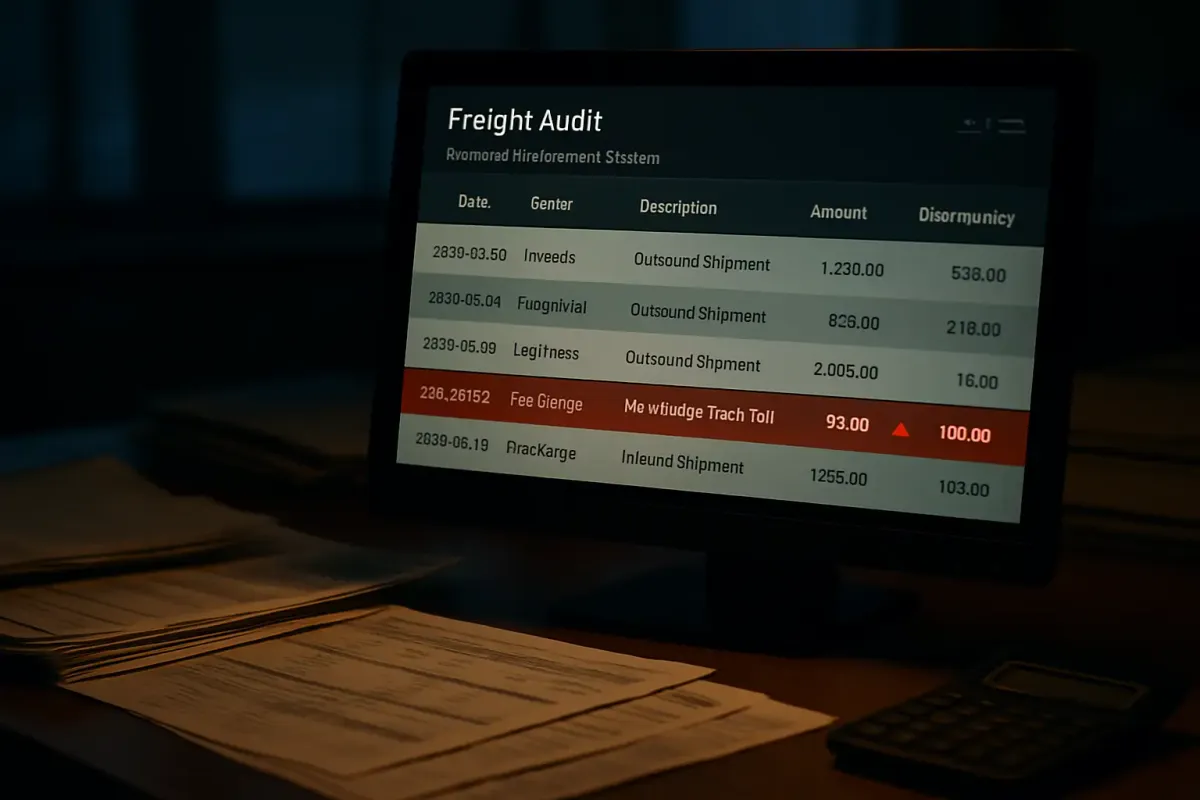
The Netherlands just cut its brand-new truck toll, and it won't last
On 22 May 2026, Dutch infrastructure minister Sandra Karremans sent a decision to the Tweede Kamer confirming a temporary rate cut on the country's new distance-based truck toll, the vrachtwagenheffing. Rates dropped 22.3% from 1 September 2026, and they stay down only until 31 December 2026. If you route freight through the Netherlands, whether you're a Dutch shipper or a German manufacturer sending trucks across the border, this affects your carrier invoices right now, and it will affect them differently again in three months.
Here's the context that makes this land awkwardly: the vrachtwagenheffing itself only went live on 1 July 2026, replacing the Eurovignette and cutting Dutch motor vehicle tax for trucks. Most shippers were still getting their carrier rate cards updated for the new base toll when the discount showed up eight weeks later. If your freight audit process hasn't fully absorbed the July change, you now have a second, temporary change stacked on top of it, and it disappears on a specific date.
Why the discount exists
The cut is a direct response to fuel-price pressure, not a policy reversal. The government acted on motions from MPs Flach and Eerdmans to offset sharply higher fuel costs tied to the conflict in the Middle East. Karremans called it "a modest but targeted relief for road transport" given the circumstances. The mechanics are straightforward: the average toll rate drops from €0.191 to €0.148 per kilometre, and it applies to every truck category equally, so it doesn't change the relative cost gap between a Euro VI diesel and an electric truck. The government expects truck owners to collectively pay about €80 million less in toll charges over the four months.
The dates that matter
| Date | What happens |
|---|---|
| 1 July 2026 | Vrachtwagenheffing goes live in the Netherlands; Eurovignette ends; Dutch motor vehicle tax for trucks up to 12,000 kg is scrapped |
| 1 September 2026 | Rates cut 22.3%, average toll drops from €0.191 to €0.148/km |
| 31 December 2026 | Temporary discount ends |
| 1 January 2027 | Full rates return, plus a separate 2.6% inflation-linked increase; a standard Euro 6 diesel truck over 32,000 kg rises to €0.206/km, while an equivalent electric truck sits at €0.04/km |
Note the discount is not retroactive. Kilometres driven in July and August are billed at the original, higher rate. Only kilometres driven between 1 September and 31 December 2026 get the reduced rate.
Who this actually hits
This isn't a Dutch-hauliers-only story. The toll applies to Dutch and foreign-registered vehicles in categories N2 and N3, meaning any truck over 3,500 kg, on nearly all motorways and a number of provincial and municipal roads. A Polish carrier running a lane from Rotterdam to Lyon pays it. A French 3PL trucking through Venlo pays it. If your supply chain touches Dutch roads at all, this is on your invoices somewhere. For procurement teams, the real question isn't whether carriers pass the toll through. They will, either as a line item or folded into a fuel/toll surcharge. The question is whether they pass the discount through too, and whether they do it on the correct dates.
What to check before 1 January 2027
Three things need attention on a defined timeline:
- Now, on September invoices: confirm the toll line items reflect €0.148/km average, not the pre-September €0.191/km figure, for any kilometres driven from 1 September onward. Kilometres from July and August should still show the original rate.
- Through Q4 2026: watch for carriers who apply the discount late, apply it to the wrong vehicle category, or simply forget to update their internal rate tables when 1 September passed.
- By December 2026: rebuild your Q1 2027 Dutch lane cost models on the assumption that the discount is gone and the toll is roughly 2.6% higher than the pre-discount base, per the RDW's confirmed 2027 rate increase. If you're renewing carrier contracts around year-end, this is the number to negotiate against, not the artificially low Q4 figure.
Where this exposes weak freight audit
A four-month, percentage-based rate window is exactly the kind of change that slips through manual invoice checks. Nobody remembers in November that a discount which started in September is due to expire in five weeks. This is a rate-table-with-effective-dates problem, and it's precisely what freight audit modules inside a transport management system are built to catch. A TMS that stores toll rates with start and end dates flags a mismatched invoice automatically instead of relying on someone in finance noticing a rounding error six months later. If you're evaluating or re-evaluating freight audit and carrier invoice reconciliation capability, this is a good test case. Ask vendors like Cargoson, Transporeon, Alpega, or nShift for a live demo of how their system handles a dated, percentage-based toll change specifically, not a generic confirmation that "yes, we support freight audit." Watch what happens when you feed it an invoice dated 15 October versus one dated 15 January.
Part of a busier September than usual
The Dutch toll cut isn't happening in isolation. The same month brought tougher Slovak rules on overloading, driving bans, and vehicle-owner liability from 1 September, and Norway made its Digitoll pre-arrival reporting system mandatory from 15 September. None of these three changes share a mechanism or a deadline, which is the point. Cross-border cost and compliance modelling in Europe right now isn't a once-a-year exercise you finish in December and forget about. It's a moving target with a new date attached most months. Use this one as the prompt to check whether your current process, TMS or spreadsheet, can actually hold two conflicting Dutch toll rates in the same calendar year and apply the right one to the right invoice line. If the answer is "we'd have to check manually," that's your action item before the January reversion, not after.