The €1.5 Million Capacity Crisis: How European Shippers Can Build Bulletproof Carrier Contingency Plans Before Transport Shortages Paralyze Supply Chains


Your logistics director just called with news that stops you cold: January 2025 saw a spike in freight offers on the Trans.eu platform, with volume increasing on 14 of 16 key lanes. On some routes, the month-over-month growth exceeded 100%. But when you ask about carrier availability, the answer gets worse: carrier activity moved in the opposite direction – dropping both month-over-month and year-over-year. Many carriers are scaling down operations, exiting less profitable routes, or suspending business entirely.
Welcome to Europe's 2025 transport capacity shortage crisis – a perfect storm that's forcing companies across the continent to scramble for reliable transport while rates climb faster than anyone expected. Driver shortages persist, with 426,000 unfilled positions in 2024, and the situation shows no signs of improving. For manufacturers and retailers managing transport operations worth €10 million or more annually, this crisis demands immediate action.
The Perfect Storm - Understanding Europe's 2025 Transport Capacity Shortage
The numbers tell a stark story. Heavy goods vehicle registrations fell by 16% between Q1 2024 and Q1 2025, and by 7% q-o-q, while demand surged across major trade lanes. This isn't just about driver shortages anymore – it's a multi-layered crisis reshaping European transport markets.
The scale becomes clear when you examine specific routes. The transport sector is under strain – caught between an excess of freight orders and a shortage of transport capacity, increasing uncertainty and complicating strategic planning. Companies that relied on just-in-time procurement are finding their assumptions shattered by a market where capacity, not price, has become the primary constraint.
Beyond Driver Shortages - The Multi-Factor Crisis
While 426,000 unfilled truck driver jobs in Europe grab headlines, the crisis runs deeper. Starting on 19 August 2025, all vehicles over 3.5 tonnes registered after June 2019 that carry out international transport within the European Union must be equipped with smart tachographs 2.0 (G2V2). This regulatory requirement adds €1,700-€2,200 upgrade costs per vehicle, forcing many smaller carriers to exit the market entirely.
Economic pressures compound these challenges. In France, 1,339 transport companies went bankrupt in a year (+37.8%), with 939 facing liquidation, mainly small firms with under 10 employees. The survivors are keeping older vehicles in service longer rather than investing in new fleets, further constraining capacity.
The €1.5 Million Cost of Reactive Capacity Management
When capacity shortages hit, the financial impact escalates quickly. Emergency freight procurement typically carries 200% - 400% rate increases, with some sources indicating increases potentially reaching these levels on Asia-Europe routes, with the cost of shipping from Shanghai to Genoa (Italy) reportedly surging by around 350%. While these examples focus on ocean freight, similar patterns emerge in European road transport during capacity crunches.
The hidden costs multiply beyond premium rates. Late deliveries trigger customer penalty clauses, often 0.5-2% of order value per day. Production line stoppages from missing components can cost automotive manufacturers €50,000 per hour. Retailers face stock-outs during peak seasons, losing both immediate sales and customer loyalty.
Consider a €500 million revenue manufacturer facing a week-long capacity shortage during peak season. Emergency transport at 40% premium rates costs an additional €150,000. Production delays cost €300,000 in penalties and overtime. Customer complaints and expedited replacements add €200,000. Stock-out losses from retail partners approach €850,000. The total: €1.5 million for one week of poor capacity planning.
Strategic Carrier Segmentation - Building Your Capacity Portfolio
Smart shippers build carrier relationships like investment portfolios – diversified, tiered, and actively managed. Your carrier strategy should allocate capacity across three tiers: primary partners handling 60% of volumes, secondary backup carriers covering 30%, and emergency options for the remaining 10%.
Primary carriers earn this status through consistent capacity availability, competitive rates, and deep integration with your systems. These relationships require mutual investment – volume commitments from you, capacity guarantees from them. Secondary carriers provide geographical coverage and seasonal flexibility, while emergency options include spot market platforms and freight exchanges.
The Carrier Scorecard Framework
Effective carrier management requires systematic evaluation beyond basic price comparisons. Financial stability metrics include credit ratings, cash flow strength, and ownership structure – family-owned carriers often show more stability than leveraged acquisitions. Capacity reliability indicators track on-time pickup rates, equipment availability during peak seasons, and geographic coverage consistency.
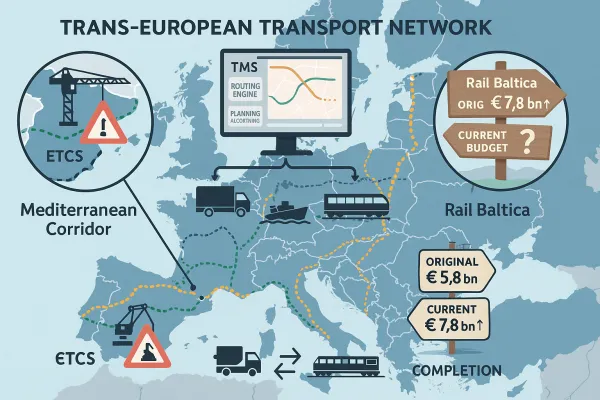
Technology integration capabilities matter more than ever. Connected to carrier systems, a TMS system accesses, stores, and compares detailed information about carriers. It also includes functionality that allows businesses to optimize routes and transportation modes as well as track delivery progress. Carriers offering API connections, real-time tracking, and automated booking systems provide operational advantages that justify premium pricing during tight capacity periods.
Emergency Capacity Activation - Your Crisis Response Playbook
When normal channels fail, having a systematic response prevents panic decisions. Your crisis playbook should include trigger thresholds – typically when primary carriers reject 20% of tenders or quote rates 30% above contract levels. Escalation procedures should clearly define who activates emergency protocols and authorizes premium spending.
Alternative modal options become crucial during road transport shortages. Intermodal transport may offer a viable alternative, with road transport increasingly confined to shorter distances – around 100–200 km – rather than long-haul, cross-continental routes. Rail and short-sea shipping provide capacity buffers, albeit with longer transit times.
Digital Tools for Real-Time Capacity Monitoring
Managing risks and preparing for unexpected scenarios that can affect the shipper's transportation process can be leveraged with a dependable TMS, as they assist in planning, executing, and monitoring transportation activities. They can assess real-time data and analytics, compare potential scenarios and options, keep track of shipments, monitor KPIs, and generate reports and alerts. Contingency plans can also be created in anticipation of any sudden changes so surprises can be avoided and quickly addressed.
Leading TMS platforms like Oracle Transportation Management, SAP Transportation Management, and Cargoson offer carrier performance dashboards and automated alerting. These systems track capacity utilization across your carrier network, flagging potential shortages before they become crises. Integration with spot market platforms provides alternative capacity sourcing within the same interface.
Contractual Strategies for Capacity Security
Traditional transport contracts focus primarily on rates, but capacity-constrained markets require different structures. Volume commitments work both ways – you guarantee minimum annual volumes while carriers reserve dedicated capacity. Penalty clauses should include capacity availability metrics, not just delivery performance.
Flexibility provisions become essential. Businesses will increasingly blend contracts for baseline capacity, using spot rates for flexibility. As a result, the uncertainty could dampen the impact of rising demand on the contract market and amplify pressure on the spot market. Your contracts should include surge pricing mechanisms that activate during capacity shortages, providing carriers with financial incentives to prioritize your freight while giving you predictable escalation frameworks.
Dynamic contract management requires sophisticated systems. Platforms like Manhattan Active Transportation Management, Blue Yonder, and Cargoson support contract structures that automatically adjust pricing and capacity allocations based on market conditions and performance metrics.
Building Long-Term Resilience - The Partnership Approach
Transactional relationships collapse during capacity crises. Strategic partnerships provide mutual benefit – carriers gain revenue predictability and operational efficiency while shippers secure capacity access and service levels. The current balance of power remains fairly favourable to shippers, but it is wise to secure long-term capacity based on balanced partnerships with carriers.
Joint planning sessions should occur quarterly, reviewing capacity forecasts, route optimization opportunities, and technology investments. Shared KPIs align incentives – track not just cost per kilometer but capacity availability, lead time reliability, and problem resolution speed. These partnerships require investment from both sides but create competitive advantages during capacity shortages.
Technology Integration as Competitive Advantage
API connectivity with carrier systems enables real-time capacity visibility and automated load tendering. At the intersection of supply chain and transport management, a Transportation Management System (TMS) acts as a central hub, facilitating real-time communication, data sharing, and collaboration. A TMS enables seamless integration between suppliers, manufacturers, distributors, and customers, ensuring end-to-end visibility and synchronization of processes.
Shared visibility platforms benefit all parties – carriers optimize routes and reduce empty miles while shippers gain shipment tracking and exception management. Solutions from Transporeon, Alpega, nShift, and Cargoson provide collaborative planning environments where carriers and shippers share demand forecasts and capacity plans.
The 2025 capacity crisis won't resolve quickly. With freight demand expected to rise in 2025, failure to make the profession more appealing or improve productivity may worsen the shortage and drive up costs further. Companies building resilient carrier relationships and contingency strategies now will maintain competitive advantage when capacity shortages intensify. Those waiting for market conditions to improve face escalating costs and service failures.
Start building your bulletproof carrier contingency plan today. The next capacity shortage is coming – the question is whether you'll be prepared or scrambling like your competitors.