The €200K TMS Implementation Reality Check: How European Shippers Can Build Bulletproof Procurement Frameworks to Avoid the Budget Disasters Hitting 75% of Projects


A German automotive parts manufacturer discovered their €800,000 TMS implementation mistake the hard way. Six months into deployment, they realized their new system couldn't handle their complex carrier network across 12 European countries. Sound familiar? You're not alone.
Budget overruns hit 75% of European TMS implementations, yet most procurement teams still approach vendor selection like it's 2019. The difference between success and financial disaster? Understanding that implementation costs range from €30,000 to €900,000, and for shippers with freight spend exceeding $250M annually, implementation can cost 2-3 times the subscription fee.
This guide breaks down the hidden cost categories that derail European TMS budgets and provides a bulletproof procurement framework that accounts for the complex realities of cross-border operations, regulatory compliance, and vendor consolidation that's reshaping the market right now.
The €800,000 Wake-Up Call: Why European TMS Implementations Keep Failing
According to the Standish Group's Annual CHAOS 2020 report, 66% of technology projects end in partial or total failure. Transportation management systems aren't immune to this trend. In fact, European shippers face even steeper odds due to cross-border complexities that don't exist in single-market implementations.
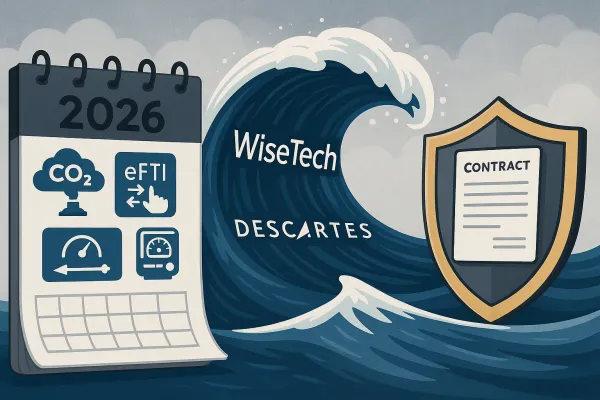
The German manufacturer's €800,000 mistake highlights a critical gap in most procurement processes. Their traditional feature-checklist approach missed the vendor consolidation risks that now define TMS procurement decisions in 2026. WiseTech Global's $2.1 billion acquisition of E2open, expected to complete in 1H26, alongside Descartes Systems Group's $115 million acquisition of 3GTMS in March 2025, represents the most significant TMS vendor consolidation wave in over a decade.
What made their disaster predictable? They evaluated their TMS like a standalone software purchase instead of a strategic transformation that affects every carrier relationship, integration requirement, and operational workflow across their European network.
The Hidden Statistics Behind European TMS Budget Disasters
Hidden costs in TMS procurement consistently add 25-30% more than initial estimates, turning what looked like smart investments into budget disasters. 76% of logistics transformations fail to achieve their performance objectives because procurement teams focus on feature comparisons and license fees while the real financial impact lives in implementation complexity, carrier integration charges, and ongoing maintenance expenses.
The math works against most buyers from day one. A basic domestic shipper needs 10-15 integrations minimum, totaling 1,000-1,500 hours of labor, while most shippers today require an average of 40 integrations. Some complex implementations record over 140 integration objects.
The Seven Hidden Cost Categories That Derail European TMS Budgets
The seven cost categories that catch European shippers off-guard include implementation services, carrier connectivity, system customization, training and change management, ongoing support, regulatory compliance, and hidden licensing fees.
Consider these TCO components: base licensing (20-30% of total), implementation services (25-40%), carrier integration (15-25%), customization and training (10-20%), and ongoing support (15-20%). Notice how the subscription fee represents less than one-third of your total investment?
European shippers face unique challenges that basic TCO models miss. Your 12-country carrier networks, multi-modal requirements, and regulatory compliance demands create cost pressures that vendors rarely discuss upfront. Yet most procurement teams spend roughly 240 hours on tender events without proper TCO modeling.
Licensed TMS software runs $50,000-$400,000+ with annual maintenance charges ranging from 15-20% of license costs. For a mid-sized operation, that initial €100,000 investment becomes €200,000+ in the first year when you factor in implementation, training, and infrastructure requirements.
Carrier Integration: The €50K+ Surprise Most Shippers Miss
Carrier integration represents the biggest hidden cost category for European shippers. Basic API integrations cost €5,000-€15,000, while complex ERP connections exceed €50,000.
Your carrier network complexity determines integration costs more than any other factor. Most European manufacturers work with 20-30 regular carriers but could benefit from access to 200-300 qualified providers. Each connection requires testing, documentation, and ongoing maintenance that vendors don't include in their initial quotes.
Legacy systems require custom development work, while modern platforms offer pre-built connections but may charge activation fees for each carrier or service provider link. Additional fees cover third-party application integration, such as SMC or PC Miler license costs.
Building Your Bulletproof TMS Procurement Framework
European TMS procurement requires a fundamentally different approach in 2026. The traditional RFP process that worked when the market had dozens of independent vendors no longer addresses consolidation risks, vendor viability concerns, or European-specific regulatory requirements.
Start with financial stability assessment. Look beyond current revenue figures to understand how recent acquisitions impact the vendor's cash flow, development priorities, and customer service capacity. Product roadmap uncertainties are already surfacing. When two TMS platforms merge, customers inevitably face decisions about which system to standardize on, what features will be deprecated, and how long dual support will continue.
Your procurement framework needs five distinct evaluation phases: vendor financial analysis, European compliance verification, carrier integration assessment, TCO modeling over 5-7 years, and implementation risk evaluation. Each phase should include specific pass/fail criteria that prevent emotional decision-making during vendor presentations.
When evaluating TMS providers, consider both established vendors like Transporeon, Oracle TM, and SAP TM alongside emerging European-focused solutions such as Cargoson, nShift, and Alpega. Each category presents different risk-reward profiles based on your specific operational requirements and integration complexity.
The European Compliance Premium: eFTI and Smart Tachograph Budget Factors
As of 9 July 2027, the eFTI Regulation will apply in full, while starting 19 August 2025, all heavy-duty vehicles registered in the EU and operating in Member States other than their Member State of registration must be fitted with G2V2 devices.
These regulatory deadlines create negotiation leverage that savvy buyers can exploit for better contract terms and protection against vendor lock-in. Your leverage is strongest when vendors need your commitment to justify their development investments.
The introduction of Electronic Freight Transport Information could save the EU transport and logistics sector up to €1 billion per year. Companies implementing eFTI-compatible systems now gain operational advantages while competitors struggle with compliance deadlines.
Budget planning around these timelines requires understanding both direct compliance costs and indirect operational impacts. Plan for 15-20% budget increases in 2026-2027 if reactive, or 8-12% if proactive with proper contract protection.
The Total Cost of Ownership Calculator: 5-Year Budget Reality
Accurate TMS cost projection requires comparing different pricing models across realistic timeframes. Cloud TMS pricing ranges from $1.00 to $4.00 per freight load booked in the system, while licensed options demand significant upfront investment plus ongoing maintenance fees.
Cloud economics work differently than traditional software models. For many European shippers, this translates to predictable monthly costs that scale with business growth rather than fixed infrastructure investments. Cloud TMS implementations often conclude within eight weeks, compared to 6-18 months for traditional systems.
Your TCO calculator should include separate line items for eFTI compliance costs, whether built into transaction fees or charged separately. The approaching mandate makes this a required expense, not optional functionality.
The procurement strategy should evaluate total contract value over 5-7 years, not just year-one costs. Include scenarios for business growth, regulatory changes, and potential vendor acquisition that could affect pricing or service levels.
Vendor Consolidation Impact: How 2026's M&A Wave Affects Your Procurement
The most significant TMS vendor consolidation wave in over a decade is reshaping European procurement decisions right now. WiseTech's acquisition of E2open in 2025, Descartes' purchase of 3GTMS for $115 million in March 2025, and Körber's transformation of MercuryGate into Infios following their 2024 acquisition represent just the beginning of a fundamental market restructuring.
This consolidation creates three distinct vendor categories for European shippers: global mega-vendors (Oracle TM, SAP TM, E2open/WiseTech), European specialists (Alpega, nShift, Transporeon), and emerging European-native solutions like Cargoson that focus specifically on cross-border European operations.
Integration timelines are extending as merged vendors focus on internal platform consolidation rather than customer-specific connectivity projects. This directly impacts European shippers whose carrier networks span multiple countries with varying technological capabilities.
European-native solutions are gaining market share precisely because they understand the unique challenges of cross-border European operations. Local development teams mean faster response to regulatory changes, while pricing models typically favor mid-market customers over enterprise accounts.
Your 60-Day Implementation-Ready Procurement Action Plan
Your procurement timeline should align with regulatory deadlines while avoiding the rush that leads to poor vendor selection. Start immediately with financial stability assessment of your vendor shortlist. Member States authorities may start accepting data stored on certified eFTI platforms for inspection from January 2026.
Phase 1 (Days 1-20): Complete vendor financial analysis, verify European compliance roadmaps, and assess integration complexity for your specific carrier network. Request detailed TCO breakdowns that include all hidden costs identified in this framework.
Phase 2 (Days 21-40): Conduct proof-of-concept deployments with your top three vendors. Focus on carrier integration speed, European regulatory compliance features, and user adoption requirements. Document all additional costs that emerge during testing.
Phase 3 (Days 41-60): Finalize contract negotiations using regulatory deadlines as leverage for better terms. Secure protection against vendor acquisition impacts, compliance cost increases, and implementation delays. Include specific performance guarantees for European carrier connectivity.
Your evaluation should include platforms from both established vendors and emerging European specialists. Compare solutions from providers like Oracle TM, Transporeon, and Cargoson to ensure you're making decisions based on operational fit, not just market recognition.
The July 2027 eFTI deadline approaches faster than most procurement teams realize. Companies that treat regulatory compliance as a procurement opportunity rather than a cost burden will emerge stronger from the transition ahead. Start your bulletproof TMS procurement framework implementation now.