The €3.2 Million TMS Analytics Gap: How European Shippers Can Transform Basic Freight Reporting Into Strategic ROI Measurement That Actually Drives Cost Savings

Last month, a German automotive parts manufacturer discovered they'd been overpaying carriers by €127,000 monthly. The culprit? Their TMS reporting system dutifully tracked every expense but missed the cost drivers hiding in plain sight. The Analytics & Reporting Platforms segment is projected to grow at the fastest CAGR of 11.2% during the forecast period, yet most European shippers still struggle with the same fundamental problem: they have data without answers.
Here's the uncomfortable truth: Errors occur in up to 10% of freight bills, according to the National Shippers Strategic Transportation Council, with freight audit firms recovering up to 8% of total freight spend. That €3.2 million figure in our title? That's the average annual savings potential most European shippers miss because their TMS reporting never evolved beyond basic cost tracking into strategic intelligence.
Why 67% of European Shippers Can't Measure True TMS ROI
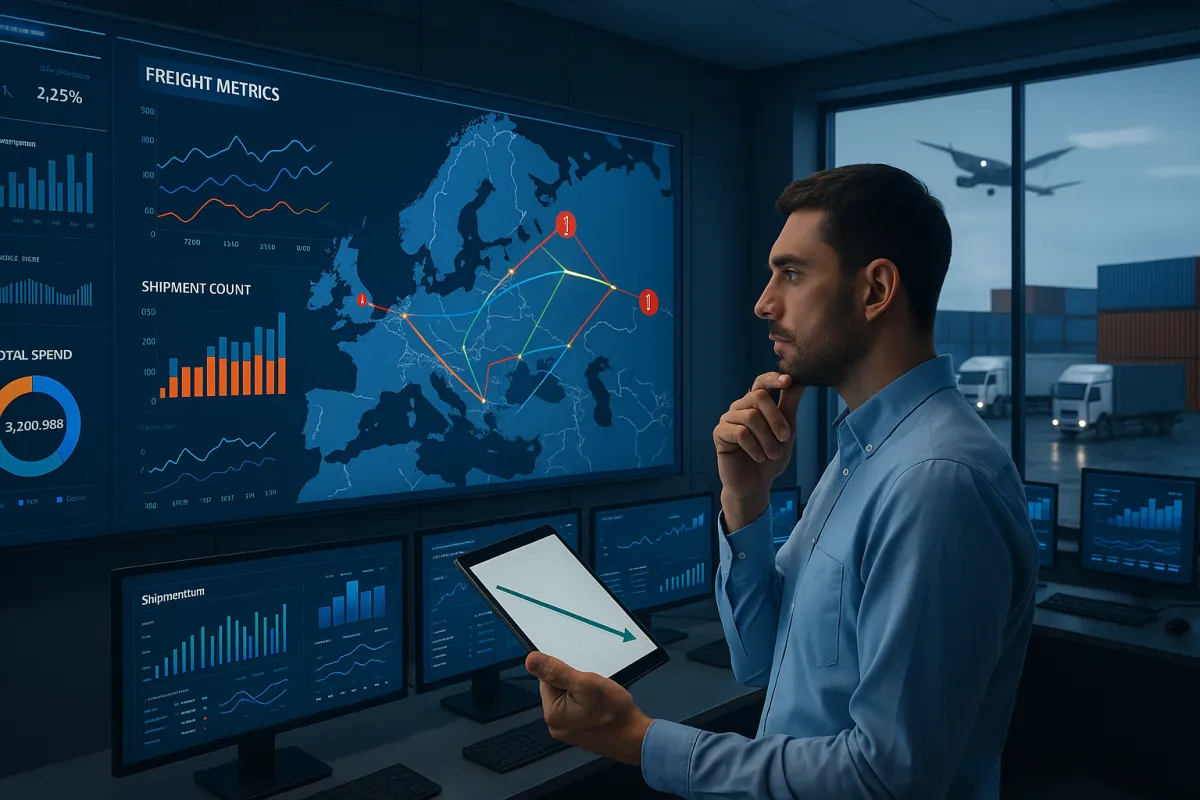
Walk into most logistics departments across Europe and you'll find the same scene: walls of dashboards displaying shipment counts, on-time percentages, and total spend figures. Beautiful visualizations that tell you what happened but never explain why it happened or what you should do about it.
This visibility trap catches shippers who mistake reporting for analytics. Your TMS generates hundreds of metrics, but how many actually influence business decisions? Most European companies focus on lagging indicators - total monthly spend, average cost per shipment, carrier performance scores. These tell you about past performance when the damage is already done.
Take that German manufacturer I mentioned. Their monthly TMS reports showed carrier performance within acceptable ranges and costs trending slightly upward with market conditions. What they missed were the patterns: specific routes being consistently overbilled, detention charges applied incorrectly 23% of the time, and fuel surcharge calculations that hadn't been updated for six months. Their reporting system dutifully tracked every transaction but never connected the dots.
The problem intensifies when you consider how European operations differ from other markets. Cross-border shipments involve multiple currencies, varying regulatory requirements, and complex VAT implications. Standard TMS reporting treats a Frankfurt-to-Milan shipment the same as one from Frankfurt to Hamburg, missing the compliance costs, border delays, and documentation requirements that dramatically affect true delivery costs.
The 5 Critical Analytics Mistakes Costing European Shippers Millions
Mistake #1: Treating freight audit as compliance rather than intelligence. Most shippers view freight audit as a necessary evil for paying bills correctly. Since 5%-10% of invoices are billed incorrectly, your savings could be very, very worthwhile, but the real value lies in the patterns these errors reveal. When carriers consistently overbill on specific lanes or accessorial charges, that's not random - it's intelligence about your negotiating leverage and process gaps.
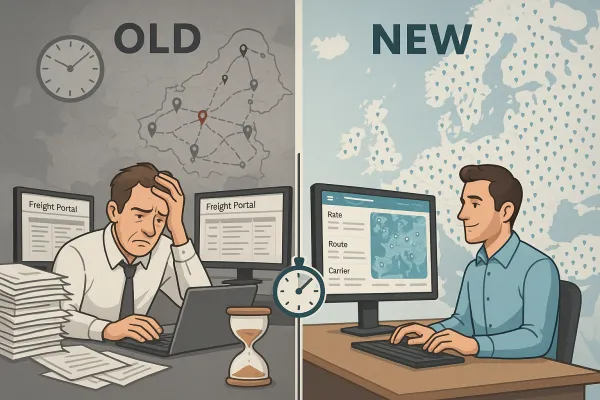
Mistake #2: Manual reporting that misses anomalies and patterns. Excel-based reporting systems can't scale to handle the complexity of modern European logistics operations. When you're processing thousands of invoices monthly across multiple carriers, currencies, and countries, manual analysis inevitably misses the subtle patterns that indicate systemic issues. Modern AI, machine learning, and automation are essential for executing an accurate, efficient, and scalable freight audit and payment process.
Mistake #3: Siloed data that prevents holistic cost driver analysis. Your TMS knows transportation costs, your ERP tracks inventory carrying costs, your WMS monitors handling expenses, but none talk to each other. Without integrated data, you can't see how a 2-day transit time reduction might eliminate €50,000 in safety stock or how consolidating shipments affects both transport costs and customer satisfaction scores.
Mistake #4: Focusing on total spend rather than cost per unit metrics. European manufacturers especially fall into this trap. They track total logistics spend as a percentage of revenue, but that metric doesn't reveal efficiency. A 10% increase in shipping volume should reduce cost per unit through economies of scale, but without granular analytics, you'll never know if you're achieving those efficiencies.
Mistake #5: Not connecting TMS data to business outcomes. Your TMS knows a shipment cost €450 and arrived one day late, but does it know that delay caused a production line shutdown worth €15,000? Without connecting transportation performance to business impact, you're optimizing in the dark.
Building ROI-Driven Analytics: The European Shipper's Framework
Transforming your TMS from a cost tracking tool into strategic intelligence requires a structured approach. Start with the four-tier analytics maturity model that successful European shippers follow:
Tier 1: Descriptive Analytics - What happened? This covers your current reporting: costs, volumes, performance metrics. Essential for compliance but limited for decision-making.
Tier 2: Diagnostic Analytics - Why did it happen? This identifies cost drivers and performance patterns. Why did October shipping costs spike 18%? Was it fuel surcharges, route changes, or billing errors?
Tier 3: Predictive Analytics - What will happen? Using historical patterns to forecast costs, identify potential disruptions, and model scenario impacts. If Brexit regulations change next quarter, how will that affect your UK-EU routes?
Tier 4: Prescriptive Analytics - What should we do? The holy grail where your system recommends optimal actions. Should you consolidate Wednesday shipments with Thursday's to save €12,000 monthly while maintaining service levels?
Leading indicators separate strategic analytics from basic reporting. Instead of tracking last month's spend, monitor real-time cost variance trends. Rather than measuring historical on-time performance, track predictive delivery risk scores. Focus on metrics that let you act before problems become expensive.
For European operations specifically, your analytics framework must handle multi-currency reporting, cross-border compliance costs, and varying regulatory requirements. A shipment from Amsterdam to Warsaw involves different cost structures than one from Amsterdam to Brussels, and your analytics must capture those differences granularly.
Advanced Analytics Features European Shippers Should Demand
Modern TMS platforms offer capabilities that transform how you understand and manage transportation costs. Freight audit and payment modules automate invoice validation, recovering duplicate charges and creating data lakes for spend analytics. But advanced analytics go far beyond basic audit functions.
AI-powered anomaly detection should automatically flag billing irregularities, route inefficiencies, and performance outliers. When your system detects that carriers on the Hamburg-Munich route consistently deliver 4 hours earlier than estimated, that's actionable intelligence for renegotiating rates or adjusting customer commitments.
Predictive analytics become crucial for budget planning in volatile European markets. When geopolitical events, fuel price swings, or regulatory changes affect shipping costs, your system should quantify the impact and recommend adjustments weeks before they hit your P&L.
Automated exception reporting eliminates the need to hunt through reports for problems. Your system should proactively alert you when detention charges exceed thresholds, when specific carriers underperform commitments, or when cost per unit trends deviate from targets.
Benchmarking capabilities let you compare performance against industry standards and peer networks. Is your €1.23 per kilogram cost on the Frankfurt-Paris route competitive? How does your damage claim rate compare to similar manufacturers?
Platforms like Cargoson, Descartes, Blue Yonder, and nShift now integrate these capabilities into comprehensive TMS suites that transform raw transportation data into strategic business intelligence.
Measuring Success: KPIs That Actually Matter for European Operations
Move beyond vanity metrics like "cost per shipment" to KPIs that drive business decisions. Cost avoidance measures your ability to prevent problems before they occur - detecting and correcting billing errors before payment, optimizing routes to avoid congestion costs, renegotiating contracts based on performance analytics.
Time-to-insight metrics measure how quickly your analytics deliver actionable intelligence. Can you identify cost anomalies within 24 hours? Do budget variance alerts reach decision-makers before month-end? Speed of insight often determines the value of the insight.
For European operations specifically, track regulatory compliance efficiency. How much do border clearance delays cost monthly? What's your average detention time at major EU ports? These metrics matter more for cross-border shipments than domestic ones.
The ROI calculation framework should include both hard and soft savings. Hard savings: recovered billing errors, optimized routes, improved carrier negotiating positions. Soft savings: reduced administrative time, improved customer satisfaction, better cash flow management.
Here's a framework that works: calculate your potential error recovery rate (clients recover between 2% and 4% of freight spending through audit), estimate process efficiency gains from automation (typically 15-30% reduction in manual work), and quantify improved decision-making speed. A logistics director managing €20 million annual transport spend should see minimum 10x ROI on advanced analytics investment within 18 months.
Implementation Roadmap: From Basic Reporting to Strategic Intelligence
Start with 90-day quick wins that demonstrate value while building toward comprehensive analytics transformation. Month one: implement automated freight audit to recover immediate savings and establish baseline error rates. Month two: deploy exception reporting for proactive cost management. Month three: integrate TMS data with ERP for holistic cost visibility.
The biggest implementation challenge isn't technical - it's cultural. Finance teams comfortable with monthly reports resist real-time alerts. Operations staff prefer familiar dashboards over predictive recommendations. Change management becomes crucial for analytics adoption.
Technology requirements vary by company size and complexity. Smaller European shippers (€5-20 million annual transport spend) can often leverage cloud-based analytics modules within their existing TMS. Larger operations typically need enterprise analytics platforms that integrate multiple data sources and support complex European regulatory requirements.
When evaluating vendors, prioritize European market experience. Platforms designed for US domestic logistics often struggle with cross-border complexity, VAT handling, and multi-currency reporting. Look for solutions that understand European regulatory requirements and can handle the complexity of intra-EU trade alongside international shipments.
Common implementation pitfalls include underestimating data quality requirements, overcomplicating initial deployments, and failing to train teams on new analytics capabilities. Start simple, ensure data accuracy, and build user adoption before adding advanced features.
Building internal analytics capabilities versus outsourcing depends on your scale and strategic priorities. Companies with €50+ million annual transport spend often justify internal teams, while smaller operations benefit from managed analytics services that provide expertise without overhead.
The Competitive Advantage of Analytics-Driven Transportation
The transportation analytics landscape continues evolving rapidly. The global transportation management system market size was estimated at USD 15.88 billion in 2024 and is estimated to reach USD 41.57 billion by 2030, growing at a CAGR of 17.5%, with analytics and reporting driving much of that growth.
AI-powered predictive analytics and autonomous decision-making represent the next frontier. Systems that automatically adjust routing based on real-time conditions, renegotiate rates based on performance data, and optimize inventory positioning using transportation analytics will define competitive advantage in the next decade.
The question isn't whether to upgrade your TMS analytics capabilities - it's how quickly you can transform basic freight reporting into strategic ROI measurement that actually drives cost savings. That €3.2 million analytics gap isn't just about money; it's about competitive positioning in an increasingly complex European logistics landscape.
Start by auditing your current analytics capabilities. Can you identify your top 10 cost drivers within 30 minutes? Do you know which routes consistently underperform and by how much? Can you quantify the business impact of transportation decisions? If not, you're not just missing savings - you're ceding competitive advantage to companies that can answer these questions instantly.