The €800,000 Integration Trap: How European Manufacturers Can Avoid TMS Implementation Disasters and Build Bulletproof Legacy System Connectivity

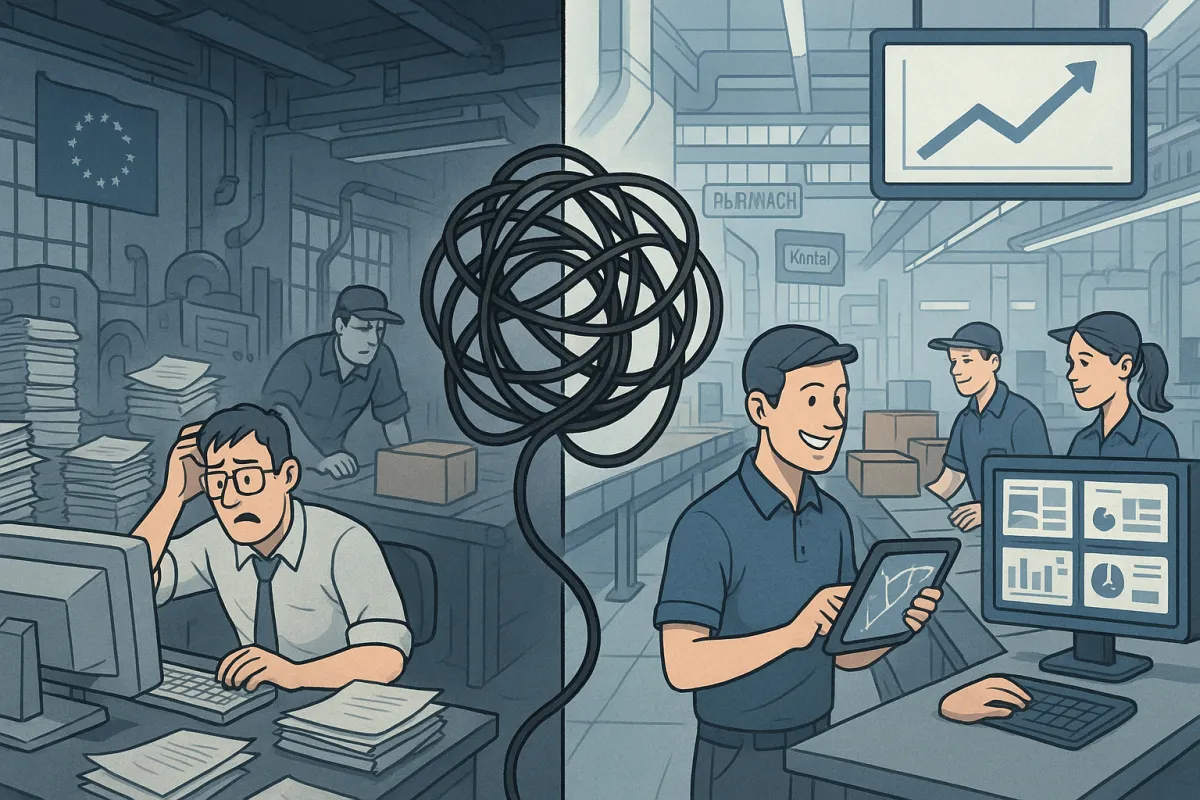
That German automotive parts manufacturer with €800,000 in sunk costs thought they'd done their homework. They chose a North American-focused platform six months before discovering their primary carriers couldn't integrate without costly custom development. Now they're facing a complete re-implementation because they treated TMS selection as a software decision rather than an integration architecture challenge.
This isn't an isolated incident. According to the Standish Group's Annual CHAOS 2020 report, 66% of technology projects (based on the analysis of 50,000 projects globally) end in partial or total failure. European shippers face even steeper odds due to cross-border complexities that don't exist in single-market implementations. Research by Ovum shows that 53% of enterprises experience limitations with their current B2B integration solutions when onboarding trading partners, with approximately 40% requiring over 30 days to bring a new partner online.
The problem isn't the TMS software itself. The problem is that most European manufacturers approach TMS integration challenges as an IT task when it's actually a business architecture transformation that needs to account for legacy systems built over decades.
The Legacy System Reality: Why Your ERP Wasn't Built for Modern TMS
Your SAP R/3 system from 1995 wasn't designed to handle real-time API calls from modern transport management platforms. Neither was your Oracle legacy database that still processes freight invoices through batch jobs every morning at 6 AM.
SAP R/3: Launched in 1992 by SAP SE, it was a highly successful ERP that eventually turned into the current SAP S/4HANA. These systems were not built with interoperability in mind, making it challenging to connect them with newer applications or third-party software seamlessly. This lack of integration capability can lead to data silos within the organization, inhibiting efficient communication between different departments or functions.
European manufacturers face a specific challenge here. European manufacturers particularly value EDI for compliance-heavy operations. Despite EDI's age, it is still effectively used today by many large retailers or huge organizations for tasks within transportation such as sending load tenders, status updates, and invoices. Major German automotive suppliers, for example, rely on EDIFACT standards for their complex multi-tier supply chain communications.
But the technical debt is mounting. ERP, TMS, and WMS tend to have very lightweight EDI processing. Companies may need different communication software to support various protocols, scripts to complete EDI processing, scripts for database table lookups, or integration between different databases. An order may go to the core ERP, stock transfers to the WMS, and shipping information to the TMS. If EDI is bundled inside core ERP, businesses may not seamlessly process EDI for WMS or TMS transactions like 940s, 204s, or 214s because ERPs may lack applicable fields or modules.
Modern platforms like Cargoson, SAP TM, Oracle Transportation Management, and MercuryGate expect API-first integrations. However, many organizations face challenges such as compatibility issues, data silos, and complex workflows that hinder smooth integration.
The Five Critical Integration Points That Make or Break Your TMS Project
You need to audit five specific integration points before selecting any TMS platform. Miss any one of these, and you're looking at the same €800,000 problem our German manufacturer faced.
ERP Financial System Connections require the most attention. Begin by identifying which SAP or Oracle modules (e.g., SAP S/4HANA, Oracle Cloud SCM) are currently in use and how they interact with your logistics workflows. This assessment will help in determining integration points and potential challenges. Your TMS needs to sync freight costs, vendor payments, and currency conversions in real-time with your financial systems.
Carrier Network Compatibility varies dramatically between European and North American platforms. USA Truck discovered their EDI tools couldn't scale when they expanded their carrier network from 200 to 500+ partners. Processing times increased from 2 minutes to 45 minutes for standard load tenders. European carriers often use different integration protocols than their North American counterparts.
Warehouse Management System Integration presents unique challenges when your WMS runs on legacy infrastructure. POS systems capture granular customer and inventory information in real time but use different databases compared to SAP. Integration configures bidirectional data replication between POS and SAP. Adapters transform and load POS data into SAP at scheduled intervals.
Customer Portal and Tracking Systems need real-time data synchronization. APIs transmit data in milliseconds. This allows a transportation management system (TMS) to run on real-time data, whether you're getting tracking updates, building loads or getting spot quotes. For European shippers managing just-in-time operations or responding to supply chain disruptions, this speed difference becomes critical.
Compliance and Reporting Systems are becoming more complex with new EU regulations. The eFTI Regulation is set to transform freight transport within the EU by boosting efforts to replace paper-based documentation with electronic data in all transport modes. This digital shift will apply to road, rail, inland waterway, and air transport. It will reduce administrative burdens for operators and authorities, enhance data security, and ensure compliance with EU and national freight regulations.
Building Your Integration Risk Assessment Framework
Most companies skip the integration risk assessment and jump straight to vendor demos. That's backwards. You need to understand your technical debt before evaluating any TMS platform.
Start with a legacy system audit. Common legacy systems include mainframes (like IBM z/OS), traditional message queues (IBM MQ, TIBCO EMS), established databases (Oracle, SQL Server), and older storage systems (HDFS, traditional NAS). These systems often handle mission-critical operations and contain years or decades of valuable business logic and data. Key challenges include data format incompatibility, performance bottlenecks, security concerns, and lack of documentation.
Document your current carrier integration methods. Are you using EDI, email attachments, phone calls, or a mix of all three? Before standardized ERPs, companies built custom data systems tailored to their unique structure and workflows. Integrating these calls for the in-depth analysis of custom data models, codes, business rules and legacy customizations that need to be accessed by SAP and other applications. Data mapping can bridge different schemas and conversion adapters translate proprietary formats to open standards, while integration tests validate data quality across systems. These steps preserve the unique processes supported by custom ERPs while connecting relevant data to SAP via an API data layer for consolidated insights and new applications.
Budget for integration complexity from day one. Despite the many benefits of performing SAP data conversion, IT managers are genuinely concerned about moving their business data from their legacy systems and applications to SAP B1. Migrating a legacy system in SAP involves careful planning to ensure data integrity and system compatibility. Plan for 30-40% of your total TMS budget to go toward integration work, not the software license itself.
Test with actual data before making any commitments. Review the architecture, code, and user experience to find out what your legacy system is and is not capable of doing. If needed, seek technical assistance to accurately assess the system's potential for integration. Determine whether you can build a custom API (Application Programming Interfaces) quickly or if the integration challenges require system modernization before proceeding.
The European Shipper's Integration Strategy: API-First vs EDI-Legacy Approach
European shippers face a choice: embrace API-first platforms or maintain EDI compatibility with your existing carrier network. The answer isn't either/or – you need a hybrid approach that acknowledges both your legacy constraints and future requirements.
API-first platforms like Cargoson, Blue Yonder, and Transporeon offer faster integration and real-time data exchange. APIs are flexible and customizable, offering exchangeable, real-time information that work with various software, applications and platforms. This means complete transparency and maximum efficiency. API implementation can be less costly than EDI because it doesn't require ongoing maintenance or translation services and is an excellent method to differentiate as a partner and service provider.
But EDI isn't dead in European freight networks. Cargoson offers direct API/EDI integrations with carriers across all transport modes, while Transporeon connects 150,000+ carriers but many integrations are standard EDIs or PDF/email transmissions rather than true API connections. Your strategy should support both integration methods during the transition period.
Consider a phased approach. Start with API integrations for your top 20% of carriers by volume, then gradually convert EDI relationships as carriers upgrade their systems. Before choosing an integration pattern for your legacy systems, consider the cost, technical debt, and cultural fit. Legacy system integration is not your run-of-the-mill integration scenario. Many challenges and hurdles await you on every corner.
The middleware consideration matters for European operations. Legacy systems use older platforms and protocols while ERP leverages modern tech like APIs and cloud services. Bridging these can require additional middleware. Solutions like Descartes' hybrid approach can bridge EDI and API requirements during your transition period.
Implementation Best Practices from €10M+ European Shippers
Companies that succeed with transport management system integration follow a different playbook than typical IT projects. They treat integration as business process reengineering, not software implementation.
A European automotive parts manufacturer with operations in six countries took 18 months to implement their TMS properly. They started with a comprehensive audit of their carrier networks, standardized their data formats before migration, and rolled out country by country over 12 months. 25% reduction in transportation costs and full eFTI compliance readiness. They succeeded because they treated the project as business transformation, not software implementation.
Phase your rollout by country, not by carrier or shipment type. European regulations, carrier networks, and integration requirements vary significantly between countries. Testing your integration in Germany doesn't guarantee it'll work in Poland or the Netherlands.
Invest in change management before technical training. The problem with legacy systems is that once the updates stop coming, the documentation stalls. Maybe the developers who worked on the project have moved on to other things. Whatever the case, this leaves users of the legacy system with outdated documentation. As a result, they'd first need to decipher how the technology works before building or buying an integration.
Plan for post-implementation optimization. Some TMS implementations took 18 months instead of 6. Others required expensive customizations not included in initial budgets. Your initial go-live is just the beginning. Real value comes from continuous optimization over the following 12-18 months.
Future-Proofing Your Integration Architecture
The regulatory landscape in Europe isn't static. As of 9 July 2027: The eFTI Regulation will apply in full. Member State authorities must accept information shared electronically by operators via certified eFTI platforms. Your TMS integration needs to handle current requirements while adapting to future compliance mandates.
Cloud vs on-premise decisions affect your integration flexibility. Cloud-based TMS solutions are expected to register the fastest growth at 18.6% CAGR due to quick setup, low initial costs, and reduced hardware requirements. More importantly, they provide access to emerging technologies without capital investment cycles.
Plan your exit strategy from day one. However, SAP will only provide mainstream maintenance for legacy SAP Business Suite 7 core applications until the end of 2027. What it calls an "offboarding phase" will be followed by optional extended maintenance until the end of 2030. After that, customers have choices in the type of extended maintenance they can buy, at a significant price premium. Know how you'll extract your data and integrations if you need to switch platforms in 5-7 years.
Budget for integration evolution, not just initial setup. Growing at a compound annual growth rate (CAGR) of 12.1 percent, the market value of transport management systems in Europe is forecasted to reach € 2.1 billion in 2028. As the market matures, integration requirements will become more sophisticated. Your architecture needs to support this evolution without requiring complete rewrites.
The €800,000 mistake happens when you choose integration approaches that solve today's problems while creating tomorrow's technical debt. Learn from our German manufacturer's experience: legacy system integration success depends on understanding your constraints, planning for hybrid approaches, and building flexibility into your architecture from day one.
Start your integration assessment before evaluating any TMS vendors. Your legacy systems aren't going anywhere – your integration strategy needs to work with them, not against them.