The European Shipper's API-First TMS Strategy Guide: How to Transition from Legacy EDI to Modern Carrier Integrations That Cut Connectivity Time by 70% Before 2027's Regulatory Deadlines

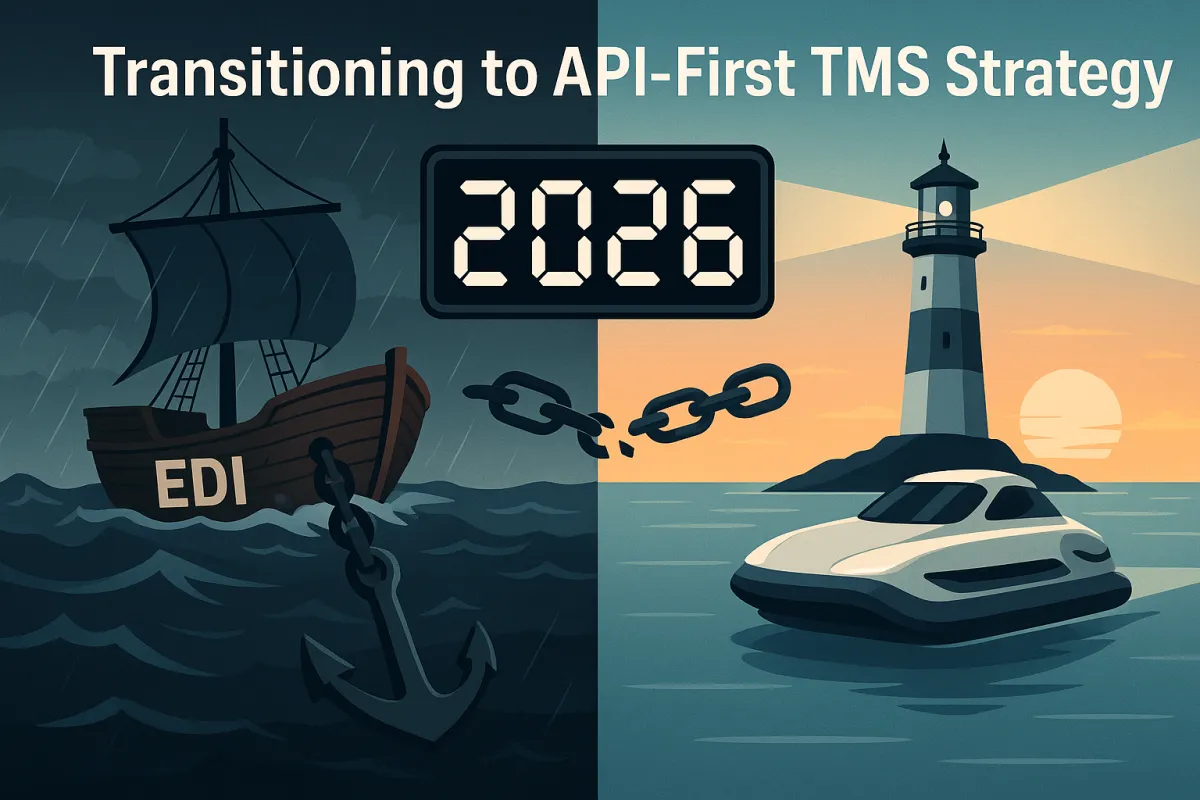
The 2026 regulatory landscape changes everything for European freight operations. Europe could lack over two million drivers by 2026, impacting half of all freight movements, while WiseTech Global's $2.1 billion acquisition of E2open and Descartes Systems Group's acquisition of 3GTMS for USD 115 million signal the most significant vendor consolidation wave in TMS market history. Your transport management software integration strategy faces a perfect storm: shrinking vendor options, expanding regulatory requirements, and basic API integrations cost €5,000-€15,000, while complex ERP connections exceed €50,000.
Most European manufacturers are underestimating what's coming. As of 9 July 2027, the eFTI Regulation will apply in full, giving you roughly two and a half years to get ready. Member State authorities must accept information shared electronically by operators via certified eFTI platforms. Meanwhile, your traditional EDI connections become liability anchors when regulatory requirements change monthly and carrier onboarding delays compound operational risks.
Here's your systematic approach to transitioning from legacy EDI to API-first TMS integrations before the regulatory deadlines eliminate your flexibility.
Why 2026 is the Critical Year for European TMS Integration Strategy
The vendor consolidation happening now directly impacts your future integration options. WiseTech's acquisition of E2open in 2025, Descartes' purchase of 3GTMS for $115 million in March 2025, and Körber's transformation of MercuryGate into Infios following their 2024 acquisition represent just the beginning of a fundamental market restructuring that's forcing European shippers to reconsider their entire TMS procurement strategy.
The regulatory pressure amplifies urgency. Start of application of the new version (v3) of ICS2 messages on 3 February 2026, and decommissioning of older version (v2) means your integration must handle messaging format updates automatically - not through manual system adjustments. Your EDI connections won't automatically adapt to these changes.
Traditional transport management systems struggle with European complexity. European manufacturers are discovering that a basic domestic shipper requires 10-15 integrations minimum, potentially totaling 1,000-1,500 hours of labor. For shippers with freight spend exceeding $250M annually, implementation can cost 2-3 times the subscription fee. The math gets worse when regulatory compliance becomes mandatory rather than optional.
European operations often see 15-25% improvements in transport administrative efficiency within the first year of successful TMS data integration. These improvements come from reduced manual data entry, automated compliance reporting, and enhanced visibility across transport networks. The ROI exists, but only if you avoid the implementation failures plaguing most European manufacturers.
API vs EDI in TMS: Understanding the Fundamental Differences
The technical differences between API and EDI integrations matter more than most procurement teams realize. EDI operates on batch processing principles that worked fine when regulatory updates happened annually. Modern API-first transportation management software provides real-time data synchronization that regulatory authorities increasingly expect.
Consider implementation complexity. Getting a TMS to talk cleanly to your ERP, your WMS, your carrier base, and your visibility tools is still harder than it should be, especially for mid-market shippers who do not have a dedicated IT team to manage EDI connections and API configurations. If onboarding takes six months and requires custom development before you can tender your first load, that is a problem.
Cost structures reveal hidden differences between API and EDI approaches. Reality shows that custom EDI mappings, API rate limits, and carrier-specific data formatting requirements cost €5,000-€50,000 per connection. The pricing seems similar initially, but APIs scale more efficiently across multiple carriers and regulatory requirements.
Error handling capabilities become critical when managing cross-border European operations. API-first integration strategies provide superior flexibility for European operations. Modern TMS platforms from providers like nShift, Transporeon, Alpega, and Cargoson prioritize RESTful APIs with standardized data formats.
The Hidden Costs of Staying with Legacy EDI Systems
Maintenance overhead grows exponentially as regulatory requirements expand. Technology evolution requires frequent upgrades and ERP system reconfigurations that internal teams cannot handle. Your IT department spends increasing time managing EDI connections that break when carriers update their systems or regulatory formats change.
Limited real-time visibility capabilities handicap competitive response. When drivers encounter border delays or weather disrupts planned routes, EDI systems can't provide the immediate updates that modern freight operations require. The operational impact compounds when managing time-sensitive European cross-border movements.
Regulatory compliance challenges multiply with legacy systems. QR code generation and machine-readable format requirements become mandatory by July 2027. Your TMS must generate these automatically for every shipment across all transport modes. Most EDI systems lack this capability and require substantial development work for compliance.
Building Your API-First TMS Evaluation Framework
Technical requirements assessment must address European-specific complexity first. Cross-border complexity demands more than basic rate comparison. Your TMS marketplace integration must handle country-specific carrier protocols, documentation requirements, and regulatory variations across EU member states.
Integration capability scoring should evaluate real-time synchronization requirements, not just data transfer volumes. Hub-and-spoke versus point-to-point integration strategies create fundamentally different operational outcomes. Hub-and-spoke architectures centralize data transformation and business logic, simplifying compliance management and reducing maintenance overhead. Point-to-point connections offer lower initial costs but create complex webs of dependencies that become expensive to maintain and modify.
Vendor selection criteria must prioritize API maturity over feature checklists. Solutions from providers including Cargoson, MercuryGate (now Infios), Descartes, nShift, and Manhattan Active demonstrate varying approaches to API-first architecture. Evaluate their European carrier connectivity, regulatory compliance roadmaps, and real-time data processing capabilities.
Essential API Features for European Cross-Border Operations
Multi-country carrier protocol support becomes non-negotiable when managing pan-European operations. Carrier connectivity protocols vary dramatically by country. French carriers might use different API standards than German logistics providers, while Scandinavian forwarders often require specialized integration approaches.
Real-time customs and documentation handling capabilities determine compliance success. The introduction of Electronic Freight Transport Information is a big step forward, driving the digital transformation of our transport systems and improving efficiency. It could save the EU transport and logistics sector up to €1 billion per year. Your API integrations must support this transition automatically.
Currency and language localization capabilities ensure operational efficiency across European markets. European shippers don't just need software that works—they need systems that handle 27 different VAT rates, multiple languages, varying carrier integration protocols, and soon, eFTI regulation compliance.
The Step-by-Step Migration Strategy from EDI to API
Risk assessment must acknowledge the complexity European operations introduce. Budget overruns hit 75% of European TMS implementations, and 66% of technology projects end in partial or total failure. A German automotive parts manufacturer discovered their €800,000 TMS implementation mistake the hard way. Six months into deployment, they realized their new system couldn't handle their complex carrier network across 12 European countries.
Parallel system approach reduces transition risks while maintaining operational continuity. Build phased implementation strategies that validate core functionality before adding complex integrations. Start with core functionality in Q2-Q3 2025, activate AI features in Q4 2025, and ensure eFTI compliance by Q1 2026.
Phased carrier onboarding methodology should prioritize high-volume routes and critical compliance requirements. Risk mitigation requires comprehensive testing across your entire carrier network. Test data flows with your largest carriers first, then expand to regional providers. Each integration point needs validation under different scenarios: cross-border shipments, multi-modal transport, exception handling, and compliance reporting.
Data migration protocols must account for European regulatory requirements and master data complexity. European operations span 27 different regulatory frameworks, each requiring specific data formats, reporting schedules, and compliance documentation. Your TMS needs to harmonize master data across these varying requirements while maintaining real-time synchronization capabilities.
Managing the Transition Period: Hybrid EDI-API Operations
Maintaining legacy connections during transition requires careful resource planning. Your IT team needs capacity to support both systems while gradually migrating carriers to API connections. Budget for temporary parallel operations that may extend longer than initial projections suggest.
Gradual carrier migration strategies should address compliance requirements first, then optimize for operational efficiency. Carriers supporting critical European corridors or essential regulatory data flows merit priority during API migration phases.
Performance monitoring during hybrid operations must track both technical metrics and business outcomes. Monitor API response times, data synchronization success rates, and error frequencies alongside operational measures like carrier onboarding speed, compliance reporting accuracy, and cost savings achievement.
Cost-Benefit Analysis: ROI Models for API-First TMS
Implementation cost breakdown must account for European-specific complexity multipliers. When it comes to TMS data integration specifically, the stakes climb even higher. Basic API integrations cost €5,000-€15,000, while complex ERP connections exceed €50,000. For shippers with annual freight under management exceeding €250M, implementation costs often run 2-3x the subscription fees.
Operational efficiency gains quantification should focus on measurable improvements. The math behind procurement automation gets compelling quickly. Load posting drops from 3 hours to 10 minutes. Rate comparison happens automatically instead of requiring 4-6 hours of phone calls. One German automotive supplier reduced tender cycle time from 72 hours to 8 hours through marketplace connectivity—roughly 89% time reduction.
Time-to-value calculations must incorporate regulatory compliance benefits. The introduction of Electronic Freight Transport Information could save the EU transport and logistics sector up to €1 billion per year. Companies implementing eFTI-compatible systems now gain operational advantages while competitors struggle with compliance deadlines.
Budget planning should anticipate regulatory-driven cost increases. Budget planning around these timelines requires understanding both direct compliance costs and indirect operational impacts. Plan for 15-20% budget increases in 2026-2027 if reactive, or 8-12% if proactive with proper contract protection.
Vendor Selection: Evaluating API-Ready TMS Platforms
Technical assessment criteria must prioritize European regulatory compliance readiness over generic functionality. Smart procurement teams are structuring their TMS evaluations around compliance readiness rather than traditional feature checklists. This means evaluating vendors like Cargoson, Manhattan Active TMS, Blue Yonder, and Oracle TM based on their demonstrated regulatory compliance capabilities, not just their routing algorithms or carrier connectivity. Vendors without robust compliance roadmaps will struggle to support your operations post-2026, regardless of their current feature set.
Regulatory compliance readiness assessment should examine actual implementation timelines rather than theoretical capabilities. The 8 critical regulatory milestones European shippers must navigate include: eFTI Implementation: As of January 2026. Performance Guarantee Structures: Build regulatory deadlines directly into your implementation timeline and penalty clauses. If a vendor can't deliver eFTI compliance by January 2026 or tachograph integration by July 2026, that's grounds for contract adjustment or termination.
European market-specific features evaluation must address cross-border operational requirements. These vendors typically provide faster eFTI implementation, better cross-border carrier connectivity, and deeper understanding of European compliance requirements. The fragmented nature of Europe has led to increased requests for TMS due to the ability to move freight between different modes, with the complexity of customs regulations after Brexit for freight moving within Europe. Regional vendors typically better address these European-specific challenges.
Integration ecosystem assessment should consider vendor stability during market consolidation. Global platforms like Oracle TM and SAP TM provide enterprise integration advantages and broader functional scope but may deprioritize European-specific features during consolidation activities. The choice depends on organizational priorities between regional optimization and global standardization.
Future-Proofing Your TMS Integration Strategy
Preparing for 2027 eFTI mandatory compliance requires action now, not later. As of 9 July 2027: The eFTI Regulation will apply in full. Member State authorities must accept information shared electronically by operators via certified eFTI platforms. Your timeline planning must align with this immovable deadline while building in sufficient testing and optimization phases.
Scalability considerations must address growing European operational complexity. The Europe Telematics Market size is estimated at 24.49 million units in 2025, and is expected to reach 49.77 million units by 2030, marking the most significant data explosion European shippers have faced. The number of active telematics devices in Europe is expected to reach 49.77 million by 2026 – growth that reflects not a trend but a structural shift.
Emerging API standards evaluation should focus on European regulatory requirements rather than global trends. eFTI represents the most significant European transport digitalization mandate since the introduction of electronic customs systems. As of January 2026, eFTI platforms can start preparing for operations, while July 9, 2027 brings full mandatory compliance.
The procurement window for optimal API-first TMS implementation is closing rapidly. Implementation timing becomes critical given regulatory deadlines and vendor consolidation pressures. The procurement window for securing optimal TMS platforms before vendor consolidation eliminates choices and capacity shortages worsen cost structures runs through Q1 2026.
Your API-first TMS integration strategy must balance immediate operational needs with regulatory compliance requirements and long-term scalability. European shippers who act decisively now secure competitive advantages while those who delay face reduced vendor choice, increased implementation costs, and potential compliance gaps as 2027 deadlines approach.