The European Shipper's Capacity Crisis Procurement Guide: How to Build TMS Selection Frameworks That Survive Vendor Consolidation and Freight Shortages Before 2026's Perfect Storm Eliminates Your Options


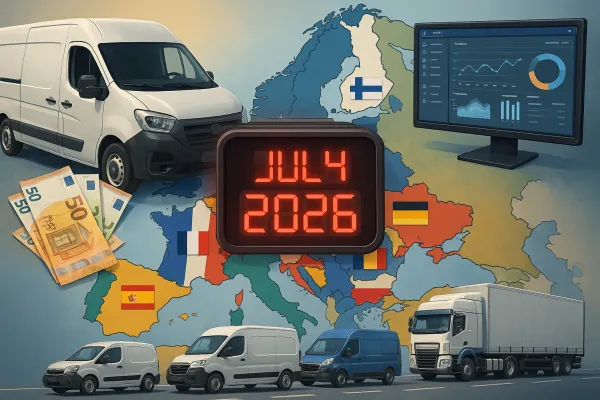
European shippers watching the Transport Management Systems market in 2026 face an unprecedented convergence of challenges. Europe's driver shortage projected to triple by 2026, impacting half of all freight movements while unfilled driver positions for heavy goods vehicles (HGVs) in Europe have surged to 426,000 in 2024. Meanwhile, WiseTech Global's $2.1 billion acquisition of E2open and Descartes Systems Group's acquisition of 3GTMS for USD 115 million in March 2025 signal the most significant vendor consolidation wave in TMS market history.
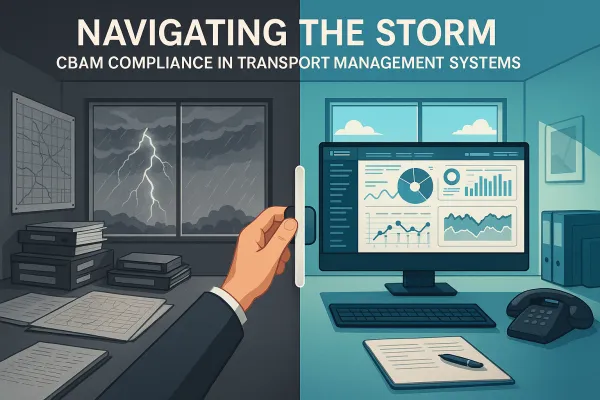
This perfect storm creates a narrow procurement window. Shippers must secure capacity-resistant TMS platforms before vendor options disappear and freight costs spiral further upward. Yet most procurement frameworks fail under these conditions because they weren't built to evaluate platforms during capacity crises or vendor consolidation periods.
The 2026 Perfect Storm: When Capacity Shortages Meet Vendor Consolidation
Europe's driver shortage is projected to triple by 2026 if no action is taken, creating substantial capacity constraints and upward pressure on wages and operational costs. This shortage multiplies operational complexity for European manufacturers already managing complex cross-border networks. Trucks transport 75% of Europe's freight by volume, and 85% of its perishable, high value and medical goods, making driver availability central to supply chain stability.
The vendor landscape transformation happening simultaneously compounds this challenge. The most significant TMS vendor consolidation wave in over a decade is reshaping European procurement decisions right now. The vendor landscape will look dramatically different by 2026. WiseTech Global's $2.1 billion acquisition of E2open is more than a headline—it's a directional shift for one of the industry's biggest technology players. With the addition of E2open's 500,000+ connected enterprises and its legacy platforms like INTTRA—responsible for around 25% of global ocean bookings.
Consider how this consolidation extends integration timelines. Product roadmap uncertainties are already surfacing. When two TMS platforms merge, customers inevitably face decisions about which system to standardize on, what features will be deprecated, and how long dual support will continue. European procurement teams who delay decisions risk finding their preferred vendors absorbed into larger platforms with different priorities and pricing structures.
Why Traditional TMS Procurement Frameworks Fail in Crisis Conditions
The procurement approach that worked in stable markets breaks under capacity shortage conditions. Traditional frameworks focus on feature comparisons and cost optimization without evaluating how platforms handle tight capacity markets. The 76% who struggle skip the planning, underestimate the complexity, and treat their TMS like a simple software purchase rather than a strategic transformation.
Hidden costs become more expensive during crisis conditions. Hidden costs in TMS procurement consistently add 25-30% more than initial estimates, turning what looked like smart investments into budget disasters. While procurement teams focus on feature checklists and license fees, the real financial impact lives in implementation complexity, carrier integration charges, and ongoing maintenance expenses that vendors rarely discuss upfront.
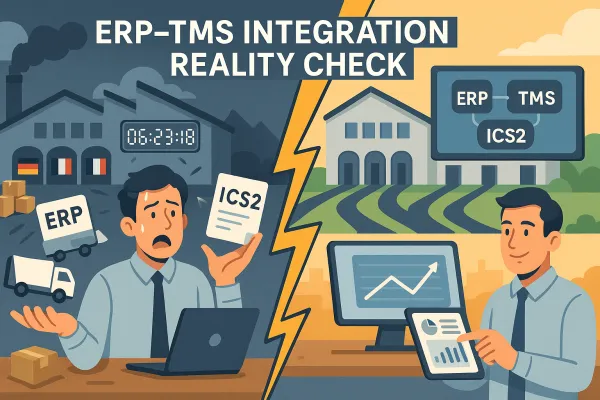
A German automotive manufacturer's experience illustrates these risks. A German automotive parts manufacturer discovered their €800,000 TMS implementation mistake the hard way. Six months into deployment, they found their European carriers couldn't integrate without costly custom development work - turning their "smart procurement decision" into a complete platform re-implementation.
The capacity shortage dimension adds new failure modes that traditional frameworks miss. Platforms optimized for stable carrier relationships struggle when shippers need rapid access to spot market capacity or backup carriers. Your procurement criteria must now include capacity shortage contingency planning as a core evaluation metric, not an edge case consideration.
The Capacity-Resistant TMS Procurement Framework
Building procurement frameworks that survive both vendor consolidation and capacity shortages requires evaluating platforms across five dimensions: carrier network resilience, spot market integration capabilities, implementation risk factors, consolidation protection measures, and total cost of ownership under volatile conditions.
Carrier network analysis becomes more complex during capacity shortages. Evaluate platforms based on their pre-built carrier connections rather than promised API availability. Many carriers aren't willing or able to create API connections, and even when they are, they'll charge integration costs to you. European shippers working with 20-30 regular carriers face substantial connectivity expenses that vendors rarely discuss during initial demos.
Compare actual carrier connectivity across platforms. Alpega connects to 80,000+ European transport professionals, MercuryGate offers broad North American coverage, and Cargoson focuses on European API/EDI connections. Cargoson builds true API/EDI connections with carriers, not just accounts in software or standardized EDI messages that carriers must implement themselves, while platforms like Transporeon require carriers to implement standard EDI interfaces themselves.
Spot market access capabilities separate capacity-resistant platforms from traditional contract-focused systems. When contracted carriers can't fulfill shipments, you need platforms that integrate with spot market networks like Uber Freight, nShift's broader network, or FreightPOP's multi-carrier connections. The question isn't whether your contracted carriers can handle normal volumes—it's whether your TMS can rapidly access alternatives when they can't.
Platform evaluation should include established players like E2open (now part of WiseTech), Descartes, Oracle TM, and SAP TM alongside European specialists like Alpega, Transporeon, and modern alternatives including Cargoson. Each offers different approaches to capacity shortage management and vendor consolidation risks.
Vendor Consolidation Risk Assessment Matrix
Mega-vendors offer comprehensive functionality but come with integration complexity and potential feature deprecation risks. European specialists provide market-specific knowledge but may lack global scaling capabilities. European-native solutions offer rapid deployment and local expertise but may have limited feature depth compared to enterprise platforms.
Assessment criteria must address post-acquisition vendor stability. When evaluating consolidated vendors, ask: How will product roadmaps merge? What's the timeline for platform standardization? Which features face deprecation risk? The scale of this deal nearly doubles WiseTech's revenue base and customer reach. But with that comes complexity. For a company used to bolt-on acquisitions, this is a step change.
Contract protection becomes essential during consolidation periods. Specify that acquisition-driven cost restructuring cannot increase your fees beyond agreed annual escalation limits. Include vendor change clauses that allow contract termination if your assigned vendor gets acquired. Maintain qualified backup vendors throughout your contract period to ensure rapid transitions remain possible.
Due diligence questions for post-acquisition vendor stability include: What's the integration timeline for merged platforms? Will customer support teams change? How will pricing structures evolve? Which geographic markets take priority for development resources? European-focused capabilities often face reduced priority in global consolidation scenarios.
Hidden Cost Framework for Capacity Crisis Procurement
TMS implementation costs range from €30,000 to €900,000, depending on complexity and vendor approach. But here's what catches European shippers off-guard: recurring costs spread over 10+ years while capacity shortage scenarios create additional cost pressures that standard budgets miss.
Carrier integration represents the largest hidden cost area during capacity crises. Carrier integration costs blindside most procurement teams because vendors present API availability as "included" functionality. While many TMS solutions offer published APIs, carriers are often unwilling or unable to create connections themselves, and even when they can, they typically charge integration costs back to the shipper.
Basic API integrations cost €5,000-€15,000, while complex ERP connections exceed €50,000. A basic domestic shipper requires 10-15 integrations minimum, potentially totaling 1,000-1,500 hours of labor. For shippers with annual freight under management exceeding €250M, implementation costs often run 2-3x the subscription fees.
Capacity shortage contingency budgeting requires modeling additional scenarios. Budget for emergency carrier onboarding fees, spot rate premiums when contracted carriers can't deliver, and expedited integration costs for backup providers. Plan for 15-20% budget increases in 2026-2027 if reactive, or 8-12% if proactive with proper contract protection.
Third-party application integration adds another cost layer. Shippers pay additional fees to integrate with third-party applications, such as SMC license or PC Miler license fees. These costs multiply during capacity shortages when you need rapid access to additional routing, rating, or carrier qualification tools.
TCO Modeling for Volatile Market Conditions
Total cost of ownership models must account for capacity shortage scenarios and vendor consolidation risks. The framework includes base licensing (typically 20-30% of total costs), implementation expenses (25-40%), carrier integration fees (15-25%), ongoing support and maintenance (10-15%), and capacity shortage contingencies (5-10% additional buffer).
Licensed TMS models include annual maintenance charges ranging from 15-20% of license costs, while traditional software maintenance fees often run around 20% of the license fee annually for support and minor upgrades. Cloud platforms shift these to operational expenses but may include usage-based charges that escalate during high-volume periods or capacity shortages.
Multi-year contract structures provide protection against rate volatility but must include adjustment mechanisms for capacity shortage scenarios. Don't just lock in flat rates—build in predictable adjustment formulas tied to specific market indices rather than general cost inflation. Include volume band pricing that provides rate protection at different shipment levels.
Compare TCO across different vendor categories. Consider how MercuryGate, Descartes, and Manhattan Active structure their enterprise offerings versus streamlined alternatives. Manhattan's total cost of ownership ranks as relatively high, while cloud-native solutions like Cargoson focus on reducing implementation complexity through pre-built integrations and European carrier connectivity.
Implementation Strategies for Crisis-Resistant TMS Deployment
Successful implementations during capacity shortage periods require phased deployment strategies that minimize risk while maximizing speed to value. Successful cloud TMS migrations follow a proven pattern. Phase 1: Assessment and Planning (4-6 weeks) Document your current transport processes, carrier relationships, and integration requirements.
Partial go-live strategies reduce implementation risk. Launch in your most stable markets first, then expand to complex regions once the platform proves reliable. For European operations, this might mean starting with domestic German or Dutch operations before expanding to cross-border Eastern European routes where capacity constraints create more operational complexity.
Parallel processing during implementation provides backup capacity. Maintain existing systems during initial TMS deployment phases. This approach costs more short-term but provides insurance against capacity shortages during the migration period. One Dutch food distributor discovered they needed this approach when their initial implementation timeline conflicted with peak season capacity constraints.
Capacity shortage scenario testing should occur during implementation phases. Build test scenarios that model carrier unavailability, spot market access requirements, and emergency routing needs. Your implementation partner should demonstrate platform performance under these conditions, not just normal operating scenarios.
Consider vendors' European implementation experience. Platforms like Descartes and 3GTMS (now combined), Blue Yonder, ShippyPro, and Cargoson offer different approaches to European deployment complexity. Modern European-native platforms often provide faster implementation timelines because they're built specifically for cross-border European operations.
Regulatory Compliance as Procurement Leverage
European regulatory requirements create procurement leverage that savvy buyers can exploit. By 9 July 2027, the eFTI Regulation will apply in full. As of January 2026, eFTI platforms and service providers can start preparing for operations, while on July 9, 2027, Member States must accept digital freight transport data.
Use regulatory timelines as vendor negotiation points. Vendors need reference customers for their eFTI and Smart Tachograph integrations. Position your organization as an early adopter in exchange for better base terms, implementation support, and protection against compliance-related cost increases.
Any TMS contract signed now should include eFTI and Smart Tachograph compliance as baseline requirements, not optional upgrades. Vendors confident in their regulatory readiness will include compliance costs in base pricing. Those charging extra reveal either implementation uncertainty or opportunistic pricing strategies.
Regulatory compliance capabilities provide protection against capacity shortage impacts. Platforms with built-in eFTI compliance reduce administrative overhead during peak capacity periods when manual processes become bottlenecks. This operational efficiency translates to competitive advantage when capacity constraints limit operational flexibility.
Actionable Next Steps: Your 90-Day Procurement Sprint
The procurement window for securing optimal TMS platforms before vendor consolidation eliminates choices and capacity shortages worsen cost structures runs through Q1 2026. The market will enter its traditional year-end slowdown, and up to 2026, the market will enter its traditional year-end slowdown. This gives you approximately 3-4 months of leverage before capacity tightens again.
Immediate vendor consolidation risk assessment should begin with your current TMS provider. Is your vendor an acquisition target? Are they acquiring others? How will this affect your contract terms, support quality, and platform roadmap? Build contingency plans that include backup vendor qualification and contract termination scenarios.
Capacity shortage scenario planning within TMS evaluation requires modeling specific operational disruptions. Document your critical carrier relationships, backup provider options, and spot market access requirements. Test prospective TMS platforms against these scenarios during vendor demonstrations, not after implementation begins.
Contract terms negotiation focus should emphasize protection against both consolidation risks and capacity shortage cost impacts. Include vendor change clauses, regulatory compliance guarantees, and capacity shortage contingency pricing. Specify implementation timelines that account for capacity constraints during peak seasons.
Your procurement team should evaluate the full vendor landscape now while options remain available. This includes established platforms like MercuryGate, Descartes, E2open, Manhattan Active, Oracle TM, and SAP TM alongside European specialists like Alpega, nShift, Transporeon, and modern alternatives including Cargoson that focus specifically on European cross-border operations.
The convergence of capacity shortages and vendor consolidation creates urgency, but rushed decisions amplify hidden costs and implementation risks. European shippers who act decisively within the next 90 days—with proper frameworks that account for both capacity and consolidation scenarios—position themselves to navigate 2026's perfect storm successfully. Those who delay risk joining the statistics of failed implementations and budget overruns that plague reactive procurement strategies.