The European Shipper's Cloud TMS Migration Guide: How to Navigate 2025's Shift from On-Premise Without Joining the 76% Failure Rate

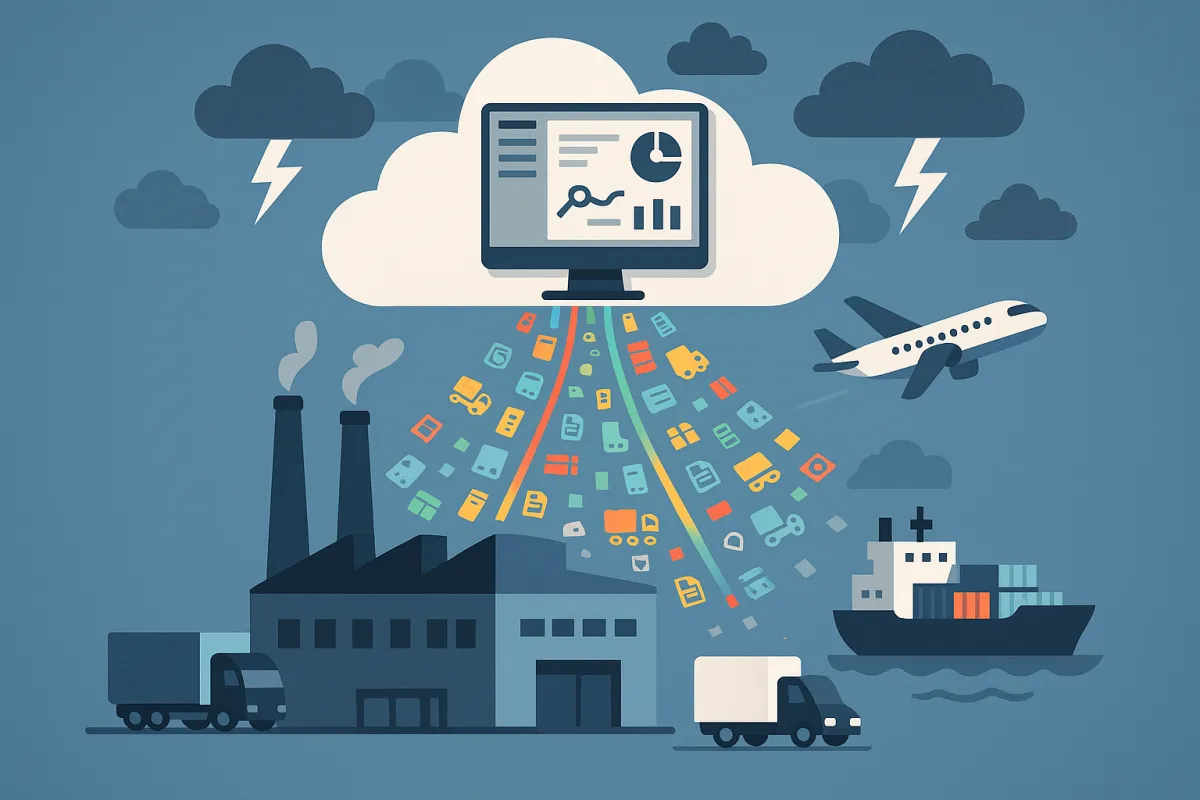
When European manufacturers launched their cloud TMS migrations this year, 63% chose cloud deployment over on-premise solutions for the first time. Yet within six months, a disturbing pattern emerged. A German automotive parts manufacturer just learned what a €800,000 TMS implementation mistake looks like. They chose a North American-focused platform six months before discovering their primary carriers couldn't integrate without costly custom development.
Their story isn't unique. This year's surge in cloud TMS adoption represents a market growing from USD 2.27 billion in 2025 to an expected USD 3.47 billion by 2030, but it's also exposing why three-quarters of these digital transformation projects fail to meet their objectives.
The 2025 Cloud Migration Reality: Why European TMS Buyers Can't Ignore This Shift
The numbers driving this transformation are impossible to ignore. Cloud deployment held 63% of transportation management system market share in 2024 and is advancing at 14.92% CAGR through 2030, with the TMS market size for SME-focused SaaS expected to double between 2025 and 2030. But the catalyst isn't just cost savings.
European regulatory compliance is forcing the issue. As of January 2025, Member States may start developing the IT systems necessary to allow authorities to check eFTI compliant transport information, with the eFTI Regulation applying in full by July 2027. The window for preparation is shrinking fast.
Meanwhile, EU ETS shipping costs for 2025 hit European shippers harder than most expected, with coverage jumping to 70% of emissions from just 40% in 2024. Carriers warn their ETS surcharges could nearly double under the updated regulations. Modern TMS platforms that integrate carbon tracking aren't just nice-to-have anymore.
The acceleration stems from enterprises replacing capital-heavy on-premises tools with scalable cloud platforms that deliver rapid deployment, lower total cost of ownership, and real-time operational visibility. But "rapid deployment" has proven to be a double-edged promise.
The Hidden Cost Crisis: Why 25-30% Budget Overruns Kill Cloud Migration Projects
Gartner predicts that through 2024, "60% of infrastructure and operations leaders will encounter public cloud cost overruns that negatively impact their on-premises budgets". For TMS migrations specifically, the damage runs deeper.
Implementation costs for European companies range from €30,000 for basic cloud TMS setups to €900,000+ for complex enterprise deployments. But scope expansion typically adds 30–50% to the initial migration budget, with new architectural components introducing ongoing costs that weren't in the original calculations.
The hidden costs that kill budgets include:
- Application refactoring proves more complex and expensive than initially anticipated, with legacy applications frequently having undocumented dependencies and custom configurations that require extensive analysis and modification for cloud compatibility
- Overprovisioning represents a common hidden cost, with organizations often provisioning more resources than necessary due to uncertainty about actual requirements or fear of performance issues
- Hidden costs such as data transfer fees, staff training, security and compliance costs, and reorganizing teams while adopting agile DevOps practices, especially challenging for businesses using older technology
Data migration alone crushes unprepared budgets. Moving years of shipment history, carrier contracts, and routing data to cloud platforms can cost €50,000-€200,000 depending on volume and complexity. One logistics director at a French textile distributor told me their data migration took three times longer than projected because their legacy system stored addresses in non-standard formats.
The 5-Year TCO Framework European CFOs Actually Approve
Smart European CFOs now demand five-year TCO calculations that include the real costs:
- Licensing & Subscriptions: 20-30% of total cost (€200-400 per user annually for enterprise cloud TMS)
- Implementation & Integration: 25-40% of total cost (€100,000-€500,000 for complex deployments)
- Data Migration & Training: 15-25% of total cost (€50,000-€200,000 depending on complexity)
- Ongoing Management & Support: 10-15% of total cost (€20,000-€80,000 annually)
For a company with €2 million annual transport spend, a properly scoped cloud TMS migration typically costs €150,000-€300,000 over five years. But poor planning can double that figure.
Implementation Failure Patterns: The 76% That Don't Make It
Why do so many cloud TMS projects fail to deliver their promised benefits? After analyzing dozens of European implementations, three patterns emerge consistently.
Underestimating Integration Complexity: Cloud environments require different security approaches and tools compared to traditional on-premises infrastructure, with identity and access management solutions, encryption services, and security monitoring tools adding ongoing costs not fully considered in initial estimates.
European companies typically need to integrate their TMS with existing ERP systems (SAP, Oracle), WMS platforms, and carrier APIs. A pharmaceutical distributor in the Netherlands spent an extra €180,000 because their chosen TMS couldn't handle their complex lot tracking requirements without custom development.
Ignoring Growth Trajectory: Companies often size their cloud TMS for current volumes, then get hit with usage-based pricing as they grow. One packaging manufacturer saw their monthly TMS costs jump from €2,500 to €7,800 after acquiring two competitors, because their pricing model charged per shipment.
Misaligning with Business Model: Choosing the wrong deployment approach kills ROI. Companies with highly standardized processes can often succeed with out-of-the-box cloud solutions. But those with complex carrier contracts or specialized shipping requirements need platforms that support extensive customization without breaking the bank.
Leading vendors like Manhattan Active, E2open, and Cargoson have developed deployment methodologies specifically designed to avoid these pitfalls, but success depends on honest assessment of your requirements upfront.
The European Advantage: Compliance-Ready Cloud Platforms
European shippers have one significant advantage in their cloud TMS migration: regulatory requirements are driving platform innovation in ways that benefit everyone.
Leading TMS providers like MercuryGate, Descartes, and Cargoson are already preparing eFTI-compatible solutions. The key is choosing platforms that combine regulatory compliance with transport optimization capabilities.
The regulation mandates that authorities in all EU Member States will be required to accept electronic data when shared by businesses via eFTI-compliant platforms. This isn't just about paperwork reduction. Modern eFTI-ready platforms automatically generate the required machine-readable QR codes and maintain audit trails that satisfy regulatory requirements.
Carbon emissions tracking represents another European compliance advantage. Maritime operators will surrender allowances under the EU ETS for the first time in 2025, and the three-year phase-in period increases scope from 40% of emissions in 2024 to 70% in 2025 and 100% in 2026.
Cloud TMS platforms built for European markets increasingly include integrated carbon calculation engines that automatically track emissions by route, mode, and carrier. This isn't just compliance theater—it's becoming a competitive requirement as sustainability-focused procurement teams demand detailed carbon reporting.
The Migration Execution Playbook: Avoiding the Common Pitfalls
Successful cloud TMS migrations follow a proven pattern. Organizations that fail to recognize the complexity of deploying a robust system will experience delays and budget overruns and may not achieve their expected benefits.
Phase 1: Assessment and Planning (4-6 weeks)
Document your current transport processes, carrier relationships, and integration requirements. Many companies skip this step and pay for it later. One Dutch food distributor discovered they had 847 unique carrier rate agreements only after starting their TMS implementation.
Phase 2: Platform Selection and Configuration (6-8 weeks)
Focus on platforms that support your specific European requirements. SMEs gain access to modular, subscription-priced solutions that lower IT overhead and can reduce logistics costs by up to 30%, with ELD and greenhouse-gas rules requiring detailed data capture, prompting fleets to integrate telematics with TMS dashboards for automated compliance and optimization.
Phase 3: Data Migration and Testing (4-8 weeks)
Plan for the unexpected. Legacy data rarely migrates cleanly, and testing with real carrier connections takes longer than anyone expects. Build buffer time into your project schedule.
Phase 4: Go-Live and Optimization (2-4 weeks)
Start with a subset of your operations, then expand. This reduces risk and allows your team to learn the new system without disrupting critical shipments.
The total timeline typically ranges from 16-26 weeks, but companies that rush through the assessment phase often end up restarting the entire project six months later.
Post-Migration Optimization: Turning Cloud Investment Into Measurable ROI
The real payoff from cloud TMS migration comes after go-live, but it requires active optimization. SME growth at 15% CAGR as vendors release out-of-the-box workflows and freemium tiers that lower switching barriers, with offerings that compress implementation to weeks and templated dashboards that surface actionable KPIs without custom coding.
Typical ROI metrics European companies achieve within 12-18 months:
- Route Optimization: 15-25% reduction in kilometers driven
- Carrier Rate Management: 8-15% reduction in transport costs through better rate comparison and tendering
- Administrative Efficiency: 30-50% reduction in shipment processing time
- Visibility & Exception Management: 60-80% faster resolution of shipment issues
One packaging manufacturer in Germany reported €280,000 in annual benefits after a €200,000 cloud TMS implementation. Their biggest gains came from automated carrier selection and real-time shipment tracking that eliminated most customer service calls about delivery status.
The key is treating your cloud TMS as an evolving platform, not a finished product. Companies that continuously optimize their configurations, add new integrations, and train their teams on advanced features consistently outperform those that deploy once and forget.
For European shippers facing the 2025 cloud migration wave, the choice isn't whether to migrate—it's whether to do it right. The 24% who succeed follow proven methodologies, plan for hidden costs, and choose platforms built for European compliance requirements. The 76% who struggle skip the planning, underestimate the complexity, and treat their TMS like a simple software purchase rather than a strategic transformation.
Your move to the cloud doesn't have to join the failure statistics. Start with honest assessment, budget for reality, and choose partners who understand European transport operations. The regulatory deadlines are approaching whether you're ready or not.