The European Shipper's Digital Freight Marketplace Integration Guide: How TMS Platforms with Built-In Carrier Marketplaces Can Cut Procurement Time by 60% While Expanding Your Network to 300+ Qualified Providers

Your procurement team spends €800,000 annually negotiating with the same 30 carriers while qualified alternatives operate just one API call away. Modern transport tender management through TMS platforms can reduce procurement cycle times by 60% while delivering measurable cost savings, but most European shippers miss the bigger opportunity: marketplace integration that provides instant access to pre-qualified carrier networks spanning hundreds of providers.
The integration of digital freight marketplace connectivity within TMS platforms represents more than automation. Connected platforms now reach 80,000+ transport professionals across Europe, transforming procurement from a periodic negotiation exercise into dynamic capacity sourcing. This shift becomes particularly relevant as industry surveys showed over 426,000 unfilled truck driver positions across Europe, making carrier diversity essential for reliability.
The Procurement Time Collapse: From Weeks to Hours
Traditional transport tender processes consume resources that most companies underestimate. A typical annual transport tender for a mid-sized European manufacturer involves 3-4 weeks of preparation, managing responses from 15-25 carriers, and another 2-3 weeks analyzing proposals. Your procurement team spends roughly 240 hours on a single tender event.
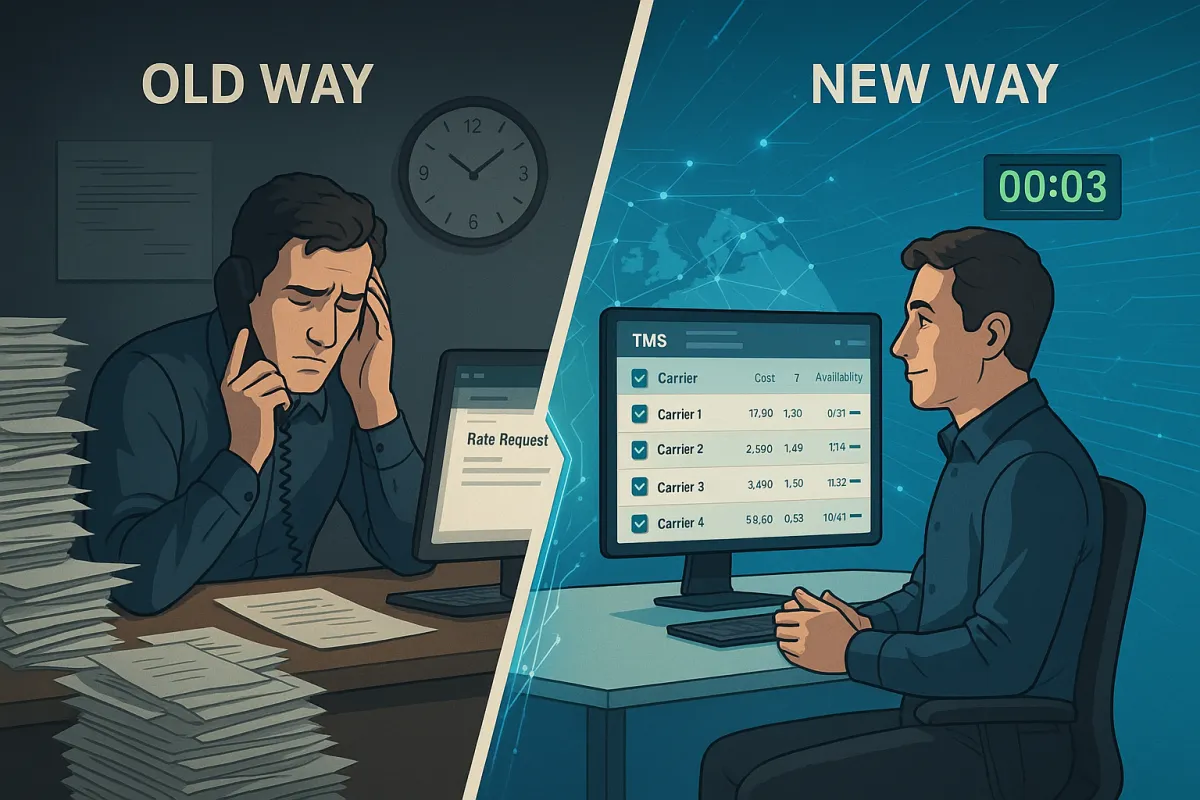
Direct system-to-system links replace phone and email rate requests, shrinking procurement cycles from days to seconds and letting shippers lock capacity before price swings. The time savings translate directly to market responsiveness. When European road freight rates fell 2.3 points in Q1 2025 for contract rates, companies with marketplace-integrated TMS platforms could capture these opportunities immediately rather than waiting months for their next tender cycle.
The access expansion proves equally significant. A German automotive parts supplier discovered they were missing 40% of potential carrier partners simply because their tender documentation was too cumbersome. Digital freight marketplace integration eliminates these barriers by standardizing request formats and automating carrier qualification processes.
European Marketplace Landscape: Understanding Your Options
The European freight marketplace ecosystem has matured significantly, offering shippers multiple integration pathways depending on their operational requirements and geographic coverage needs.
Alpega TMS connects to 80,000+ transport professionals across Europe and in 2025, they launched Alpega MultiParcel which also connects to over 1,000 parcel carriers. The platform provides both contract and spot freight capabilities with particular strength in reusable packaging management for manufacturing and chemicals sectors.
Transporeon offers marketplace connectivity through its freight sourcing hub, focusing on streamlining spot procurement with AI and behavioral science while fully automating road transport sourcing within a trusted network of carriers and partners. Their approach emphasizes strategic tender integration alongside tactical procurement needs.
Upply Marketplace operates in 14 European countries: France, Belgium, Germany, Spain, Italy, Netherlands, Luxembourg, Monaco, Portugal, Poland, Romania, Czech Republic, Austria and Sweden. The platform supports API integration to automate the publication and tracking of batches, connecting to existing digital environments.
Cargoson provides API-first integration capabilities designed specifically for manufacturing and wholesale companies, focusing on shipper-side optimization rather than marketplace revenue models. Their approach prioritizes integration flexibility and transparent pricing without transaction-based fees.
Integration Architecture: Native vs. API Connectivity
TMS vendors approach marketplace integration through two primary models: native marketplace features built into the platform or API connectivity to external marketplaces. The choice significantly impacts your operational flexibility and vendor dependency.
Native integration offers seamless user experience but creates platform lock-in. While carriers can easily join platforms through their portals, requesting completely new carrier API/EDI integrations becomes more complex and costly, with vendors typically not building custom carrier integrations themselves.
API-first approaches provide greater flexibility for multi-marketplace strategies. API-first architecture requirements protect against platform changes by ensuring your integrations don't depend on proprietary connections that may be deprecated during vendor consolidations. Specify open API standards and require documentation that enables third-party integration development.
Strategic Benefits: Beyond Rate Comparison
Marketplace integration delivers advantages that extend beyond immediate cost savings. Early adopters report 10-15% additional savings beyond basic automation benefits, but the operational improvements often prove more valuable than pure freight cost reduction.
Real-time capacity access becomes critical during market disruptions. Through marketplace partnerships, shippers gain direct access to extensive carrier networks while maintaining visibility into carrier details and performance. This eliminates the need to set up new carriers, saves time, and streamlines operations.
Digital freight forwarding market platforms that aggregate live capacity and automate tender acceptance show 17% higher loaded-mile revenue for participating carriers. This creates a positive network effect where quality carriers maintain active participation, improving shipper access to reliable capacity.
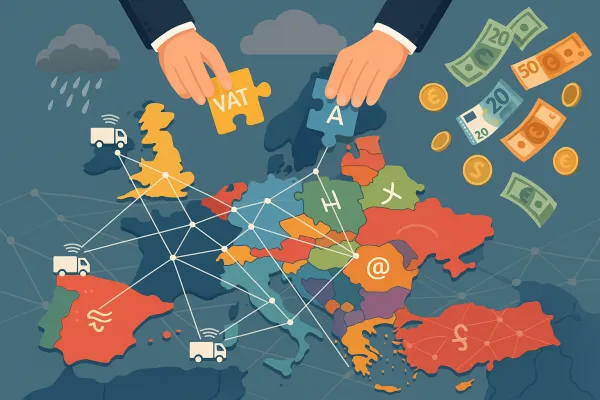
For European operations specifically, marketplace integration addresses cross-border complexity that traditional carrier networks struggle to manage efficiently. Coverage spans 29 European countries with both national and international routes, including continental Europe markets like Belgium, Netherlands, France, and Germany, as well as the UK and Poland.
Regulatory Compliance Automation
European marketplace platforms increasingly build compliance capabilities directly into their tendering processes. As of January 2025, Member States may start developing IT systems necessary to allow authorities to check eFTI compliant transport information, with full eFTI Regulation application beginning July 9, 2027. The introduction of Electronic Freight Transport Information could save the EU transport and logistics sector up to €1 billion per year.
Marketplace platforms investing in eFTI readiness provide competitive advantages for shippers preparing for these regulatory changes. For TMS selection, this means prioritizing platforms that can handle secure, certified IT platforms that integrate with existing data management systems and share data selectively with authorized partners through unique access links in machine-readable formats.
Implementation Strategy: Avoiding Common Pitfalls
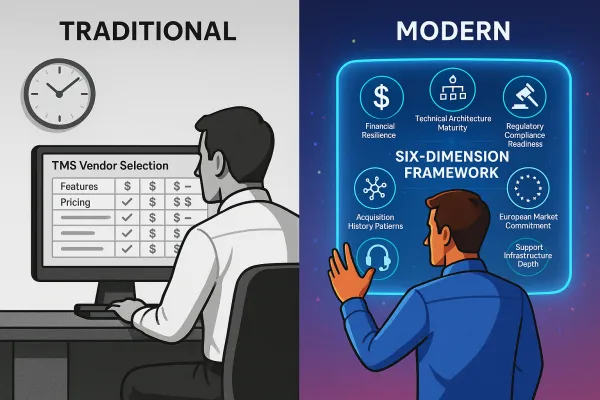
Successful marketplace integration requires careful platform selection and phased deployment approaches. A mid-sized German automotive parts manufacturer thought their TMS implementation was going smoothly. Six months into implementation, €800,000 spent, they realized their new system couldn't handle their complex carrier network across 12 countries.
Start with carrier network quality assessment. Not all marketplace connections provide equal value. Platforms offering over 70,000 loads per month with vetted operators who assist in subcontracting freight exchange work provide higher reliability than unqualified aggregators.
The most successful migrations follow a phased approach: pilot with one major lane, measure results carefully, then expand systematically. This methodology allows you to validate marketplace value before committing to full-scale integration.
ERP Integration Requirements
Marketplace integration success depends heavily on underlying data quality and system connectivity. Many interfaces between TMS and ERP systems require custom-developed transformations and processing, and marketplace APIs add another integration layer that must be managed carefully.
The Europe ERP Software Market size was valued at USD 30.82 billion in 2024 and is projected to grow to USD 36.35 billion by 2025. Despite this massive investment, the integration gap between TMS and legacy ERP systems continues to prevent manufacturers from capturing the full value of their digital transformation initiatives.
Test marketplace API performance under realistic data volumes before deployment. Data quality issues between your TMS and existing systems can undermine the entire process. Test integrations thoroughly with actual historical data before full deployment.
Risk Management: Avoiding Vendor Lock-In
The European TMS market consolidation creates new risks for marketplace-dependent strategies. WiseTech Global's $2.1 billion acquisition of E2open has sent shockwaves through the European transportation management systems market, marking the most significant consolidation move in recent TMS history. Descartes Systems Group's $115 million purchase of 3GTMS in March 2025 adds another major player.
Companies undergoing integration often experience 12-18 months of reduced innovation while they harmonize platforms and teams. Your marketplace strategy must account for these integration periods and potential service disruptions.
Multi-marketplace strategies provide insurance against individual platform risks. Multi-vendor strategies can provide insurance against individual vendor risks, though they require more complex integration management. Consider core TMS functionality from your primary vendor with specialized modules from best-of-breed providers that integrate via APIs.
Cost Structure Evaluation
Marketplace pricing models vary significantly across platforms and can impact your total cost of ownership. Transaction-based pricing with options for shipper-pay or carrier-pay models typically ranges from €500-€5,000/month depending on shipment volume.
Revenue-sharing arrangements often hide true costs. Some platforms charge carriers commission fees that get passed through to shippers via higher rates. Evaluate pricing transparency and total cost impact rather than focusing solely on platform subscription fees.
Cloud TMS pricing ranges from $1.00 to $4.00 per freight load booked in the system, with costs based on variable pricing per load or annual subscriptions reaching tens of thousands of dollars. For many European shippers, this translates to predictable monthly costs that scale with business growth.
Future-Proofing Your Marketplace Strategy
The intersection of regulatory requirements and technological advancement creates specific considerations for European shippers planning marketplace integration strategies.
By September 2025: The Commission plans to adopt the remaining eFTI implementing specifications. These will provide detailed functional and technical requirements for the IT systems and services to be used by businesses and the rules for their certification.
AI-driven procurement features are emerging across major platforms. AI-driven procurement capabilities analyze historical performance, predict market trends, and recommend optimal tender timing. Platforms investing in these capabilities provide competitive advantages for strategic procurement planning.
Sustainability considerations increasingly influence carrier selection criteria. European regulations around emissions reporting and carbon footprints require more sophisticated evaluation methods. Marketplace platforms integrating carbon tracking and sustainability scoring provide tools for regulatory compliance and ESG reporting requirements.
Position your marketplace strategy to capture both immediate procurement efficiencies and long-term regulatory readiness. The platforms building eFTI compliance, carbon tracking, and AI-driven optimization features today will provide the most value as European transport regulations continue evolving through 2027 and beyond.