The European Shipper's Multimodal TMS Crisis Management Guide: How to Build Corridor-Resilient Implementation Strategies That Thrive Despite TEN-T Delays and Transform Infrastructure Gaps Into Competitive Advantages

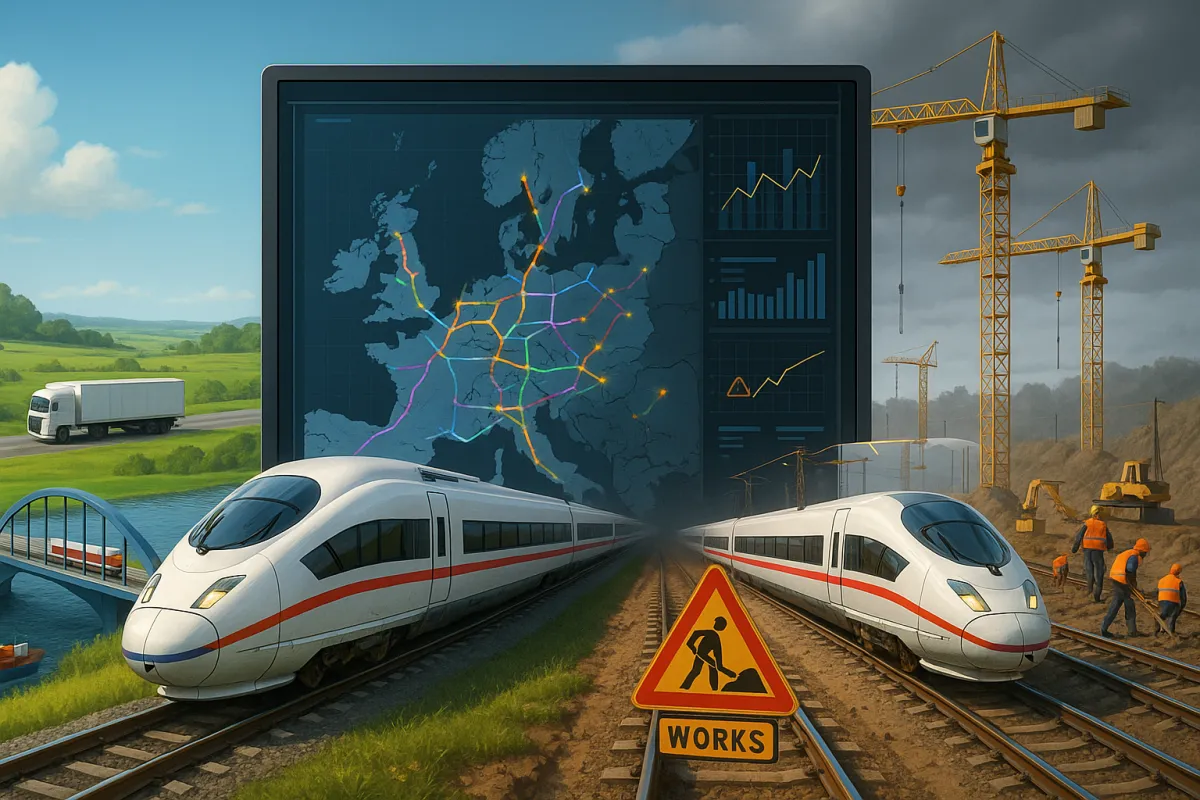
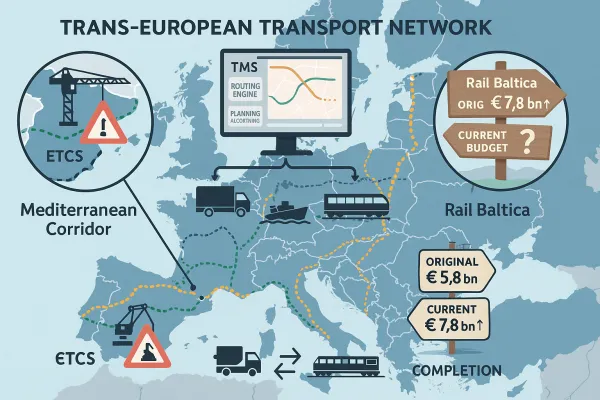
The €515 billion Trans-European Transport Network faces delays that would make Deutsche Bahn punctuality statistics look optimistic. European Court of Auditors confirm the 2030 deadline will "undoubtedly be missed", with flagship cross-border rail projects facing an average delay of 17 years. Rail Baltica costs have exploded from €5.8 billion to €23.8 billion - a 291% increase, while Spain has invested over €7 billion since 2018 to implement ETCS on the Mediterranean Corridor, expecting completion by 2030. Meanwhile, France postpones its crucial Montpellier-Perpignan ETCS implementation until 2042. This 12-year gap creates operational nightmares that traditional multimodal TMS implementation strategies simply cannot handle.
For European shippers planning TMS implementation strategy, this represents more than an infrastructure headache - it's a fundamental challenge to multimodal transport management that requires immediate strategic response.
The €515 Billion Infrastructure Reality Check: Why Traditional Multimodal TMS Planning Fails in Europe's Fragmented Landscape
For multimodal operations dependent on north-south European connectivity, this uncertainty demands contingency-first TMS architecture from day one. Traditional TMS implementation assumes infrastructure operates as designed. European corridor delays shatter this assumption.
Consider the operational nightmare facing European manufacturers today. The ERTMS deployment map for 2030 shows Spain's corridor fully operational with ETCS while the French section remains incomplete. Each incomplete corridor segment creates unique documentation and operational requirements. The Spain-France rail gap forces freight to navigate different signaling systems, documentation protocols, and potentially different gauge requirements.
This isn't theoretical complexity. A German automotive parts manufacturer just discovered what happens when TMS implementation ignores corridor fragmentation. After investing €800,000 in a TMS platform, they realized their primary European carriers couldn't integrate without costly custom development work - forcing a complete re-implementation that's still ongoing.
The Real Cost of TEN-T Delays on Transport Operations
Terminal capacity constraints during construction periods add another layer of complexity. Construction work reduces available slots, increases dwell times, and creates unpredictable delays that ripple through entire transport networks.
Budget impact analysis reveals the hidden costs. When the Lyon-Turin rail link opening is now forecast for 2033, rather than the original goal of 2015 or revised one of 2030, European shippers dependent on transalpine freight routes face operational gaps lasting over a decade. The Basque Y railway line, which was supposed to be operational by 2010 according to its initial timeline and by 2023 according to the revised plan from 2020, is now expected to be ready by 2030 at the very earliest.
These delays don't just affect rail capacity - they cascade through entire networks. Rail delays don't eliminate transport demand - they shift it to roads already operating near capacity. Your TMS needs road transport backup systems that can handle sudden volume increases without compromising service levels.
Building TMS Architecture for Infrastructure Uncertainty: The Contingency-First Approach
Your TMS implementation strategy must account for operational gaps, varying deployment timelines, and infrastructure that exists in multiple completion phases simultaneously. This demands a fundamental shift from optimization-focused to resilience-focused TMS architecture.
Leading platforms now approach contingency planning differently. Blue Yonder integrates machine learning to predict corridor disruptions based on historical patterns and real-time data feeds. FreightPOP focuses on mode flexibility, automatically switching between rail, road, and short-sea options based on performance criteria. European-focused solutions like Cargoson, alongside nShift emphasize European-specific routing intelligence that understands TEN-T construction schedules and their operational implications.
Modern platforms like Manhattan Active, E2open, and emerging solutions such as Cargoson build these capacity fluctuations into their planning algorithms, but legacy systems often struggle with real-time capacity adjustments.
Cross-Border Handover Challenges and System Requirements
The ERTMS deployment creates unique documentation and operational requirements that most TMS platforms weren't designed to handle. Your TMS must handle these transitions seamlessly while maintaining compliance with varying national requirements.
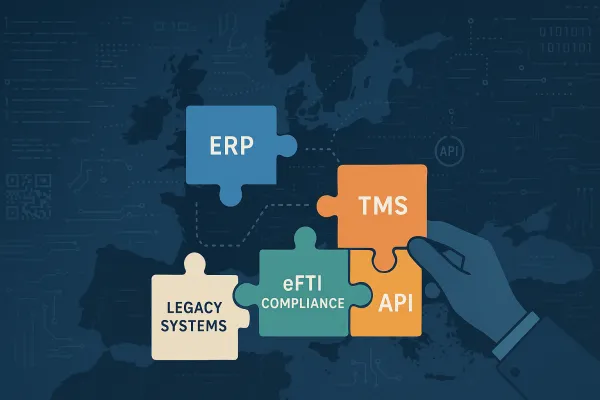
Technical integration requirements become exponentially more complex when infrastructure operates in multiple completion phases. Your TMS needs native support for:
- Dynamic signaling system integration across corridor segments
- Real-time documentation switching based on infrastructure completion status
- Automatic gauge compatibility verification for cross-border movements
- Capacity booking systems that account for construction-period slot reductions
The Multimodal Integration Technology Landscape: What Actually Works in Fragmented Europe
ICT Logistics' intermodal Transport Management System (TMS) calculates the optimal route for containers and trailers based on lead time, CO2-emission and cost. The intelligent algorithms of the intermodal TMS provide the answer and ensure that all modes are optimally coordinated.
But corridor-resilient implementation requires more than optimization algorithms. European shippers need platforms that understand the reality of fragmented infrastructure completion timelines.
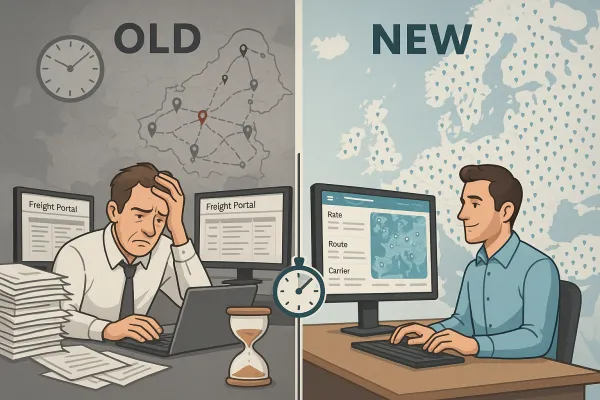
Specialized European solutions offer distinct advantages. Cargoson focuses exclusively on shippers rather than carriers, addressing specific challenges of manufacturing and wholesale companies. Most machinery manufacturers are live in 1-2 weeks. We import your carrier rate cards in any format, set up API connections, and provide go-live training. Compare this to 6-18 month implementations typical of enterprise TMS platforms.
Compare this with enterprise platforms like Descartes offers a comprehensive, multimodal TMS for medium and high volume shippers in North America and Europe to book, track, report, automate and optimize shipments across their network. Descartes' Shipper TMS can be implemented in a fraction of the time when compared to enterprise alternatives.
Real-Time Capacity Management During Construction Periods
Maintain control anytime anywhere with real-time tracking and tracing of all container and trailer shipments. Stagnation due to an unexpected blockade? Switch immediately to another mode of transport so that shipments still arrive on time and customer expectations are met.
Dynamic slot allocation becomes critical when construction work disrupts terminal operations. Your TMS needs integration with terminal operating systems that can provide real-time capacity updates across multiple completion phases.
Implementation Strategies That Account for Phased Infrastructure Completion
European procurement teams face unprecedented timing pressures. European shippers should begin TMS evaluation and selection processes in 2025-2026 to allow sufficient time for system integration and testing before authority readiness phases begin. As of January 2026, eFTI platforms and service providers can start preparing for operations while Member States authorities may start accepting data stored on certified eFTI platforms for inspection.
Phase-by-phase rollout matching corridor completion schedules requires careful planning. Start with corridors where infrastructure completion is most certain, then expand to fragmented segments as they come online. Phased implementation strategies protect against vendor disruption by establishing core functionality first, then adding compliance modules and specialized features in subsequent phases. This approach allows platform changes or vendor consolidation to be addressed without complete system replacement.
Vendor selection becomes particularly complex given current market consolidation. The most significant TMS vendor consolidation wave in over a decade is reshaping European procurement decisions right now. WiseTech's acquisition of E2open in 2025, Descartes' purchase of 3GTMS for $115 million in March 2025, and Körber's transformation of MercuryGate into Infios following their 2024 acquisition represent just the beginning of a fundamental market restructuring.
Cost-Benefit Analysis for Multimodal Investment Decisions
ROI calculations must account for infrastructure uncertainty extending beyond 2030. The 2025 report reveals that the situation has worsened, with an average delay of 17 years for five of the assessed projects. Traditional ROI models assuming stable infrastructure are worthless in this environment.
Focus on platforms with proven European deployment experience. Customers typically report 10-30% freight cost reduction and positive ROI within 2 months. The savings come from: (1) Comparing rates across all your carriers for each shipment instead of defaulting to familiar choices. Unlike enterprise TMS, Cargoson's monthly pricing means fast payback.
Practical Implementation Framework: The 90-Day Corridor Assessment Model
Immediate assessment priorities should focus on your most corridor-dependent operations. Identify which routes face the highest infrastructure uncertainty and prioritize TMS capabilities that provide routing alternatives.
Vendor selection criteria must include acquisition resistance as a core evaluation factor. Success requires treating vendor stability and acquisition-resistance as core procurement criteria alongside traditional functionality and cost evaluation. Consider European-native solutions like Cargoson alongside established platforms from Transporeon and nShift.
Implementation timelines vary dramatically. Cloud TMS implementations often concluding within eight weeks, compared to 6-18 months for traditional systems. But corridor-resilient functionality requires additional integration work that most vendors underestimate.
Future-Proofing Against Ongoing Infrastructure Changes
European shippers face infrastructure uncertainty that will persist well beyond 2030. The European Court of Auditors changed their assessment from "unlikely to be met" to "will not be met" for TEN-T completion deadlines. Your TMS implementation strategy must account for this reality, building systems that thrive in fragmented infrastructure rather than waiting for unified networks that may not arrive for another decade.
Monitor regulatory changes that affect multimodal operations. Modern TMS platforms like Cargoson, MercuryGate, and Descartes now offer built-in carbon calculators that provide pre-calculated CO2 emission estimation before making transport booking, shifting carbon consideration from post-hoc reporting to proactive decision-making.
Contract negotiations should include specific provisions for infrastructure delay impacts. Build penalty clauses that account for corridor construction delays beyond your vendor's control, while securing guaranteed service levels for alternative routing capabilities.
The successful approach prioritizes flexibility over optimization, contingency over efficiency, and adaptability over standardization. European shippers who embrace corridor-resilient TMS architecture today will operate more effectively while competitors struggle with infrastructure delays that may persist through the next decade.
Your TMS implementation decisions made this year will determine competitive position for the remainder of the 2020s. Choose platforms and partners that understand European infrastructure reality, not theoretical optimization models designed for stable networks that don't exist.