The European Shipper's Omnibus Navigation Guide: How to Turn the EU's 2025 Simplification Package Into Transport Cost Savings and Competitive Advantage

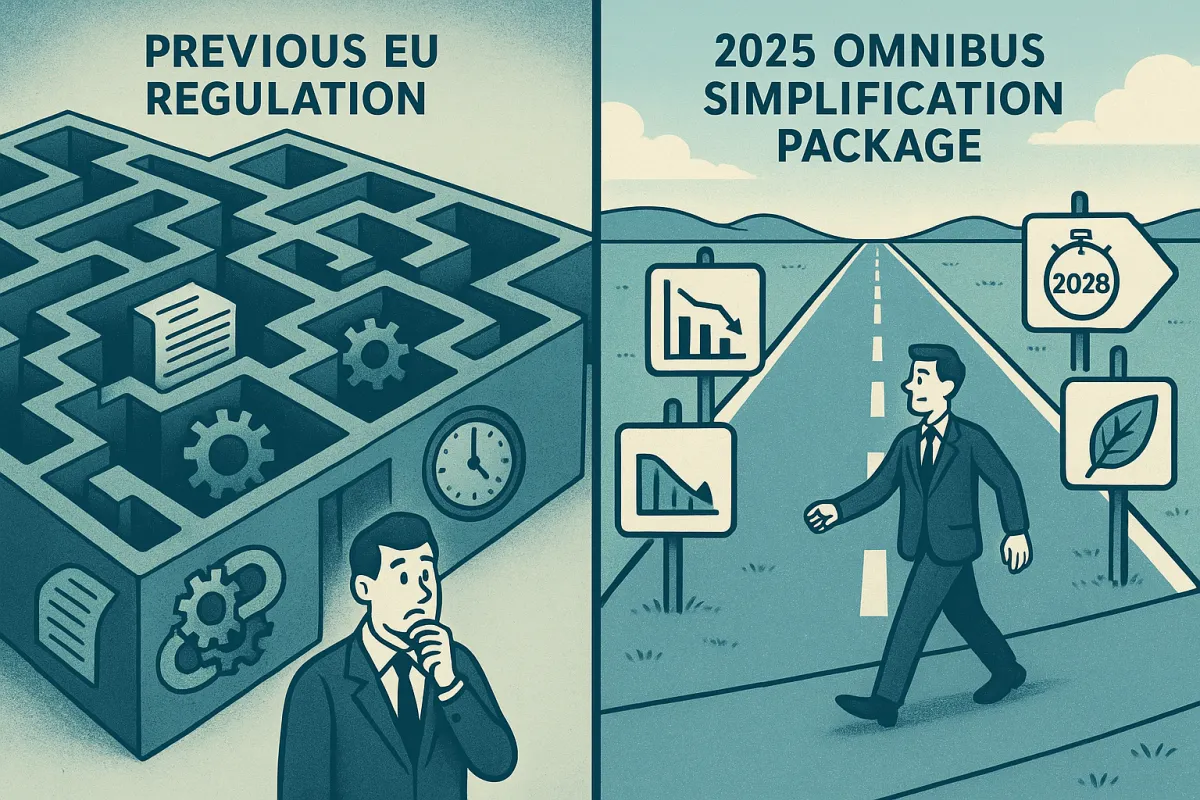
The European Commission's February 2025 Omnibus Simplification Package landed with a €6.3 billion promise. The Commission suggests this could save €6.3 billion in annual administrative costs and unlock €50 billion in public and private investments for policy priorities. For European transport operations, this represents the most significant regulatory simplification opportunity in a decade - if you know how to navigate it.
Here's what most companies miss: According to the European Commission's calculations, 99 percent of emissions covered by CBAM will still be covered, while approximately 90 percent of importers would benefit from reduced CBAM obligations. That's not just regulatory relief - it's a competitive advantage waiting to be claimed.
The CBAM Breakthrough: €1.2 Billion in Hidden Transport Cost Savings
The European Commission is proposing the introduction of a CBAM-specific, mass-based de minimis threshold of 50 tonnes of imported CBAM goods per calendar year and per importer. This single change transforms the compliance landscape for mid-market European manufacturers and wholesalers.
The 50-tonne threshold creates immediate operational benefits. Companies importing cement, steel, aluminum, or fertilizers below this annual limit escape CBAM authorization requirements, quarterly certificate holdings, and embedded emissions calculations entirely. Key changes include a de minimis exemption for importers of up to 50 tonnes per year of CBAM-covered goods—relieving 90% of importers while maintaining 99% emissions coverage.
Beyond the obvious compliance cost reduction, this creates strategic sourcing opportunities. Transport managers can now optimize smaller-volume supply routes without CBAM administrative overhead - think regional European suppliers for specialized components or emergency stock replenishment from non-EU sources.
The timing matters. Implementation dates for CBAM will remain unchanged under the proposed amendments. The current transitional period spans 2023-2025 for data gathering and reporting, with the definitive period – when financial obligations take effect – commencing on 1 January 2026. You have eight months to restructure supply chains around the new thresholds.
Administrative Burden Reduction: What 25% Really Means for Your Transport Operations
The Commission has outlined an explicit goal of reducing reporting burdens by 25% for large companies and 35% for SMEs. Sound abstract? Here's the practical impact on transport operations.
Documentation requirements are consolidating. The Omnibus package introduces CBAM declarants would have the option to choose freely between reporting actual emissions or using default values (with an added margin) when submitting their declarations. This eliminates the complex supplier data collection that's been consuming procurement team resources since CBAM's transitional period began.
Certificate management becomes simpler. The number of CBAM certificates in the CBAM declarant's account in the CBAM registry must only cover at least 50 percent (instead of 80 percent) of embedded emissions at the end of each quarter. That's a 30% reduction in financial exposure and cash flow management complexity.
The second-order effects matter more. Transport procurement teams currently spend 15-20% of their time managing sustainability documentation across carriers and supply chain partners. With simplified default value options and reduced certificate requirements, that time gets reallocated to strategic activities: carrier performance optimization, route efficiency analysis, and cost negotiations.
The Stop-the-Clock Advantage: Strategic Timeline Management Through 2028
CSRD reporting requirements will be delayed by a period of two years for in-scope companies. Companies that would otherwise have faced reporting requirements from financial years commencing on or after 1 January 2025 will now report on financial years commencing on or after 1 January 2027.
This creates a strategic window most companies haven't recognized yet. The delay doesn't just postpone compliance - it provides time to optimize your transport sustainability strategy before reporting requirements lock in current practices.
The transposition deadline for Member States to integrate the CSDDD into national law is extended by one year to July 26, 2027, with the first application phase for the largest companies deferred to July 26, 2028. For supply chain operations, this means due diligence requirements for transport suppliers get pushed back by a full year.
Here's the opportunity: transport managers now have until 2028 to implement supply chain due diligence systems that would have been required in 2027. That's 12 additional months to negotiate better terms with carriers, consolidate supplier relationships, and build automated compliance monitoring into your TMS platform.
The timeline advantage compounds. While competitors scramble to meet original deadlines, you can use the extended timeframe to negotiate preferred-partner agreements with carriers who've already invested in sustainability tracking and reporting capabilities.
TMS Platform Selection in the Post-Omnibus Environment
The regulatory simplification is reshaping TMS vendor evaluation criteria just as the market undergoes unprecedented consolidation. WiseTech's acquisition of E2open in 2025, Descartes' purchase of 3GTMS for $115 million in March 2025, and Körber's transformation of MercuryGate into Infios represent just the beginning of a fundamental market shift.
The European TMS market reached around € 1.4 billion in 2024, growing at a compound annual growth rate (CAGR) of 12.2 percent, with the market value forecasted to reach € 2.5 billion in 2029. The Omnibus simplifications are accelerating vendor consolidation as companies seek platforms that can handle both current and future regulatory requirements efficiently.
The vendor landscape now divides into two categories: those building compliance automation into core functionality, and those treating regulatory requirements as add-on modules. Providers of broader supply chain and logistics offerings such as Blue Yonder, Manhattan, E2open (acquired by WiseTech in 2025), Descartes (including 3G acquired in 2025) and Kinaxis are competing in the TMS space.
European-focused platforms like Alpega, Transporeon (now Trimble), and Cargoson are positioning themselves as alternatives to the consolidated global players. The key differentiator isn't feature breadth - it's regulatory adaptation speed. Platforms like 4flow, proLogistik, and nShift that can rapidly implement Omnibus changes will gain market share from vendors still integrating post-acquisition systems.
API architecture becomes non-negotiable. With regulatory requirements continuing to evolve, your TMS needs the flexibility to integrate new compliance modules without platform migration. Evaluate vendors based on their demonstrated ability to implement regulatory changes quickly, not just their current feature set.
Your 90-Day Omnibus Implementation Action Plan
Days 1-30: Assessment and Planning
Audit your current CBAM exposure by product category and annual import volumes. Document all imports of cement, steel, aluminum, and fertilizers from non-EU sources over the past 24 months. Identify suppliers where you're consistently below the 50-tonne threshold - these become immediately CBAM-exempt under the new regulations.
Review your CSRD and CSDDD preparation timelines. With Wave 2 CSRD reporting pushed to 2028 and CSDDD compliance delayed until July 2028, you have strategic flexibility. Determine which sustainability initiatives can be phased differently to take advantage of the extended deadlines.
Days 31-60: Supply Chain Optimization
Renegotiate supplier agreements to leverage CBAM threshold exemptions. For imports consistently below 50 tonnes annually, eliminate CBAM-related compliance costs from supplier negotiations. These savings should translate to either cost reductions or service improvements.
Assess your TMS platform's Omnibus readiness. Can it handle simplified CBAM reporting? Does it integrate with certificate management systems? Can it track multiple regulatory thresholds simultaneously? If not, this is your window to evaluate alternatives like Cargoson, Alpega, or other European platforms before the competitive pressure intensifies.
Days 61-90: Strategic Positioning
Develop carrier sustainability partnerships for the extended compliance timeline. With CSDDD due diligence requirements delayed, you can negotiate preferred-partner agreements with carriers investing in sustainability capabilities. This positions you ahead of competitors who'll scramble when deadlines approach.
Implement automated CBAM threshold monitoring. Even with simplified requirements, you need systems to ensure you don't accidentally exceed the 50-tonne limit and trigger full CBAM obligations mid-year. This becomes a competitive advantage - precise threshold management lets you optimize sourcing without compliance surprises.
Beyond Compliance: Turning Simplification Into Strategic Transport Advantage
The Omnibus package's real value isn't in the regulations it eliminates - it's in the competitive advantages it creates for companies that move quickly.
Resource reallocation opportunities are immediate. The 25-35% administrative burden reduction frees up procurement and logistics team capacity for strategic initiatives. Instead of managing CBAM documentation, your teams can focus on carrier performance optimization, route efficiency analysis, and supply chain risk management.
Market positioning becomes possible. While competitors struggle with complex compliance requirements, companies leveraging Omnibus simplifications can offer customers faster, more flexible supply chain solutions. The 50-tonne CBAM threshold, in particular, enables agile sourcing strategies that weren't economically viable under full CBAM obligations.
The extended sustainability reporting deadlines create strategic negotiating power. You can now implement supply chain sustainability initiatives on your timeline, not regulatory deadlines. This lets you negotiate better terms with carriers and suppliers who understand you're not under immediate compliance pressure.
Technology investments make more sense. With stable regulatory requirements until 2028, TMS platform decisions have longer payback periods. Whether you choose consolidated platforms like the new WiseTech-E2open combination, European specialists like Transporeon or Cargoson, or best-of-breed solutions from providers like nShift and FreightPOP, you have time to optimize implementations without regulatory deadline pressure.
The companies that recognize the Omnibus package as a strategic opportunity, not just regulatory relief, will build lasting competitive advantages in European transport operations. The question isn't whether to take advantage - it's how quickly you can move before your competitors catch up.