The European Shipper's TMS Contract Negotiation Masterclass: How to Secure Vendor-Resistant Terms and Bulletproof Pricing Before 2026's Consolidation Wave Eliminates Your Procurement Leverage


European shippers managing transport operations with annual spends exceeding €10 million face an unprecedented procurement challenge. WiseTech's acquisition of E2open in 2025, Descartes' purchase of 3GTMS for $115 million in March 2025, and Körber's transformation of MercuryGate into Infios following their 2024 acquisition represent just the beginning of a fundamental market restructuring that's forcing European shippers to reconsider their entire TMS procurement strategy. While regulatory deadlines approach simultaneously, creating the perfect storm for procurement teams.
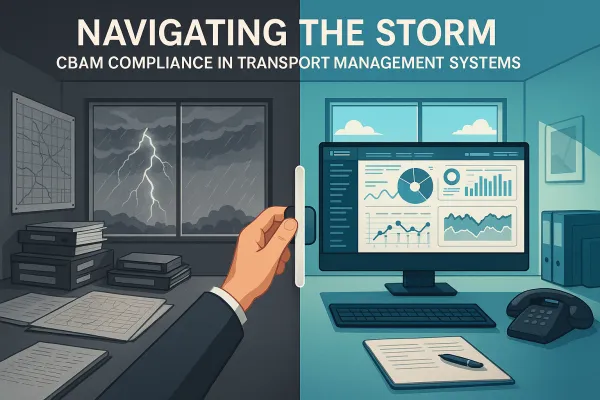
The convergence isn't coincidental. 9 July 2027 · The eFTI Regulation will apply in full. Member State authorities must accept information shared electronically by operators via certified eFTI platforms. Meanwhile, The Carbon Border Adjustment Mechanism (CBAM) successfully entered into force on 1 January 2026. These regulatory pressures are forcing vendor consolidation decisions while procurement windows narrow rapidly.
The Contract Negotiation Window Is Closing Faster Than You Think
Market data reveals why procurement urgency has reached critical levels. The European TMS market, valued at €1.4 billion in 2024 and growing at a compound annual growth rate of 12.2 percent, is forecasted to reach €2.5 billion by 2029. This growth is happening alongside unprecedented consolidation that's eliminating choice and creating new risks for procurement teams who thought they had plenty of time to evaluate options.
The vendor landscape transformation isn't gradual. Descartes Systems Group today said it has acquired the transportation management solutions (TMS) software vendor 3GTMS for $115 million. The deal marks Descartes' 32nd acquisition since 2016. This aggressive acquisition pattern indicates further consolidation ahead, not behind us.
WiseTech Global's $2.1 billion acquisition of E2open is more than a headline—it's a directional shift for one of the industry's biggest technology players. With the addition of E2open's 500,000+ connected enterprises and its legacy platforms like INTTRA—responsible for around 25% of global ocean bookings.
The procurement mathematics are unforgiving. 66% of technology projects end in partial or total failure, with 17% of large IT projects threatening company existence. When your TMS vendor becomes an acquisition target, you inherit these integration risks without directly managing the project. Post-acquisition integration timelines typically span 12-18 months, during which platform development stagnates and support quality deteriorates.
Implementation costs amplify during vendor transitions. TMS implementation costs range from €30,000 to €900,000, depending on complexity and vendor approach. But here's what catches European shippers off-guard: recurring costs spread over 10+ years while capacity shortage scenarios create additional cost pressures that standard budgets miss.
The €800,000 Implementation Reality Check: Why Standard Contract Terms Fail
A German automotive manufacturer's experience illuminates the hidden costs that procurement teams consistently miss. In early 2024, they signed a three-year TMS renewal without regulatory compliance pricing protection. When their vendor introduced eFTI compliance as a premium add-on module nine months later, the additional licensing costs reached €800,000 annually.
The case study reveals four critical cost categories that destroy TMS budgets:
Integration Complexity: Carrier integration represents the largest hidden cost area during capacity crises. Carrier integration costs blindside most procurement teams because vendors present API availability as "included" functionality. Reality shows that custom EDI mappings, API rate limits, and carrier-specific data formatting requirements cost €5,000-€50,000 per connection.
Regulatory Compliance: European shippers consistently underestimate TMS implementation costs because they conflate software subscription fees with total project expense. The "long pole of the tent" of implementation time, and therefore cost, resides in the design, build, and testing of integrations. Adding regulatory compliance requirements to already complex integrations multiplies both risk and cost exponentially.
Carrier Connectivity: Europe's fragmented carrier landscape demands specialized integrations that global TMS platforms often handle poorly. Cross-border operations require support for multiple tachograph systems, customs documentation formats, and national reporting requirements.
Ongoing Maintenance: Vendor consolidation creates maintenance risks that traditional contracts don't address. When platforms merge, customers face feature deprecation, support team changes, and pricing restructuring without protection clauses.
Budget planning must account for these realities. Budget planning around these timelines requires understanding both direct compliance costs and indirect operational impacts. Plan for 15-20% budget increases in 2026-2027 if reactive, or 8-12% if proactive with proper contract protection. Certain contract terms shift compliance risk entirely to shippers while protecting vendors from implementation challenges.
Master the Regulatory Leverage Strategy: Turn 2026 Compliance into Negotiation Power
European regulatory deadlines create unprecedented negotiation opportunities for procurement teams who understand how to exploit them. The regulatory convergence gives procurement teams unprecedented negotiation leverage. Vendors need to prove compliance capabilities to win deals, creating opportunities for more favorable contract terms.
The 8 critical regulatory milestones European shippers must navigate include:
eFTI Implementation: As of January 2026 · eFTI platforms and service providers can start preparing for operations. Member States authorities may start accepting data stored on certified eFTI platforms for inspection. This voluntary period provides testing opportunities that smart procurement teams can leverage.
CBAM Financial Obligations: In alignment with CBAM Regulation as of the 1 January 2026, the validation of CBAM authorisations for CBAM goods is enforced by Customs before Release for Free Circulation, including the monitoring of 50 tonnes threshold, while facilitating SME Importers of CBAM goods in alignment with Omnibus package.
Smart Tachograph Requirements: From July 1, 2026, vans weighing 2.5-3.5 tons performing international transport of goods will be subject to the obligation to use second-generation smart tachographs (G2V2). Simultaneously, as of 1 January 2026, the transitional phase of the Carbon Border Adjustment Mechanism (CBAM) has ended and the definitive phase has begun.
Procurement teams should structure vendor evaluations around compliance readiness rather than traditional feature checklists. Instead of treating 2026 regulatory requirements as obstacles, procurement-savvy European shippers are using these deadlines as vendor selection criteria and contract negotiation leverage. The approach works because vendors face the same deadline pressures but with greater exposure to customer demands. Smart procurement teams are structuring their TMS evaluations around compliance readiness rather than traditional feature checklists.
The Data Act Advantage: New Legal Weapons for TMS Buyers
September 2025's Data Act implementation creates unprecedented negotiating leverage against cloud TMS providers. The regulation mandates data portability provisions that TMS buyers can now demand as contractual obligations, not vendor favors.
Key contract language should include:
Mandatory data portability clauses that specify export formats, timing requirements, and cost structures for data migration. Transparent pricing for data export services with caps on per-record or per-gigabyte charges. Reduced lock-in provisions that prevent vendors from using proprietary data formats to complicate switching.
These legal requirements provide negotiation ammunition that didn't exist 12 months ago. Vendors who resist data portability requirements reveal their lock-in strategies, while those embracing compliance demonstrate customer-first approaches.
The Advanced Contract Protection Framework: 8 Mission-Critical Clauses
Smart contract negotiations extend beyond initial implementation to ongoing compliance management. Your TMS vendor should be a regulatory compliance partner, not just a software provider. The framework requires specific contractual protections that address vendor consolidation risks and regulatory obligations simultaneously.
Performance Guarantee Structures: Build regulatory deadlines directly into your implementation timeline and penalty clauses. If a vendor can't deliver eFTI compliance by January 2026 or tachograph integration by July 2026, that's grounds for contract adjustment or termination.
Transparent Cost Escalation Caps: The real value lies in how the contract is structured, payment flexibility, compliance terms, liability clauses, and performance guarantees all shape the long-term success of the partnership. Overlooking these details can lead to hidden costs, compliance risks, or strained vendor relationships.
Vendor Acquisition Protection Clauses: Include specific language requiring 12-18 months advance notice of any acquisition discussions that might impact service delivery or platform functionality. Price protection clauses should extend through acquisition transitions. Specify that pricing remains locked for 24 months following any ownership change, regardless of platform migration requirements or feature consolidation decisions.
Regulatory Compliance Cost Protection: Avoid these contract killers: Regulatory Change Exclusions: Clauses that exclude vendor responsibility for regulatory compliance updates. Any TMS contract signed now should include eFTI and Smart Tachograph compliance as baseline requirements, not optional upgrades.
Feature Deprecation Protection: Functionality guarantees become critical when vendors merge platforms. Contract language should specify that any feature deprecation requires equivalent functionality replacement or contract termination rights without penalty.
Pricing Model Warfare: Volume Tiers vs Per-Transaction vs Subscription Hybrid
Pricing negotiations require understanding how different models scale with business growth and regulatory requirements. Ask: "What is the exact per-shipment cost for our volume range (including +/- 25%) and how does the tiering work?"
Volume-tiered pricing often resets at contract renewal, creating procurement traps that favor vendors during growth periods. Hybrid models that combine fixed subscriptions with usage-based components provide more predictable cost structures.
Ask: "Provide an itemized total cost view (license + implementation + integrations + support + add-ons) and confirm what's included vs billed separately." This transparency prevents cost surprises during implementation and ongoing operations.
Build cost protection into multi-year agreements by including escalation caps tied to specific business metrics rather than vendor discretion. During capacity-constrained markets, these protections become particularly valuable as vendors attempt to increase pricing across their customer bases.
Implementation Timeline Negotiation: Building Bulletproof Project Management Into Contracts
Implementation timelines require contractual structure with financial consequences for vendor delays. Ask: "What timeline are you contractually committing to, with milestones/acceptance criteria and what happens financially if those milestones slip?"
The reality for complex European operations demands 12-15 months for full implementation, not the "weeks" promised in vendor demonstrations. The license is typically only about 20–25% of total cost; the rest hides in integration, add-on modules, and disruption. Plan for 8–12 months to implement properly—not the "weeks" you'll hear in sales calls.
Phased implementation structures protect against vendor consolidation disruption:
90-Day Quick Wins: Basic functionality deployment with core carrier integrations and user training completion. This phase validates vendor capabilities and platform fit before investing in complex integrations.
6-Month Core Functionality: Full transportation execution capabilities with primary carrier networks, basic reporting, and compliance framework implementation. This milestone should trigger acceptance criteria and payment schedules.
12-Month Full Deployment: Advanced analytics, complete carrier network integration, regulatory compliance certification, and optimization tools activation. Final acceptance occurs only after demonstrating performance under production loads.
Contractual milestone structures should include financial penalties for vendor-caused delays, not just buyer penalties for slow adoption. This balanced approach aligns incentives and protects against vendor over-commitment during sales processes.
Post-Signature Vendor Management: Ensuring Contract Terms Translate to Operational Reality
Build ongoing compliance reporting requirements into your contracts. The regulation mandates that authorities in all EU Member States will be required to accept electronic data when shared by businesses via eFTI-compliant platforms. Your vendor should provide regular compliance status reports, audit preparation support, and regulatory update notifications.
Governance structures prevent vendor relationship drift after implementation. Many procurement teams invest heavily in contract negotiation but ignore ongoing vendor management, allowing beneficial terms to erode through informal changes and scope creep.
KPI tracking and performance measurement integration should connect directly to contract terms. Automatic escalation procedures activate when performance drops below contractual thresholds, triggering vendor remediation requirements or contract adjustment rights.
Maintaining negotiation leverage throughout the contract lifecycle requires proactive relationship management, not reactive problem-solving. Schedule quarterly business reviews that assess vendor performance against contract commitments and market alternatives.
2026 Market Positioning Strategy: Acting Before Options Disappear
The TMS vendor consolidation wave is eliminating procurement choices while regulatory urgency grows. The procurement window is narrowing because regulatory pressure is forcing vendor priorities. Companies that haven't initiated TMS selection processes by mid-2026 will find significantly fewer viable options as vendors focus resources on existing customer compliance rather than new client acquisition.
The 90-day action plan for European shippers requires immediate vendor landscape assessment. Evaluate current TMS provider acquisition vulnerability, regulatory compliance readiness, and competitive alternatives before market dynamics shift further.
Leverage competitive dynamics between Oracle TM, Blue Yonder, Manhattan Active, Descartes, and independent players like Cargoson. The post-consolidation landscape reveals three distinct categories: global mega-vendors (Infios/MercuryGate, Descartes, SAP TM, Oracle TM, E2open/WiseTech), European specialists (Alpega, nShift, Transporeon/Trimble), and emerging European-native solutions (including Cargoson) that focus specifically on cross-border European operations.
Vendor sales cycle timing creates pressure points that improve negotiation outcomes. Quarter-end and year-end deadlines provide natural leverage opportunities, while regulatory deadline pressure creates additional urgency that benefits prepared buyers.
The window for optimal TMS contract negotiations closes rapidly as vendor options diminish and regulatory requirements become mandatory. European shippers who act decisively in 2026 secure favorable contract terms and compliance-ready platforms before market consolidation eliminates choice. Those who delay face reduced vendor options, increased implementation timelines, and potential compliance gaps as regulatory deadlines approach.
European shippers who approached TMS procurement strategically during the 2026 regulatory convergence gained sustainable competitive advantages. They secured better contract terms, avoided implementation disasters, and built operations capable of adapting to future regulatory changes. Those who treated compliance as an afterthought paid premium prices for rushed implementations and ongoing support.