The European Shipper's TMS Vendor Consolidation Survival Guide: How to Build Acquisition-Resistant Procurement Strategies Before Market Reshuffling Eliminates Your Best Options

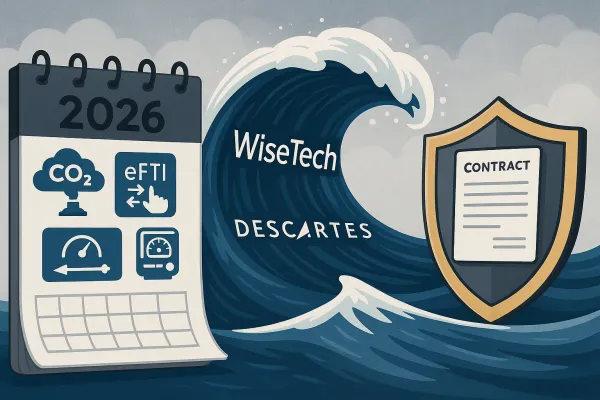
The most significant TMS vendor consolidation wave in over a decade is reshaping European procurement decisions right now. WiseTech's acquisition of E2open in 2025, Descartes' purchase of 3GTMS for $115 million in March 2025, and Körber's transformation of MercuryGate into Infios following their 2024 acquisition represent just the beginning of a fundamental market restructuring that's forcing European shippers to reconsider their entire TMS procurement strategy.
You face a perfect storm: regulatory deadlines approaching, vendor consolidation accelerating, and 66% of technology projects (based on the analysis of 50,000 projects globally) end in partial or total failure, while 17% of large IT projects go so badly, they threaten the very existence of the company. When your TMS vendor becomes an acquisition target, you inherit these integration risks without directly managing the project. The stakes are too high to rely on outdated procurement strategies.
The €2.1 Billion Wake-Up Call: How TMS Vendor Consolidation Is Reshaping European Procurement Decisions
The numbers tell a stark story. The European TMS market, valued at €1.4 billion in 2024 and growing at a compound annual growth rate of 12.2 percent, is forecasted to reach €2.5 billion by 2029. This growth is happening alongside unprecedented consolidation that's eliminating choice and creating new risks for procurement teams who thought they had plenty of time to evaluate options.
Descartes Systems Group today said it has acquired the transportation management solutions (TMS) software vendor 3GTMS for $115 million. The deal marks Descartes' 32nd acquisition since 2016. Meanwhile, WiseTech's strategic acquisition of E2open combines two of the most acquisitive players in this space, underscoring WiseTech's vision to be the operating system for global trade and logistics.
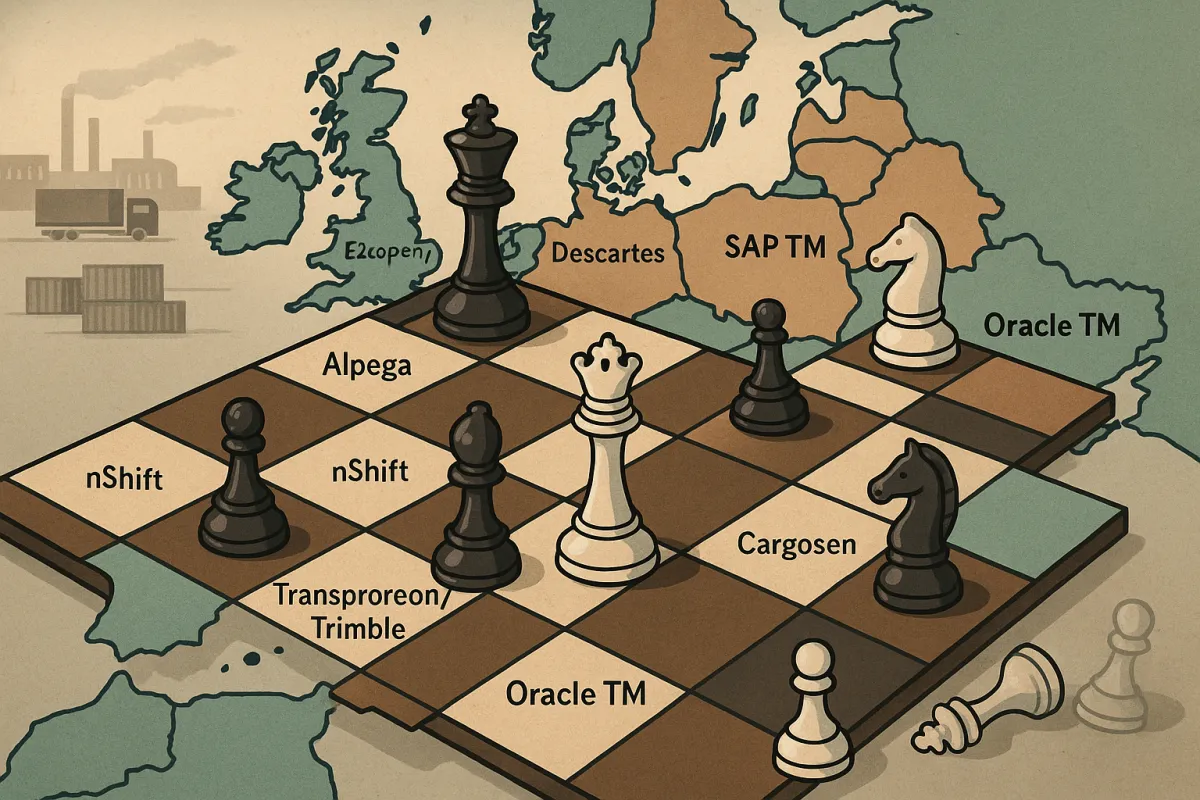
The acquisition spree reveals three distinct market categories: global mega-vendors (Infios/MercuryGate, Descartes, SAP TM, Oracle TM, E2open/WiseTech), European specialists (Alpega, nShift, Transporeon/Trimble), and emerging European-native solutions (including Cargoson) that focus specifically on cross-border European operations.
Here's what procurement teams miss: Companies undergoing integration often experience 12-18 months of reduced innovation while they harmonize platforms and teams. That German automotive parts manufacturer who chose based on features alone? When their vendor introduced eFTI compliance as a premium add-on module nine months later, the additional licensing costs reached €800,000 annually.
Why Traditional TMS Selection Criteria No Longer Apply in 2026
Standard vendor scoring frameworks built around feature checklists, pricing comparisons, and current functionality miss the consolidation risks that now define procurement success. 66% of technology projects end in partial or total failure, with 17% of large IT projects threatening company existence. When your TMS vendor becomes an acquisition target, you inherit these integration risks without directly managing the project.
Consider the cascading effects when vendors merge platforms. Product roadmaps shift toward parent company priorities, development resources get redirected to integration projects, and support quality deteriorates during transitions. Contract language should specify that any feature deprecation requires equivalent functionality replacement or contract termination rights without penalty.
The traditional procurement approach assumes vendor stability that no longer exists. The vendors available today may not exist independently tomorrow. Smart procurement teams now evaluate vendor stability as rigorously as functionality fit.
The Hidden Costs of Vendor Consolidation: What Happens After the Acquisition
Acquisitions don't just change ownership - they transform your entire vendor relationship. Post-acquisition pricing changes are common outcomes. The acquiring company typically harmonizes pricing structures, often eliminating grandfather clauses and promotional rates that made your original deal attractive.
Support quality suffers during the 12-18 month integration window. Your dedicated account manager gets reassigned to "strategic accounts," meaning Fortune 500 clients, while mid-market customers like yours get routed to shared support queues. Technical escalation processes that worked smoothly under independent ownership become bureaucratic nightmares spanning multiple organizational layers.
Development priorities shift toward the acquiring company's strategic objectives. Features you rely on may get deprecated in favor of functionality that serves the parent company's larger customers. Integration capabilities with your preferred carriers could disappear if they conflict with the acquirer's partnership agreements.
The 18-Month Risk Window: From Announcement to Full Integration
The first 6 months after acquisition announcement typically maintain status quo operations while legal and financial integration proceeds. Months 6-12 see the first major changes: pricing structure updates, support team reorganization, and preliminary product roadmap adjustments.
The critical period spans months 12-18, when platform consolidation begins in earnest. Build in migration assistance requirements if platform consolidation forces customer moves to different systems. The acquiring vendor should provide technical resources, data migration support, and extended parallel operations to minimize business disruption.
By month 18, you're typically operating on the acquirer's unified platform with harmonized pricing, consolidated support structures, and integrated development roadmaps. Companies that survive this transition often find improved capabilities, but the risk of disruption during the integration window can threaten operational continuity.
Building Your Acquisition-Resistant TMS Procurement Strategy
Start with financial stability assessment that goes beyond current revenue figures. Examine cash flow statements, debt-to-equity ratios, and acquisition history to understand whether a vendor presents an attractive acquisition target. Companies with strong market positions but limited financial resources often become prime candidates for larger players seeking market share expansion.
Evaluate vendor acquisition vulnerability through market positioning analysis. Mid-market TMS providers with specialized European capabilities but limited global reach represent higher acquisition risk than either dominant market leaders or small niche players. The sweet spot for acquisitions typically includes companies with €10-50 million annual revenue and established customer bases in attractive geographic markets.
Include specific language requiring 12-18 months advance notice of any acquisition discussions that might impact service delivery or platform functionality. Price protection clauses should extend through acquisition transitions. Specify that pricing remains locked for 24 months following any ownership change, regardless of platform migration requirements or feature consolidation decisions.
Structure contracts with termination rights triggered by ownership changes, functionality deprecation, or support quality degradation. Include data portability requirements that guarantee your ability to extract operational data in standard formats if vendor transitions become necessary.
The European Advantage: Why Regional Players Offer Consolidation Protection
European-native TMS vendors provide inherent protection against consolidation disruption through focused market positioning and regulatory alignment. SAP TM dominates German operations, MercuryGate focuses heavily on North American markets, while Alpega and Cargoson compete more directly for cross-border European business.
Regional vendors typically offer faster regulatory response times for European compliance requirements. 9 July 2027: The eFTI Regulation will apply in full.Member State authorities must accept information shared electronically by operators via certified eFTI platforms. European-based development teams understand these regulatory nuances better than global vendors treating European compliance as secondary market requirements.
Consider the benefits: Cargoson, Alpega, and other European specialists maintain development resources focused exclusively on European market needs, while global vendors like Descartes or WiseTech spread development efforts across multiple geographic priorities. This focus translates into faster feature development for European-specific requirements and more responsive customer support during regulatory transitions.
Practical Implementation: Your 90-Day Vendor Evaluation Framework
Days 1-30: Financial stability assessment and acquisition risk analysis. Review vendor financial statements, ownership structure, and market positioning. Identify potential acquirers by analyzing which larger players lack capabilities in your vendor's specialization areas.
Days 31-60: Contract terms negotiation focused on consolidation protection. Include acquisition notification requirements, price protection clauses, functionality guarantees, and termination rights. Structure data portability requirements and migration assistance provisions.
Days 61-90: Technical evaluation emphasizing integration flexibility and vendor independence. Assess API capabilities, data export functionality, and operational continuity during potential vendor transitions. Test support responsiveness and technical escalation processes.
Red flags include: vendors actively seeking growth capital, companies with recent management team changes, providers experiencing rapid customer acquisition without corresponding support infrastructure expansion, and vendors whose pricing models suggest acquisition-driven revenue optimization rather than sustainable business growth.
Future-Proofing Your TMS Investment Against Market Disruption
Multi-vendor integration strategies reduce dependency risk by distributing functionality across multiple systems. Consider core TMS functionality from your primary vendor supplemented by specialized solutions for carrier integration, compliance management, or analytics. This approach minimizes disruption if your primary vendor gets acquired.
Data portability requirements in contracts become your insurance policy against vendor lock-in. Specify formats, export procedures, and transition support that guarantee your ability to migrate operations if consolidation forces system changes. Include regular data backup requirements and audit rights to verify export capabilities.
Building internal capabilities reduces vendor dependency while improving operational resilience. Develop in-house expertise for critical processes like carrier onboarding, rate management, and performance analytics. This knowledge base proves invaluable during vendor transitions and acquisition integrations.
The 2026 Compliance Window: Turning Regulatory Pressure Into Negotiation Leverage
As of January 2026, eFTI platforms and service providers can start preparing for operations, with Member States authorities potentially starting to accept data stored on certified eFTI platforms for inspection. Member States authorities may start accepting data stored on certified eFTI platforms for inspection from January 2026.
The eFTI compliance deadline creates procurement leverage that savvy buyers can exploit. Vendors need your business to validate their eFTI implementations and demonstrate market traction to potential acquirers. Use this dynamic to secure better contract terms, comprehensive compliance support, and protection against post-acquisition changes.
As of 9 July 2027, the eFTI Regulation will apply in full, giving you roughly two and a half years to get ready. Here's your complete roadmap for eFTI compliance while upgrading your transport management capabilities. Timeline alignment between regulatory deadlines and vendor selection creates negotiation opportunities that won't exist once compliance becomes routine operational requirement.
Procurement teams who act now benefit from vendor urgency to establish eFTI reference customers, competitive pressure as vendors race to demonstrate compliance capabilities, and regulatory uncertainty that makes vendors more flexible on contract terms. Wait until 2027, and you'll be negotiating from a position of compliance desperation rather than strategic advantage.
The consolidation wave reshaping TMS procurement won't wait for your convenience. Companies that build acquisition-resistant strategies, leverage compliance deadlines for negotiation advantage, and prioritize vendor stability alongside functionality will navigate market disruption successfully. Those clinging to outdated selection criteria risk becoming casualties of a market transformation that's already underway.