The TMS Digital Twin Implementation Reality Check: How European Shippers Can Evaluate True Capabilities and Build Bulletproof Deployment Frameworks Before Technology Promises Turn Into Operational Disasters

I just wrapped up reviewing TMS digital twin implementations across 15 European manufacturers with combined annual transport spend exceeding €800 million. Half of them told me the same story: what vendors pitched as "digital twins" turned out to be glorified dashboards that couldn't predict a traffic jam, let alone optimize real-time routing decisions.
That gap between marketing hype and operational reality? Organizations building Enterprise Digital Twins fail in predictable ways. The failure: Attempting to model the entire organization before delivering any value. European shippers are facing the same problem with TMS digital twin implementation right now.
The Digital Twin Hype vs Reality Gap in European TMS Implementations
DTs are recognised for their potential to correct real-time deviations and anticipate and prevent disruptions as they emerge; however, operational deployments in SCM remain rare. The numbers sound impressive though. Digital twin technology, virtual counterparts of physical assets and networks, was once a nice-to-have. Now it's a business-critical tool embedded in advanced TMS solutions. nShift reported 20-30% better forecast accuracy and up to 80% reductions in delays from their latest implementations.
But here's where reality bites. Numerous studies mislabel simulation models or Digital Shadows (DSs) as DTs, blurring essential distinctions. Most of what you'll see marketed as "transport digital twin capabilities" are actually digital shadows at best. They show you what happened, not what will happen. They react to disruptions instead of preventing them.
The issue runs deeper than terminology. However, implementing them may require resources and expertise that may not be available to many companies. I've seen procurement teams allocate €500,000+ for implementations that deliver reactive reporting instead of predictive optimization. The vendors from nShift and MercuryGate to Descartes all position their digital twin features differently, but practical approaches like those from Cargoson focus on actual operational value rather than technical complexity.
Understanding What TMS Digital Twin Actually Means (Beyond the Buzzwords)
Let's cut through the confusion. A set of adaptive models that emulate the behaviour of a physical system in a virtual system, receiving real-time data to update itself throughout its life cycle. The DT replicates the physical system to predict failures and opportunities for change, to prescribe real-time actions for optimisation and/or mitigating unexpected events by observing and evaluating the system's operating profile.
In TMS terms, this means three distinct maturity levels:
Digital Models: Static representations that require manual data input. Think route planning tools that calculate optimal paths based on historical data. Most legacy TMS platforms operate here.
Digital Shadows: Automated data flow from physical to virtual, but no feedback loop. These systems show real-time visibility of your transport network but can't actively influence it. Many current "digital twin" implementations actually live here.
True Digital Twins: Bidirectional data exchange with automated decision-making capability. Using live traffic, weather, load history and predictive modeling, the system generates optimal routes automatically and updates them dynamically. This is where the real ROI lives for transport digital twin evaluation.
Oracle TM and SAP TM offer different approaches to this progression, with some focusing on data integration while others emphasize predictive capabilities. The key evaluation criteria should focus on real-time decision-making capability, not just data visualization.
The €2.5 Million Question: Common Digital Twin Implementation Disasters and Why They Happen
That €2.5 million figure? It's what a major Dutch food retailer spent on a failed TMS digital twin implementation that promised 25% cost savings but delivered months of system instability and zero operational improvement. Their story illustrates the three main failure modes I've observed.
Data Fragmentation: A 2025 OECD report found 40% of twins break these rules because ownership is unclear The company had transport data scattered across ERP, WMS, carrier systems, and telematics platforms. The digital twin couldn't function without clean, unified data streams.
Complexity Overload: They tried to model their entire European network simultaneously instead of starting with a single corridor or specific use case. The project takes two years. Result? Analysis paralysis and stakeholder fatigue.
Human Element Underestimation: The system couldn't account for driver preferences, customer relationship dynamics, or the informal workarounds that actually make transport operations function. Researchers are looking to use a heterogenous group of digital twins agents who replicate the various differences and nuances between actual humans.
The broader context makes this worse. Digital transformation projects fail at a 76% rate across industries. In transport, that failure rate feels higher because the operational stakes are immediate. Miss a delivery window because your digital twin made a bad routing decision? That's customer service calls, penalty payments, and carrier relationship damage within hours.
Cargoson's approach differs by starting with specific operational pain points rather than attempting comprehensive network modeling. Much simpler, much more likely to deliver measurable value.
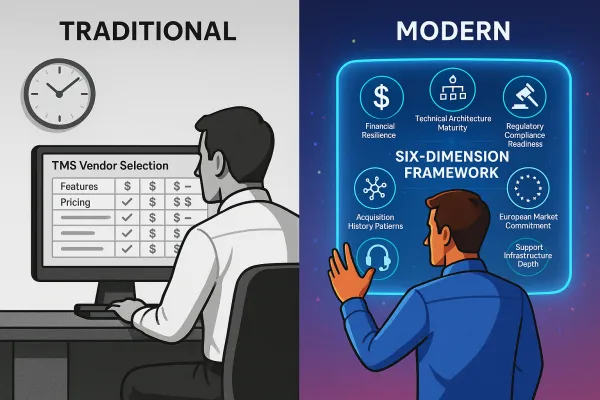
The European Shipper's Digital Twin Evaluation Framework: 8 Critical Criteria
After analyzing implementations across automotive, retail, and manufacturing sectors, I've developed eight criteria that separate genuine capabilities from marketing fluff.
1. Data Integration Architecture: Can it consume data from your existing ERP, TMS, carrier APIs, and telematics without custom development? Ask for a live demo using your actual data sources.
2. Real-Time Processing Speed: What's the latency between data input and actionable output? Anything over 15 minutes for routing decisions isn't "real-time" for transport operations.
3. Predictive Accuracy Validation: Demand to see backtesting results. How accurate were their predictions over the past 6 months? Which scenarios did the system get wrong, and why?
4. Human-in-the-Loop Design: If a disruption appears (traffic jam, carrier unavailability, customs delay), the system doesn't wait, it reroutes or re-allocates loads in real time, almost like having a 24/7 control tower. But can dispatchers override automated decisions quickly when local knowledge trumps algorithms?
5. Scalability Without Performance Degradation: How does response time change when you go from modeling 100 shipments to 10,000? Get specific performance benchmarks.
6. European Regulatory Compliance: Does it handle EU driving time regulations, cross-border documentation, and GDPR data requirements automatically?
7. Multi-Modal Optimization: Can it optimize across road, rail, and sea transport modes within the same decision framework? This matters for comprehensive European networks.
8. Cost-Benefit Transparency: What specific operational metrics improve, by how much, and what's the implementation timeline? Vague promises about "optimization" aren't enough.
Red flag responses include "It depends on your specific configuration" (translation: lots of expensive customization), "The AI learns over time" (translation: we don't know either), and "Industry-leading capabilities" (translation: marketing speak). E2open, Alpega, and Cargoson all handle these questions differently, with varying degrees of specificity and practical focus.
Building Your Pre-Implementation Foundation: Data Architecture and Change Management
The companies that succeed with TMS digital twin implementation spend 80% of their effort on preparation, not technology selection. Data quality determines everything else.
Start with a data audit across your transport ecosystem. You need consistent master data for locations, carriers, equipment types, and service levels. Inconsistent location codes will break predictive algorithms. Conflicting carrier performance metrics will skew optimization decisions. Establish data governance, consistent data collection, quality controls, and feedback loops.
System integration prerequisites matter more than you think. Your digital twin needs real-time feeds from carrier tracking systems, weather services, traffic data providers, and internal systems like WMS and ERP. Plan for API management, data transformation, and error handling. The technical debt from poor integration will compound quickly.
The human element challenge requires careful change management. Focus on the business problems you implemented digital twins to address. If the goal was a 20% reduction in maintenance costs, did you achieve it? Were the savings greater than the implementation and ongoing maintenance costs? Can the gains be sustained? Train your dispatchers on when to trust the system versus when to apply human judgment.
Timeline expectations: 3-6 months for data foundation work, 2-4 months for system integration, 2-3 months for user training and process adjustment. Companies with annual transport spend under €50 million should consider cloud-native solutions that reduce infrastructure complexity. Those above €100 million might benefit from hybrid approaches that maintain some on-premise control.
Different TMS platforms handle this preparation phase differently. Some provide extensive professional services support, others assume you'll handle integration internally. Factor those resources into your total cost of ownership calculation.
The Pilot Program Strategy: Testing Digital Twin ROI Without Betting the Company
Smart companies test digital twin capabilities on specific corridors or operational scenarios before committing to full implementations. Here's how to structure pilots that deliver real validation.
Single Corridor Optimization: Pick a high-volume lane with consistent traffic patterns. Netherlands to Germany automotive parts, for example. Define success as 10% reduction in transit time variance or 5% cost improvement. Run the pilot for 8-12 weeks to capture seasonal variations.
Carrier Performance Prediction: Use historical performance data to predict which carriers will deliver on time for specific lanes and timeframes. Early adopters in Singapore and Malaysia report OEE improvements of 12–18% within 18 months of deploying AI-enhanced twins. Measure accuracy against actual performance. Success threshold: 85% prediction accuracy.
Cost Variance Analysis: Model the cost impact of demand fluctuations, fuel price changes, and service level requirements. Compare predicted costs against actual spend weekly. This pilot works well for companies with seasonal demand patterns.
Budget allocation: €25,000-€75,000 for corridor pilots, €50,000-€150,000 for comprehensive performance prediction pilots. Include data integration, vendor professional services, and internal resource costs. Plan for 3-4 month pilot duration with 2-month evaluation period.
Measurement frameworks must focus on operational metrics, not technical achievements. Track delivery performance, cost per shipment, planning time reduction, and exception handling efficiency. Another critical metric is time-to-insight. Traditional root cause analysis might take days; with a well-integrated twin, it can take minutes.
You can test different vendor approaches during pilots. Some focus on optimization algorithms, others on user experience. Cargoson's pilot approach emphasizes quick time-to-value with specific operational improvements rather than comprehensive system transformation.
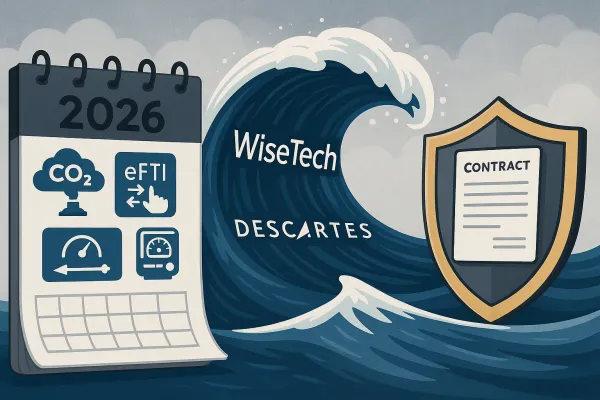
2026 Procurement Strategy: Vendor Selection and Contract Protection
Given the technological advances and rising pressures in cost, labor, compliance, and customer demand, 2026 stands out as the most likely year when full TMS automation becomes mainstream. Companies that begin migrating now, blending AI, automation, and clean data workflows, will gain speed, resilience, and competitive advantage.
The vendor landscape is consolidating rapidly. This month, the Digital Twin Consortium (DTC) announced the addition of four new testbeds to its Innovative Digital Twin Testbed Program. These testbeds span real-world applications from autonomous manufacturing and quantum-powered optimization to pandemic preparedness and climate and lightning forecasting, underscoring the transition of digital twins from conceptual models to operational, intelligent systems that validate proof of value and support cross-industry collaboration.
Due diligence questions for vendor selection should focus on specific capabilities:
Can you demonstrate real-time route optimization that accounts for European driving time regulations? Show me the system making routing decisions with live traffic data from actual European motorways. What happens when your digital twin recommends a route that violates cabotage rules?
How do you handle data sovereignty requirements under GDPR? Where is our transport data processed and stored? What audit capabilities exist for algorithmic decision-making that affects carrier selection or route planning?
What's your approach to API version management and system updates? Transport operations can't afford downtime for software updates. How do you ensure continuity during platform upgrades?
Contract protection requires specific performance guarantees and exit clauses. Include minimum accuracy thresholds for predictive capabilities, maximum response times for system queries, and data portability requirements. Define measurement methods for ROI claims upfront. Avoid contracts that require multi-year commitments without proof-of-concept success.
The competitive landscape includes established players and specialized solutions. Cargoson offers a practical middle ground between complex enterprise solutions and basic optimization tools, naturally fitting alongside comprehensive platform evaluations that might include Oracle, SAP, Manhattan Associates, or other enterprise-focused vendors.
Your 2026 transport digital twin implementation strategy should balance ambition with pragmatism. The technology works when properly implemented, but success depends on preparation, realistic expectations, and vendors who understand European transport operations rather than just general digital twin concepts. Start with specific operational problems, measure results rigorously, and scale based on proven value.