The 18-Minute Solution: How TMS Automation Turns Europe's 426,000 Driver Shortage Into a Strategic Advantage for Forward-Thinking Shippers

The math behind Europe's transport crisis couldn't be clearer. IRU's 2024 global truck driver shortage report has found that 3.6 million positions remain unfilled in 36 countries studied representing 70% of global GDP, with 233,000 unfilled jobs in Europe alone. The average European truck driver is 47 years old, and 30% are over 55 — a retirement cliff is looming. At the same time, only 5% of drivers are under 25, and a mere 4% are women.
But here's the overlooked opportunity: MIT's Center for Transportation & Logistics research suggests that improving driver efficiency could solve shortage problems, with studies examining how strategic improvements to driver productivity can maximize resource utilization. For European shippers managing significant transport spend, TMS automation represents the fastest path to extracting more value from each available driver.
Where European Operations Bleed 18 Minutes Daily
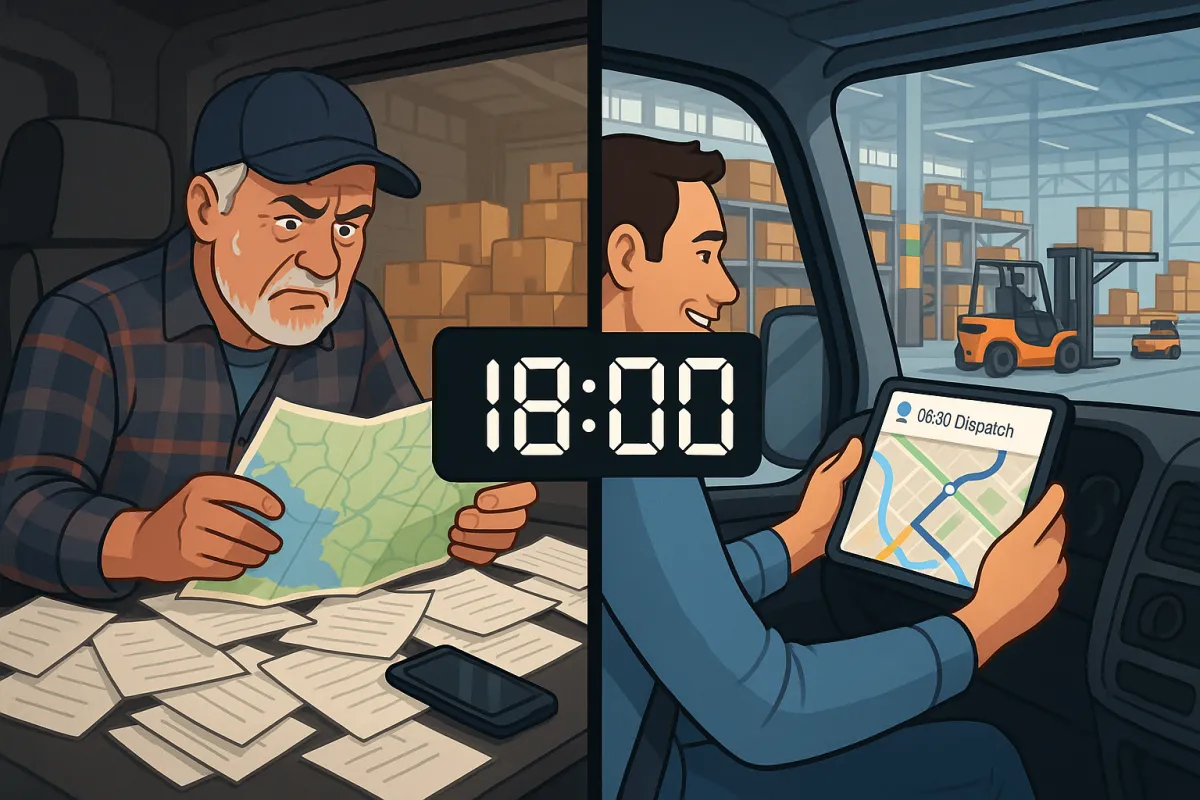
Watch a typical European driver's day and you'll spot the inefficiencies immediately. Manual dispatch processes eat up 15-20 minutes per route change. Communication delays between drivers and planners average another 12 minutes daily. Route planning inefficiencies cost 8-15 minutes per delivery.
A Romanian logistics director recently shared his pain point: drivers spent 45 minutes daily managing paperwork, phone calls, and manual updates. A trucking company reported a 40% reduction in manual workload for dispatch teams after implementing TMS automation. The same automation that cuts dispatch workload directly translates to more productive driver time.
These aren't isolated incidents. European operations still rely heavily on phone calls, emails, and manual coordination. When a delivery window changes, the ripple effect through manual systems can consume an hour of driver productivity. When multiplied across your fleet, those lost minutes become substantial capacity.
TMS Automation Technologies That Actually Deliver Results
Evidence from multiple deployments indicates productivity gains of 60–80%, with additional benefits in service reliability, scalability and data quality that compound over time. The key lies in understanding which specific technologies create these improvements.
AI-powered route optimization eliminates the guesswork. Modern systems analyze traffic patterns, delivery constraints, and driver hours-of-service regulations simultaneously. One TMS case study found that optimizing routes and loads cut empty miles by 28%, significantly lowering operational costs.
Automated carrier selection transforms tender management. Instead of manual rate shopping across multiple carriers, advanced systems match loads to optimal carriers based on cost, service requirements, and performance history. Using the TMS, the paper and packaging manufacturing company reduced labor hours 60% and tender loads 80% faster.
Digital driver communication platforms eliminate phone tag. Drivers receive route updates, delivery instructions, and customer communications directly through mobile applications. TMS driver apps give drivers the ability to manage their schedules directly, view assigned loads, access real-time updates, and communicate easily with dispatchers. With select TMS platforms, drivers can even accept or reject trips, review their current schedule, and receive alerts for upcoming assignments. This level of control and transparency promotes improved driver satisfaction and operational efficiency.
Your Implementation Framework for 2026
Start with inefficiency mapping. Document your current driver utilization patterns across a typical week. Track time spent on administrative tasks, waiting periods, and communication delays. Most European manufacturers discover 25-35 minutes of recoverable time per driver per day.
Technology selection requires European-specific considerations. Solutions like Cargoson, Alpega, and Descartes offer varying degrees of eFTI readiness. Research indicates that companies using TMS solutions can reduce freight spend by 8-12% on average, but the real value comes from productivity improvements.
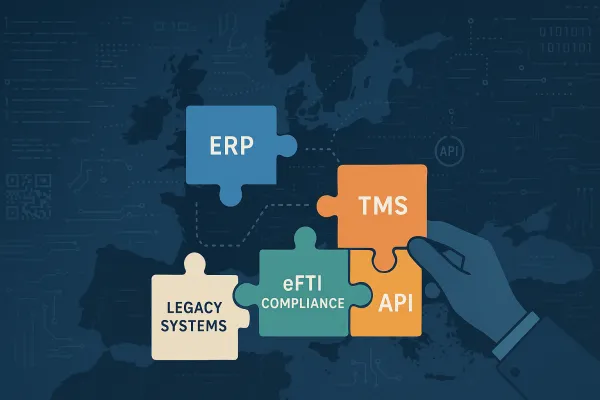
Integration planning determines success speed. Modern TMS solutions integrate with warehouse management systems (WMS), enterprise resource planning (ERP) systems, and other tools. This connectivity streamlines supply chain workflows and reduces the risk of miscommunication or data silos.
ROI calculation should focus on driver hour savings, not just cost reduction. Calculate the value of an additional 18 minutes of productive driving time per driver. For a 50-truck fleet, that represents 15 hours of additional capacity daily — equivalent to adding 1-2 drivers without hiring.
Real European Success Stories
Romanian operator Altec Logistic provides a compelling example. Companies that fail to modernise their fleets will pay more and lose tenders, while those utilizing telematics and automation can achieve significant efficiency gains. The company attributes substantial revenue increases to telematics, automation, and emissions monitoring.
A German automotive parts manufacturer discovered the reverse scenario. Their manual processes created such inefficiencies that drivers averaged only 6.5 hours of actual driving during 11-hour shifts. TMS automation recovered 2.1 hours per driver daily — representing a 32% productivity improvement without adding headcount.
The 2026 Regulatory Catalyst
As of 9 July 2027, the eFTI Regulation will apply in full, giving you roughly two and a half years to get ready. The regulation mandates that authorities in all EU Member States will be required to accept electronic data when shared by businesses via eFTI-compliant platforms.
Member States authorities may start accepting data stored on certified eFTI platforms for inspection from January 2026. Use this voluntary period for real-world testing and staff training. QR code generation and machine-readable format requirements become mandatory by July 2027. Your TMS must generate these automatically for every shipment across all transport modes.
This creates a forcing function for automation investment. Companies implementing TMS platforms now can ensure eFTI compatibility from day one. Those waiting until 2027 face rushed implementations and limited vendor options.
It could save the EU transport and logistics sector up to €1 billion per year. The savings come from automated documentation, reduced inspection times, and streamlined cross-border operations. But individual companies capture these benefits only through proper TMS integration.
Your 90-Day Quick Wins Strategy
Start with driver communication automation. Deploy mobile applications that eliminate phone-based dispatch communication. Target 8-12 minutes of daily time savings per driver within 30 days.
Implement automated route optimization for high-volume corridors. Focus on routes with consistent delivery patterns where AI can immediately identify improvements. Track fuel savings and delivery time reductions weekly.
Automate tender management for repeat shipments. Configure automated carrier selection rules for standard lanes. Automated rate checks, dock door assignments, and carrier scoring reduce manual entry, errors, and cycle times. The system's tools provide consistent decisions, freeing staff to focus on exceptions and learning from outcomes.
Plan strategic deployments for Q2-Q4 2026. eFTI platforms and service providers can start preparing for operations beginning January 2026, with authorities starting to accept data stored on certified platforms. Use this timeline to implement comprehensive automation before regulatory deadlines.
Budget planning should account for both technology costs and change management. European teams require extensive training on integrated workflows. Among companies that completed an ERP implementation, 77% said the most critical success factor was institutional leadership support. In addition, 60% said the top skill needed for a successful implementation was effective communication with all stakeholders.
Beyond Survival — Competitive Advantage Through Automation
The driver shortage crisis forces a fundamental question: will you compete for scarce drivers or maximize productivity from existing capacity? More than half of European trucking companies report they cannot expand due to driver shortages; 48% are experiencing lower productivity, and 39% are seeing revenue decline.
Forward-thinking manufacturers view automation as competitive differentiation. While competitors struggle with manual processes and driver recruitment, automated operations can increase effective fleet capacity by 15-25% without adding trucks or drivers.
The window for first-mover advantage closes rapidly. European regulations drive standardization, but early implementers capture operational improvements while competitors adjust to compliance requirements. The July 2027 deadline approaches faster than you think, and the benefits of early implementation extend far beyond regulatory compliance.
Assessment beats speculation every time. Map your current driver productivity patterns, evaluate TMS options with eFTI compatibility, and calculate the value of recovering those lost 18 minutes daily. The mathematics of European logistics have changed — automation isn't just about managing shortage, it's about turning constraint into competitive advantage.