The 76% Logistics Transformation Crisis: How European Shippers Can Beat the Odds When Most Digital Projects End in Failure

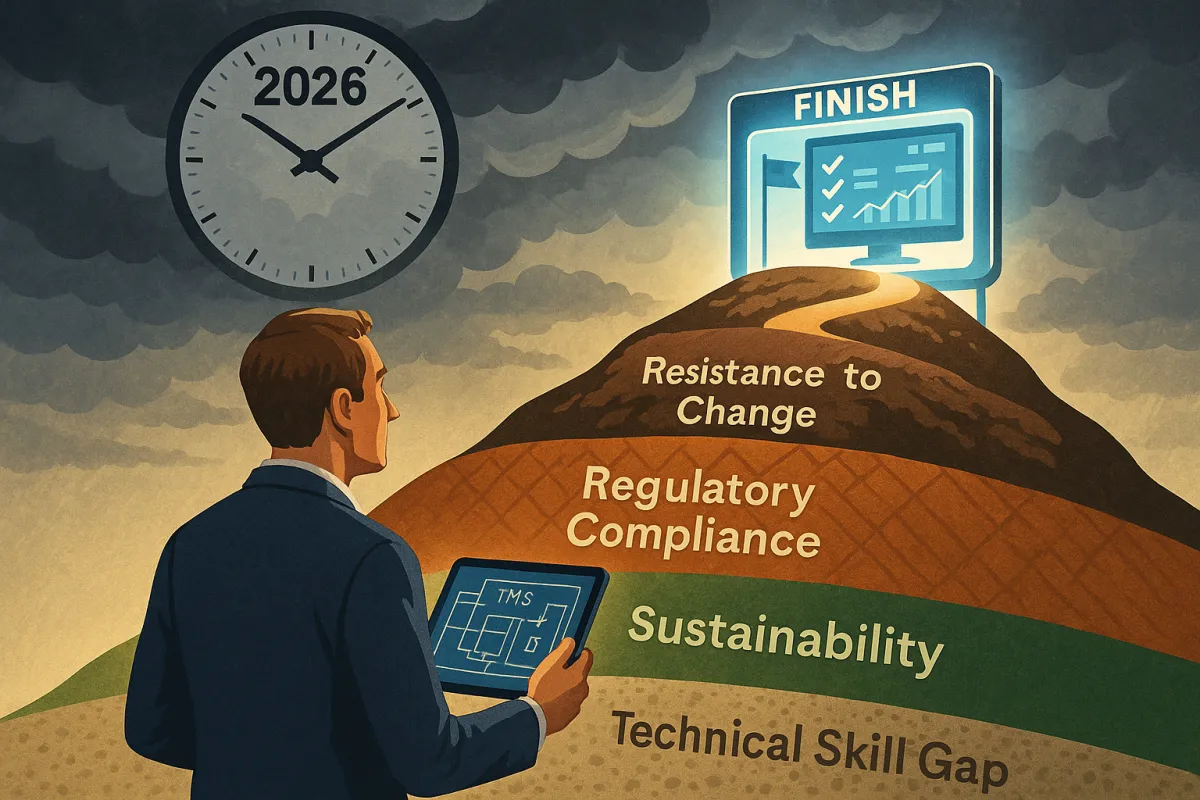
The numbers paint a bleak picture: seventy-six percent of logistics transformations never fully succeed, failing to meet critical budget, timeline or key performance indicator (KPI) metrics, with more than 80% of respondents attempting four transformations in fewer than five years. Yet European manufacturers and retailers keep betting their operations on digital transformation projects, often with catastrophic results.
What makes this failure rate particularly alarming for European shippers is the timing. From 2026, the EU Artificial Intelligence Act will come into full effect for logistics companies, while in 2026, shippers will look for partners who can demonstrate progress toward cleaner fleets that align with European CO₂ trajectories, and the most valuable platforms in European logistics will embed regulatory data structures and workflows directly into their products.
The regulatory pressure creates a perfect storm: companies that need successful logistics transformation to survive 2026's compliance requirements are using approaches that have a three-in-four chance of failure.
The Fatal Flaw: Why Most Leaders Take the Wrong Approach
"Leaders often respond to resistance by ramping up urgency and adopting a directive leadership style, which is not only ineffective, but actually counterproductive," said Snigdha Dewal, Senior Principal Researcher in Gartner's Supply Chain practice, with the prevailing urgency approach, characterized by directive leadership, limited stakeholder engagement, and a "get with the program" mindset, leading to a 47% decrease in the odds of transformation success.
This is where most European supply chain directors go wrong. Under pressure from looming regulatory deadlines and board expectations, they default to command-and-control implementation. The result? Internal change resistance played a greater role in obstructing the success of their transformation initiatives than outside pressures.
I've watched this pattern repeat across manufacturing plants from Hamburg to Milan. A procurement director selects a TMS like Cargoson, MercuryGate, or Descartes based on features and price, then expects the logistics team to "get with the program." When the warehouse manager questions the new routing logic or the transport coordinator highlights integration gaps, leadership doubles down on urgency rather than addressing the underlying concerns.
The McKinsey research confirms what we see in practice: over 70% of change initiatives fail to achieve desired results because of unorganized implementation. Yet most companies treat TMS implementation as a technical project rather than an organizational transformation.
The Success Formula: How the 24% Who Succeed Do Things Differently
Effectively responding to team resistance and incorporating feedback increased the odds of transformation success by 62%, while 81% of logistics leaders believe that transformation is critical, yet only 20% adopted the approach of using resistance as a resource to leverage the collective wisdom of their teams to improve transformation outcomes. Adopting this less common approach dramatically improved the odds of transformation success by 62%.
The successful 24% do three things differently:
Leaders engage their teams from the start of the process, embrace the areas of resistance as a resource, not a problem, and act on feedback to adapt transformation plans and how they are implemented. When your transport manager questions why the new system requires additional data entry, that's not obstruction - that's valuable intelligence about workflow gaps.
Successful implementations treat platform selection differently too. Instead of choosing between Oracle TM, SAP TM, or Manhattan Active based purely on functionality matrices, winning companies evaluate how well vendors like E2open, Blue Yonder, or Cargoson support iterative implementation and user feedback integration.
The successful adoption includes leaders demonstrating listening while setting objectives, involvement of resistant stakeholders to understand underlying challenges and gauge team readiness for change, and maintaining an adaptable mindset that recognizes setbacks as natural parts of transformations.
European Digital Readiness Gaps Create Additional Risk
European logistics faces a unique challenge that amplifies transformation failure rates. There is still a shortage of qualified drivers and logistics specialists across Europe. Automation and AI can help, but they cannot completely compensate for the shortage of personnel.
The skills gap means many European logistics teams lack the technical background to properly evaluate or implement modern TMS platforms. When a company selects Transporeon, nShift, or Alpega without adequate technical resources, implementation becomes a blind leading the blind scenario.
Transparency and compliance requirements are increasing significantly. And without digital support, these requirements can hardly be implemented efficiently. This creates a paradox: companies need sophisticated platforms to meet 2026 regulatory requirements, but lack the internal capabilities to implement them successfully.
Companies that recognize this gap early invest in change management and technical training before platform selection. They partner with vendors like Cargoson, FreightPOP, or 3Gtms that offer comprehensive implementation support rather than just software licensing.
What Makes European Transformations Particularly Vulnerable
European logistics transformations face three additional complexity layers that US counterparts don't typically encounter:
Regulatory complexity requires asking carriers for their CO₂ and fleet roadmap, their readiness for ETS2, and their approach to digital documentation and data sharing, while supporting eFTI-compatible data models, shipment-level emissions calculations, and clean integrations with customs and authority systems.
With expanded ESG and CO₂ reporting requirements, logistics companies must record their emissions in increasing detail—often along the entire supply chain. Missing or insufficient data can result in companies being excluded from tenders.
Cross-border operations add another layer of complexity that single-market implementations don't face. A TMS that works perfectly for domestic German operations might struggle with Italian customs integration or French driver hour regulations.
Most transformation failures in Europe happen when companies underestimate these regulatory and cross-border integration challenges. Successful implementations build compliance requirements into the vendor evaluation process from day one.
Building Your Transformation Risk Assessment Framework
Based on Gartner's research findings, here's a practical framework for assessing your transformation risk before vendor selection:
Team Engagement Assessment: Score your organization's readiness to embrace feedback and resistance as valuable input. Companies with high scores succeed 62% more often than those with command-and-control approaches.
Internal Capability Audit: Honestly assess your team's technical skills for implementing platforms like Oracle Transportation Management, SAP Extended Warehouse Management, or Cargoson. Over 70% of change initiatives fail to achieve desired results because of unorganized implementation.
Regulatory Readiness Check: Evaluate your current data quality for 2026 compliance requirements. Make it straightforward for customers to feed shipment, emissions, and document status data into ESG reports, internal dashboards, and authority interfaces, as logistics leaders will actively look for platforms that lower the cost and effort of staying aligned with European rules.
Vendor Implementation Philosophy: During evaluations with MercuryGate, Descartes, Blue Yonder, E2open, or Cargoson, ask specific questions about how they handle user resistance and incorporate feedback during implementation. Vendors that dismiss concerns as "change management issues" are red flags.
Your 90-Day Transformation Success Foundation
Most European shippers can't wait 12-18 months for perfect planning. Here's a 90-day framework based on successful transformation patterns:
Days 1-30: Stakeholder Intelligence Gathering
Map every person whose work will change. Include warehouse supervisors, customer service reps, and carrier relationship managers. Document their current pain points and concerns about change.
Days 31-60: Resistance Resource Mining
Host sessions where resistant team members explain their concerns in detail. Often, resistance reveals critical operational requirements that weren't captured in the initial specification. This intelligence improves vendor evaluation accuracy.
Days 61-90: Vendor Reality Testing
Use your resistance intelligence to create realistic evaluation scenarios for potential providers. Test how ShippyPro, ProShip, EasyPost, Shipmondo, or Cargoson handle your specific edge cases and integration challenges.
Companies following this approach report higher implementation success rates and shorter time-to-value periods. More importantly, they avoid the 76% failure trap by building organizational buy-in before technology selection.
The European regulatory environment of 2026 will not forgive logistics transformation failures. Companies that strategically address these challenges and seize the opportunities arising from the changed conditions will come out ahead in an increasingly complex European market. The question isn't whether you'll need to transform your logistics technology - it's whether you'll be among the successful 24% or join the failing majority.