The €1.3 Million Question: How Smart European Shippers Are Using TMS Carbon Tracking to Turn EU ETS 2026 Full Compliance Into Competitive Advantage

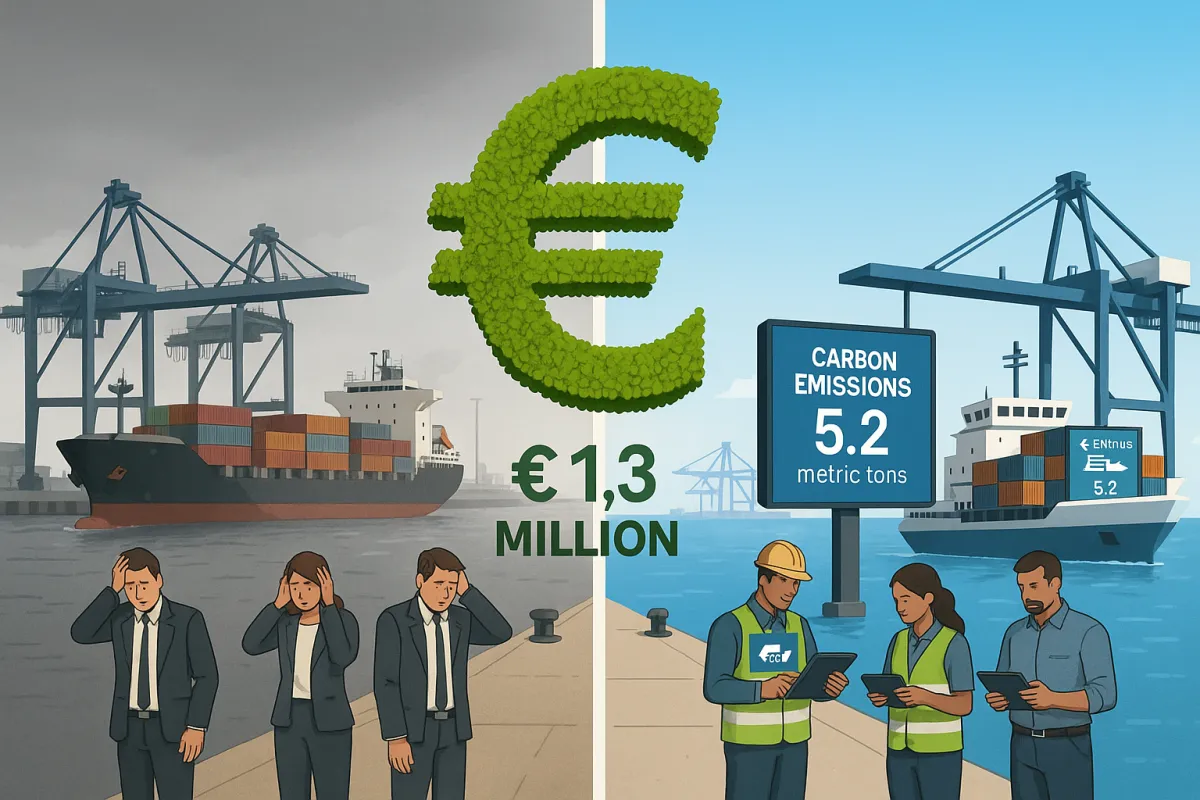
The operating cost of an average bulk vessel trading within the EU could increase by €1.3 million annually in 2026. Yet while most European shippers are scrambling to manage this expense as pure overhead, the smart ones are using advanced TMS carbon tracking features to transform EU ETS compliance from a cost burden into a strategic advantage.
A phased approach for surrendering obligations determination is foreseen, starting at 40% in 2024, 70% in 2025 and reaching 100% by 2026 for the ship types under scope. The transition to full compliance, with 100% of CO₂ emissions subject to carbon pricing—and, for the first time, methane (CH₄) and nitrous oxide (N₂O) may also be included from June onwards isn't just about regulatory compliance. Starting in 2026, the EU ETS will expand to include methane (CH₄) and nitrous oxide (N₂O), two potent greenhouse gases: Methane has a global warming potential 28 times higher than CO₂. Nitrous oxide is 228 times more potent than CO₂.
The challenge? All major ocean carriers serving Europe have already introduced EU ETS surcharges, but concerns persist about overcharging and lack of transparency. For example: A 2024 analysis by Transport & Environment found that some carriers may be generating windfall profits from surcharges, with Maersk estimated to make €60,000 per voyage in excess charges. Without transparent data and accurate tracking systems, shippers can't verify whether they're paying fair carbon charges or being overcharged.
The EU ETS 2026 Shock: Why Manual Carbon Tracking Will Cost You Millions
The numbers don't lie. Taking all of this into account, one metric tonne of VLSFO consumption on an intra-EU voyage can expect to generate $319.30 of EU-ETS compliance costs in 2026, up from $185.04 in 2025 and $90.67 in 2024. That's more than triple the cost in just two years.
shipping in the EU ETS will increase the average annual operating costs per container vessel by $524,000 in 2024 and by $1.4m in 2026, and increase the operating costs per tanker by $400,000 in 2024 and $1.1m in 2026. These aren't abstract figures – they represent real budget line items that procurement teams across Europe are already fighting to manage.
Beyond cost increases, Monitoring, Reporting, and Verification (MRV): Companies must accurately track and report all GHG emissions, including the newly added methane and nitrous oxide. Failure to comply risks fines and reputational damage. Excess emissions penalty of €100 for each to of CO2eq emitted for which the shipping company has not surrendered allowances. Payment of the excess emissions penalty shall not release the shipping company from the obligation to surrender an amount of allowances equal to those excess emissions when surrendering allowances in relation to the following calendar year.
The Hidden Compliance Complexity: Beyond Basic CO₂ Tracking
CBAM adds another layer of complexity. While EU ETS affects transport costs directly, From the beginning of 2026 importers of products included in these 6 sectors will begin to pay a border carbon tax for their products based on the price of allowances in the European Union Emissions Trading System. This means shippers need carbon tracking not just for transport emissions, but for embedded emissions in their imported goods.
A German automotive manufacturer told me their procurement team spent 400 hours last quarter manually calculating carbon emissions across their supply chain, only to discover significant discrepancies with carrier-reported figures. Sound familiar? Shippers' Action Point: Use tools like Searoutes' Freight Emissions Reporter to verify EU ETS emissions calculations and ensure they align with actual emissions and EUA costs.
The manual approach breaks down when you need to track emissions across multiple carriers, modes, and routes while ensuring accuracy for both ETS compliance and CBAM reporting. Without automated systems, you're essentially flying blind into a €1.3 million annual cost increase.
The TMS Carbon Intelligence Revolution: From Reactive Reporting to Proactive Optimization
A Shipper TMS is the ideal place to determine the carbon emissions by collecting and analyzing data of all the transportation activities of an organization and applying the same logic... Data which is typically fully available in a TMS. The key aspects of how a TMS will measure carbon emissions are; Mode of transportation, Load weight, Distance travelled & Fuel consumption.
Modern TMS platforms like MercuryGate, Descartes, nShift, and Cargoson now offer built-in carbon calculators that provide pre-booking emission estimates. Best-in-class TMS systems also help companies minimize their carbon footprint by including emissions calculations alongside cost and other variables when selecting freight carriers.
Carbon emission tracking through TMS supports transparency and accountability in efforts to reduce the logistics sector's carbon footprint... This capability enables businesses to monitor their environmental impact accurately, set reduction targets, and report progress. Carbon emission tracking through TMS supports transparency and accountability in efforts to reduce the logistics sector's carbon footprint.
Advanced Features That Separate Leaders from Laggards
The most sophisticated TMS carbon tracking systems now include emissions tariff engines using NTM values, conforming to EN16258, ISO14083, and GLEC framework standards. Report transport emissions using standard NTM factors or your own custom values.
Additionally, some platforms feature built-in carbon tracking tools that measure emissions per shipment or mode, helping businesses set and meet their sustainability goals more effectively. Real-time analytics capabilities enable continuous improvement decision-making, while API integration capabilities connect with CBAM registry systems and carrier sustainability platforms.
For European shippers, the ability to choose by price, lead time, ranking, booking cut-off or carbon footprint transforms carbon data from a compliance requirement into a procurement optimization tool.
The Strategic Procurement Shift: Selecting Carriers and Routes Based on Carbon Performance
Here's where smart shippers gain competitive advantage: using carbon intensity data for strategic carrier negotiations. When you can demonstrate that Carrier A consistently delivers 15% lower emissions than Carrier B on the same route, you have negotiating power beyond just price discussions.
Advanced TMS systems optimize overall efficiency by consolidating loads and automatically comparing rates, capacity, emissions, and other criteria to determine the best carrier for each load. This multi-variable optimization approach means you're not just finding the cheapest rate – you're finding the optimal balance of cost, speed, and carbon efficiency.
A logistics director at a major German retailer implemented carrier scorecards that included carbon performance metrics alongside traditional KPIs. The result? They negotiated 3% lower rates with their top-performing green carriers by committing to volume increases, while simultaneously reducing their carbon footprint by 12%.
The Multi-Modal Optimization Advantage
Technological sustainably efforts have also made strides in producing more sustainable transportation practices through improved modal shifts for the most optimal route and method of transportation and technology capabilities that result in carbon footprint reduction.
Modal shift analysis becomes particularly powerful when TMS systems can evaluate rail versus road options for intra-European transport, considering both EU ETS exposure and total carbon footprint. Platforms like Transporeon, MercuryGate, Descartes, and Cargoson now offer real-time modal comparison features that factor carbon costs into route optimization decisions.
Load consolidation strategies through TMS can reduce carbon footprint while optimizing for EU ETS exposure. When your system can identify opportunities to consolidate shipments and reduce the number of EU port calls, you're simultaneously cutting costs and emissions.
Building Your Carbon-Smart TMS Implementation Strategy
Smart implementation focuses on systems that automatically generate audit-ready documentation for 2026 independent verification requirements. The Commission will study the data on embedded emissions to refine the methodology for the definitive period starting in 2026. This means your TMS needs to capture not just current reporting requirements, but be flexible enough for methodology changes.
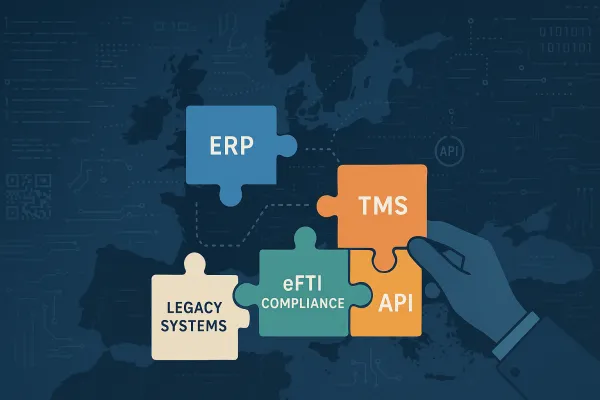
Furthermore, the integration of TMS software with Logistics ERP facilitates better data analytics and reporting capabilities, providing insights into how transportation and logistics decisions impact the company's overall sustainability goals. Companies can track key performance indicators (KPIs) related to carbon emissions, fuel consumption, and other environmental metrics, enabling continuous improvement towards greener logistics practices.
When evaluating TMS vendors, prioritize those offering pre-built integrations with major ERP systems like SAP, Microsoft Dynamics, and NetSuite. Popular cloud TMS integrations include Microsoft Dynamics 365 Business Central, SAP, NetSuite, Odoo, Magento, and WooCommerce, which makes your web-based TMS the logistics hub for your entire technology stack. Cargoson offers pre-built integrations with major business software platforms, which simplifies the connection process.
The Competitive Intelligence Edge: Turning Compliance Into Market Advantage
The most forward-thinking companies use supply chain carbon data as a competitive differentiator. When you can provide customers with detailed carbon footprint reports showing 20% lower emissions than competitors, you're not just compliant – you're winning business.
Customer transparency becomes a powerful tool when your TMS can generate automated sustainability reports for stakeholders. Cloud logistics software includes freight carbon emission calculations and sustainability reporting features. These tools help shippers make environmentally conscious transport decisions while meeting corporate sustainability goals and regulatory requirements.
Supply chain differentiation through verified sustainability performance creates barriers for competitors while opening new market opportunities, especially as procurement teams increasingly include carbon criteria in vendor selection processes.
The 2026 Action Plan: Implementation Timeline for European Shippers
Q1 2026: System selection should focus on platforms offering real-time carbon tracking, automated CBAM integration, and multi-modal optimization. Evaluation criteria must include API connectivity with EU registries and carrier sustainability systems.
Q2-Q3 2026: Implementation and integration with existing ERP systems becomes critical. Cloud TMS implementation takes weeks, not months... Cloud-based alternatives start at €199/month and get you shipping in weeks without buying servers or software. This speed advantage becomes crucial as the compliance deadline approaches.
Q4 2026: Full compliance readiness means your system should handle automated carbon reporting for both EU ETS and CBAM requirements while providing the carbon intelligence needed for competitive positioning.
Budget planning considerations: A cloud-based TMS typically costs between €200-€1000 per month for mid-sized companies, scaling based on shipment volume and features needed... This is way less than traditional enterprise software costs... Conventional systems might cost €100,000+ annually, but cloud transportation management platforms make enterprise-grade functionality accessible to companies of all sizes.
The €1.3 million question isn't whether EU ETS 2026 compliance will increase your costs – it will. The question is whether you'll use TMS carbon tracking to turn that regulatory burden into competitive advantage. The companies implementing these systems now will be the ones capturing market share when their competitors are still struggling with manual carbon calculations and carrier surcharge disputes.
The transformation from cost burden to competitive advantage starts with the right TMS platform and the strategic vision to use carbon data for more than just compliance reporting.