The Integrated Freight Marketplace Revolution: How European Shippers Can Access 300+ Verified Carriers Directly Through Their TMS to Cut Procurement Time by 60% During 2026's Capacity Crisis

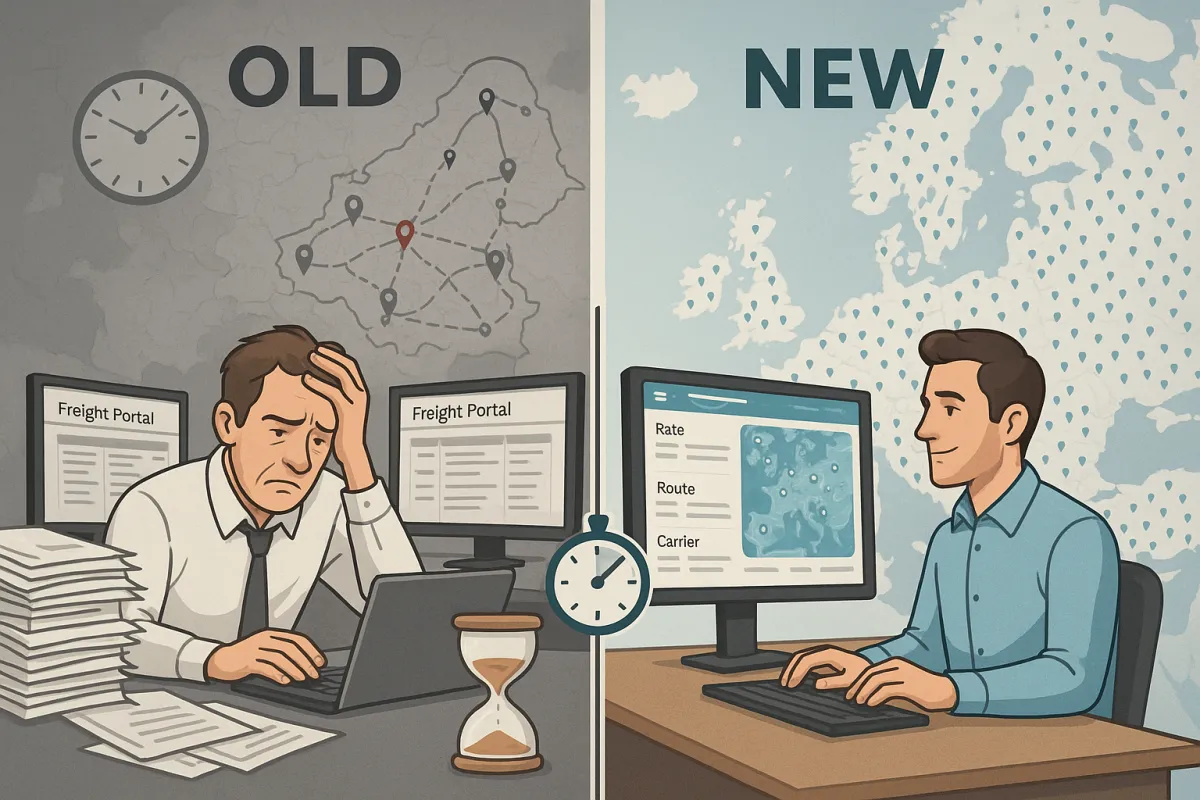
The traditional European freight procurement process consuming 18-28 hours per tender can now be compressed to 45 minutes through marketplace-connected TMS automation. This isn't just theoretical efficiency—real European manufacturers are documenting these gains while navigating the worst capacity crisis in decades.
With unfilled driver positions for heavy goods vehicles (HGVs) in Europe surging to 426,000 in 2024, a significant increase from 233,000 in 2023, and projections suggesting Europe could lack over two million drivers by 2026, impacting half of all freight movements, your approach to freight marketplace integrated TMS isn't just about efficiency—it's about survival.
The Marketplace Integration Paradigm Shift
Something fundamental is happening with TMS marketplace connectivity. Advanced transportation management software provider Alvys announced the launch of its integrated marketplace, which consolidates multiple load boards directly within its TMS platform. Shipwell's Amazon Freight integration uses a direct API connection to pull real-time rates, automate booking, and sync tracking updates between systems. These aren't simple add-ons—they represent architectural shifts in how TMS platforms approach capacity access.
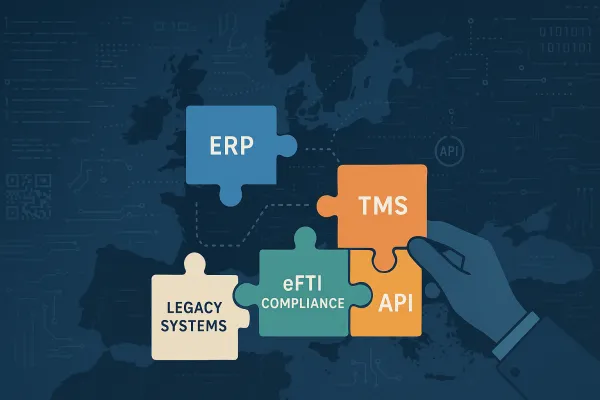
The distinction between portal access and true API integration matters more than most realize. Some vendors offer "marketplace access" through separate logins or batch rate uploads. True integration means your dispatcher sees marketplace rates alongside contracted rates in the same tendering interface.
European manufacturers now access real-time data on carrier operations already in the Alvys TMS, matching available freight to specific trucks and routes, while Amazon Freight appears as a carrier option during load planning, allowing you to compare rates and book shipments without leaving the platform. The days of juggling multiple portals are ending.
Quantifying the Procurement Time Revolution
The math behind procurement automation gets compelling quickly. Load posting drops from 3 hours to 10 minutes. Rate comparison happens automatically instead of requiring 4-6 hours of phone calls. One German automotive supplier reduced tender cycle time from 72 hours to 8 hours through marketplace connectivity—roughly 89% time reduction.
These aren't incremental improvements. The automated rate comparison alone saved 15 hours per week across their transport team. When you scale this across procurement cycles, the productivity gains compound rapidly. Automated invoicing and carrier bill audit cuts billing cycle time by nearly two-thirds compared to manual processes, with platforms saving brokerages over 1.4 million hours to date.
The European Capacity Crisis Context
The capacity constraints driving marketplace adoption aren't temporary disruptions. Europe's unfilled truck-driver positions rose to around 426,000 in 2024, nearly doubling year on year, with the gap potentially reaching 745,000 by 2028. Young people remain scarce in the sector—fewer than 5% of European drivers are under 25, and women account for only around 4%.
Traditional carrier networks of 15-50 regular partners no longer provide sufficient coverage. Marketplace-connected TMS expands this to hundreds of qualified carriers automatically. Shipwell's Amazon Freight integration provides access to 70,000+ trailers and real-time truckload rates, while Alvys Marketplace allows carriers to find and book freight from multiple load boards—representing over a trillion dollars' worth of freight—directly within their TMS.
True Integration vs. Portal Access
The technical architecture determines operational impact. API integration means marketplace rates appear automatically in your existing tendering screens with one-click booking that updates both systems simultaneously. The workflow difference translates to measurable time savings and reduced data entry errors.
Real integration leverages existing TMS data intelligently. "You no longer need to post your truck anywhere because we know where your truck is going to be empty. We know whether your truck has loads from that location where you're delivering. We also know how much money your truck needs to be making in order to break even or make a profit".
This creates automated matching capabilities that portal-based systems can't replicate. Instead of manually searching multiple load boards, dispatchers can set parameters for desirable loads and let the system do the work, dramatically reducing the time and stress involved in finding and booking freight.
European Compliance and Data Considerations
GDPR compliance and data residency requirements add complexity to marketplace integration evaluation. Cargoson focuses specifically on European compliance requirements and GDPR-compliant carrier verification, while global platforms often require careful assessment of their European data handling practices.
Your selection criteria should explicitly address data residency, carrier verification standards, and regulatory compliance capabilities. European-focused vendors understand these requirements natively, while others may require custom configuration or additional compliance verification.
Vendor Landscape and Selection Framework
The European TMS marketplace integration landscape includes established players and emerging specialists. FreightPOP connects to 1,500+ carriers across parcel, LTL, FTL, ocean, rail, and air through API-based integrations, including negotiated rates, partner rates, and marketplace rates in rate shopping.
Cargoson positions itself alongside vendors like Transporeon and Alpega with European-specific regulatory compliance, while global platforms like MercuryGate and Descartes offer broader functionality but require more careful European compliance evaluation.
The architectural differences matter for implementation complexity. Shipwell customers can enable integration through the Integration Marketplace by connecting their Amazon Freight account, with activation taking just a few minutes and the carrier option appearing immediately in load planning workflow. Compare this to traditional EDI implementations requiring weeks of setup.
Implementation Considerations
Single-vendor solutions offer distinct advantages for European operations. Alvys TMS has its own native EDI engine for seamlessly integrated communication, with no need for third party EDI, costly custom integrations, or per-transaction charges. This reduces total cost of ownership and integration complexity.
ERP integration planning requires careful attention to data quality. Data quality issues between your TMS and existing systems can undermine the entire process. Test integrations thoroughly with actual historical data before full deployment.
ROI and Performance Measurement
Advanced optimization capabilities differentiate modern marketplace-integrated TMS platforms from basic rate comparison tools. Blue Yonder automates the carrier selection process based on historical performance rather than just price, ensuring higher service levels, while Blue Yonder, Oracle TM, and Cargoson each offer different approaches to automating carrier selection based on historical performance data, real-time capacity, and cost optimization.
ROI measurement should encompass operational improvements beyond rate savings. Organizations typically see 5–10% savings on freight budgets by automating rate comparisons, with manual processes generating billing errors that automated systems eliminate through real-time validation. Gartner® finds optimization features can contribute up to 15% ROI.
The productivity gains often exceed direct cost savings. Alvys users report benefits like 40-50% reduction in overhead costs and significant improvements in operational efficiency. For operations managing significant European transport spend, these efficiency improvements enable margin preservation while increasing throughput without linear headcount increases.
Future-Proofing Considerations
AI-driven procurement capabilities are emerging across major platforms. AI-driven procurement capabilities are emerging across major platforms, with vendors developing machine learning algorithms that analyze historical performance, predict market trends, and recommend optimal tender timing.
Alvys is developing partnerships to expand its freight offerings and is exploring the use of machine learning and AI to further refine its load matching and planning capabilities, noting "Those interesting variables where you apply machine learning and AI to be able to do all of those things".
The integration roadmaps focus on expanding partner ecosystems and enhancing automation. Alvys is actively working with the largest freight load boards to expand Alvys Marketplace, giving carriers even more options in one place, while established platforms continue refining their AI capabilities for more sophisticated load matching and optimization.
Your 2026 marketplace integration strategy should prioritize vendors demonstrating clear AI roadmaps, expanding partner networks, and proven ability to handle European regulatory requirements. The capacity crisis isn't temporary—building procurement efficiency and carrier access now positions your operations for sustained competitive advantage as market conditions tighten further.