The TMS Scenario Modeling Revolution: How European Shippers Can Test Transport Strategies Before Implementation to Avoid the €2.8M Mistakes Hitting 67% of Network Changes

The spreadsheet-based route planning you've been using for five years just broke. Your weekly tender process that "worked fine" last quarter is now missing 30% of capacity bids. That manual carrier selection system your transport manager swears by? A mid-sized German automotive parts manufacturer thought their TMS implementation was going smoothly. Six months in, €800,000 spent, they realized their new system couldn't handle their complex carrier network across 12 countries.
This story isn't unique. More than half (52%) of companies worldwide lose more than one month of operational capacity in any year affected by logistics disruption. The findings show that recurring breakdowns across global supply chains are translating directly into lost productive time, increased costs and sustained pressure on growth and competitiveness. In multiple regions, a substantial share of companies report annual disruption costs of $1 million or more. Automotive supply chains incur an estimated $13 billion in disruption costs each year. Technology firms face losses of around $16 billion.
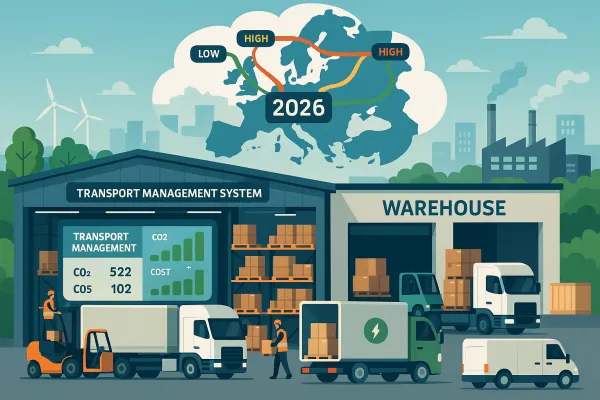
The European logistics sector is facing a perfect storm of volatility that traditional planning methods simply cannot handle. In 2026, modern supply chains demand smarter decisioning, deeper automation, better visibility, and next-generation transportation management technology to keep pace. With AI adoption accelerating and customer expectations rising, today's leaders must rethink how they invest in transportation management software. Your transport team needs scenario planning capabilities before the next crisis hits, not after.
Why Traditional Transport Planning Is Failing European Shippers in 2026
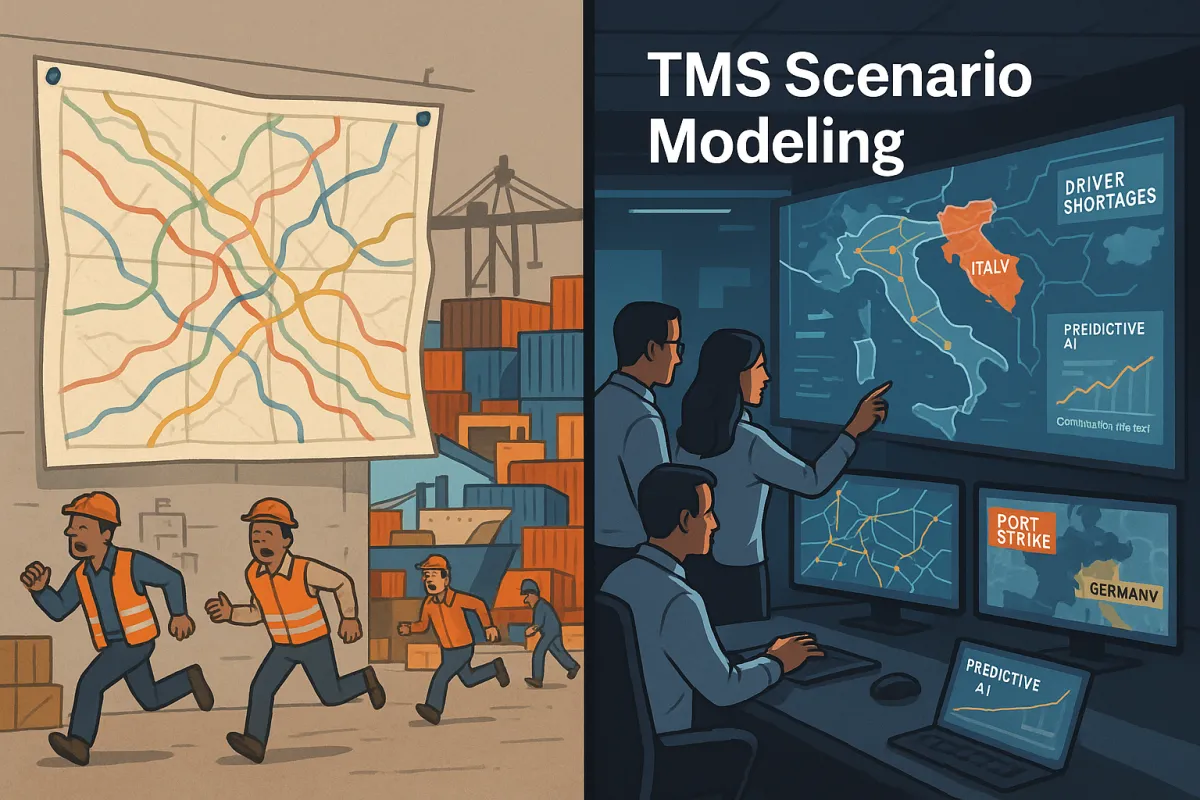
Static planning approaches built around "average" demand patterns and predictable supply chains have become liability. When your Italian subsidiary experiences a port strike while your German operations deal with driver shortages, your annual transport tender results become outdated within weeks.
Here's what catches European transport managers off-guard: Today, that pressure is magnified by geopolitical instability, rising fuel costs, capacity constraints, and the growing threat of cyberattacks. Operational resilience is no longer optional. Your competitors using traditional TMS planning are discovering their systems lack the agility to test different strategies before implementation.
Outdated reporting tools leave decision-makers waiting for reconciled data, while competitors are already using AI to generate instant forecasts, scenario models, and demand predictions. Traditional TMS platforms like older Oracle TM implementations or basic Manhattan Active deployments focus on execution optimization rather than strategic scenario testing.
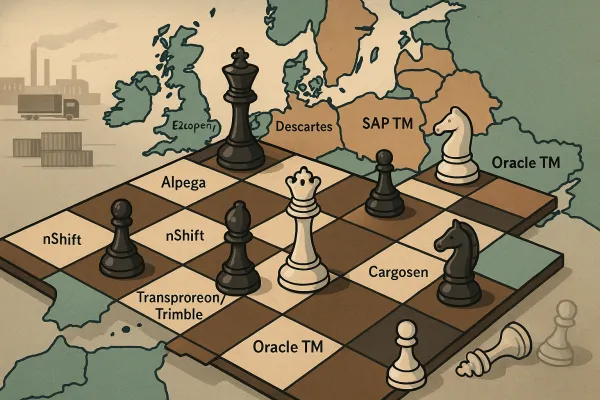
The difference between modern scenario-enabled platforms like e2open, advanced Descartes modules, or Cargoson's what-if capabilities versus legacy systems is striking. While traditional TMS handles current operations efficiently, scenario modeling prepares you for tomorrow's disruptions.
The €2.8M Cost of Network Changes Gone Wrong
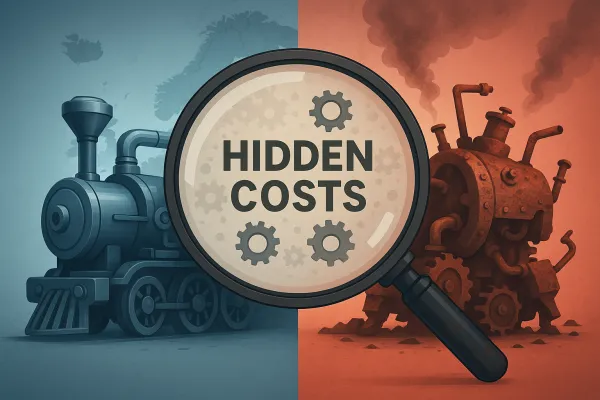
Poor transport planning decisions create cascading financial damage that extends far beyond immediate freight costs. Companies with inefficient networks can lower their distribution and transportation costs by as much as 25%. But the reverse is equally true - inefficient network changes can increase costs by similar margins.
Consider the German manufacturer mentioned earlier. Their €800,000 TMS implementation mistake represents just the software cost. Six months post-implementation, their carrier integration failures were costing them 15% more than their old spreadsheet-based system. Add integration delays, change management issues, and operational disruption during the failed rollout, and total costs approached €2.8 million.
76% of logistics transformations fail to achieve their performance objectives. The difference between success and failure? A methodical approach to measuring return on investment, based on concrete and verifiable metrics.
What TMS Scenario Modeling Actually Does (Beyond Basic Route Optimization)
Modern TMS scenario modeling capabilities represent a fundamental shift from reactive execution to proactive strategic planning. Transport planners and operators can simulate "what if" scenarios, test route changes, and model the impact of shifting demand patterns without touching live systems. This capability turns planning into a strategic, data-backed advantage.
Consider consolidation rule testing: your transport team wants to reduce costs by consolidating deliveries across multiple days instead of same-day shipping. Traditional planning would implement this change across your entire network and measure results over months. Scenario modeling tests the impact on specific customer segments, identifies service level trade-offs, and quantifies cost savings before any actual changes occur.
Emerging innovations offer new ways to optimize costs: Predictive modeling: AI tools for advanced route simulations. TMS platforms from Blue Yonder, e2open, Manhattan Active, and Oracle are embedding machine learning into scenario planning workflows. Instead of quarterly strategic planning exercises, these systems continuously evaluate alternatives during routine operations.
Cargoson's scenario capabilities focus specifically on European operational requirements - testing cross-border routing changes, evaluating carrier mix optimization for capacity-constrained lanes, and modeling the cost impact of sustainability compliance requirements.
Digital Twins vs Traditional TMS Modeling: The Strategic Difference
A digital twin isn't just another analytical model. It's a living system that continuously monitors, learns and adapts across the supply chain. "Think of it as a digital replica of a physical supply chain," says Shashank Mane, VP of sales and go-to-market at Capgemini.
The strategic difference comes down to data continuity and real-time adaptation. Digital twins can also predict what will happen and—if they're built properly—even prescribe actions. The twin did it in minutes by pulling live data from production, logistics, and inventory systems to test every scenario.
It lives, breathes, and evolves in real-time, continuously fed by data from your actual operations. A digital twin combines three essential ingredients: a precise digital definition of your system (from your CAD, PLM, or TMS data), operational data collected via IoT sensors and telemetry, and an information model that correlates and presents this data to facilitate decision-making.
Traditional TMS scenario modeling uses historical data and static assumptions. Digital twins update scenarios continuously as conditions change, automatically testing new variables and recommending adjustments.
The European Shipper's Scenario Modeling Framework: 5 Critical Use Cases
European transport operations face unique complexities that make scenario modeling particularly valuable. Cross-border regulations, multi-modal requirements, and diverse carrier networks create optimization challenges that don't exist in single-market operations.
Carrier Mix Optimization for 2026's Capacity Constraints: Test different carrier allocation strategies before capacity becomes scarce. Your scenario model evaluates cost, service level, and risk trade-offs across your carrier portfolio. Instead of discovering that 40% of your volume depends on carriers with financial stability issues, scenario planning identifies these vulnerabilities early.
Modal Shift Planning for Regulatory Compliance: The operating cost of an average bulk vessel trading within the EU could increase by €1.3 million annually in 2026. Yet while most European shippers are scrambling to manage this expense as pure overhead, the smart ones are using advanced TMS carbon tracking features to transform EU ETS compliance. Scenario modeling tests the cost impact of shifting 20% of your volume from road to rail or evaluating intermodal alternatives for specific lanes.
Network Consolidation vs Service Level Trade-offs: European shippers often struggle with balancing consolidation savings against customer service requirements. Scenario modeling quantifies these trade-offs. Test closing your Barcelona distribution center while maintaining service levels to Southern Spain customers through adjusted routing from Madrid.
Cross-border Route Optimization with Customs Delays: Model the impact of 2-hour average delays at specific border crossings on your delivery performance. Test alternative routing through different countries or adjusted scheduling to maintain customer commitments.
Sustainability vs Cost Balancing for CSRD Compliance: Dynamic planning might identify, for instance, a high-volume commodity item with cross-sell potential, where higher manufacturing costs for the item are offset by lower end-to-end logistics costs through bundled shipping and higher customer conversion. This type of complex predictive modeling is what digital twins do best. Typical results in such a scenario are up to a 20 percent improvement in fulfilling consumer promise, a 10 percent reduction in labor costs, and a 5 percent revenue uplift.
Different TMS platforms handle these scenarios with varying sophistication. Manhattan Active excels at network optimization scenarios. Oracle TM provides robust multi-enterprise modeling. Blue Yonder offers AI-driven demand scenario testing. Cargoson focuses on European-specific regulatory and cross-border scenarios.
Stress Testing Your Transport Network Before Crisis Hits
The most valuable scenario modeling applications prepare your network for disruptions that haven't happened yet. The planners quantify exposure instead of guessing. "We went from being blindsided by disruptions to having 14 days of advance warning on average," Prakash explains. During the October 2022 China lockdown, for example, companies with digital twin capabilities were actually simulating that precise situation one or two months earlier.
Focus your stress testing on 3-5 scenarios that pose the highest financial risk to your operations: port delays affecting 30% of your inbound volume, sudden capacity reductions on your three highest-volume lanes, border slowdowns extending transit times by 24 hours, your largest carrier declaring bankruptcy, or severe weather disrupting operations across Northern Europe for one week.
Regular scenario testing reveals vulnerabilities before they become operational failures. Instead of reactive crisis management, you're prepared with predetermined alternatives that maintain service levels while minimizing cost impact.
Building Your TMS Scenario Modeling Capabilities: The Implementation Roadmap
Successful scenario modeling implementation requires more than selecting software with advanced features. Centralize data sources: Connect ERP, WMS, TMS, IoT sensors, and external partner systems to a unified platform. Standardize metrics and definitions: Align KPIs, units of measure, and reporting formats across all tools.
Your implementation roadmap should establish data integration across all transport-related systems before attempting advanced modeling. Most European manufacturers discover that their ERP systems in different countries use incompatible data formats. Address these integration challenges early, or your scenario results will be unreliable.
For example, a global OEM created a digital twin to optimize the policies it fed into its TMS platform for outbound logistics. As a result, the OEM reduced costs for freight and damages by 8 percent.
Phase 1: Data Foundation and Integration (8-12 weeks) Connect your ERP, TMS, WMS, and carrier systems to create unified transportation datasets. European implementations typically require additional work for multi-currency handling, cross-border documentation requirements, and varying carrier data standards across countries.
Phase 2: Baseline Scenario Development (4-6 weeks) Create your first scenario models using historical data. Start with straightforward comparisons: current network performance versus 10% volume increases, or existing carrier mix versus alternative allocation strategies.
Phase 3: Advanced Modeling and AI Integration (6-8 weeks) Implement machine learning capabilities that automatically generate scenario alternatives. Modern platforms like Blue Yonder, e2open, and Cargoson offer varying levels of AI-driven scenario generation.
Implementation complexity varies significantly across platforms. Manhattan Active and Oracle TM typically require 6-12 months for full deployment. Cargoson reports 6-12 weeks to operational scenario modeling. Consider your timeline requirements when evaluating platforms.
The Data Foundation: What You Need Before You Can Model
Scenario modeling accuracy depends entirely on data quality. Digital twins depend on data integrity. Start by auditing your WMS, TMS, IoT, and telematics systems to understand data coverage and latency. Timely beats perfect—especially in early-stage pilots.
European shippers need comprehensive historical shipment data covering at least 18 months, including seasonal variations and disruption periods. Your data foundation must include carrier performance metrics (on-time delivery, capacity availability, cost variations), detailed cost breakdowns (base rates, fuel surcharges, accessorial charges), and customer service requirements by segment.
Common data quality issues that break scenario accuracy include inconsistent address formats across ERP systems, missing carrier performance data for lanes you want to optimize, incomplete cost allocation for cross-border shipments, and outdated routing assumptions that don't reflect current network reality.
ROI Measurement and Continuous Improvement: Making Scenario Modeling Pay
Measuring scenario modeling ROI requires tracking both direct cost savings and avoided losses. Digital twins revolutionize logistics management with 10 to 30% savings on transport costs. However, quantifying the value of avoided disruptions or improved planning decisions requires more sophisticated measurement approaches.
For example, one retailer used digital twins to connect their planning, inventory deployment, and transportation management tools. For instance, a consumer-packaged-goods company measured variable demand and labor in its warehouse and identified the opportunity to reduce total distribution center costs by 15 percent.
Direct savings categories include fuel cost reductions through improved routing, carrier cost savings through better tender timing and mix optimization, reduced detention and accessorial charges through better planning, and labor savings from automated scenario analysis replacing manual planning work.
Avoided cost categories prove equally valuable: disruption costs prevented through proactive alternative routing, capacity premiums avoided through better demand forecasting, customer penalty costs prevented through service level maintenance during disruptions, and inventory carrying cost reductions through improved transit time reliability.
Track key performance indicators that demonstrate scenario modeling value: cost per shipment trending, on-time delivery performance consistency, carrier performance score improvements, and planning cycle time reductions.
Continuous improvement requires regular model validation against real-world results. Monthly comparison of scenario predictions versus actual outcomes identifies areas where your modeling assumptions need adjustment.
When Scenario Modeling Isn't Worth the Investment
Scenario modeling delivers maximum value for complex, high-volume transport operations with multiple variables to optimize. If your transport network involves fewer than 50 shipments weekly, uses only 2-3 carriers, operates primarily within single countries, or has minimal seasonal demand variation, basic TMS optimization might sufficient for your needs.
Small shippers with annual transport spend below €500,000 often find better ROI focusing on carrier relationship improvements and basic route optimization before investing in advanced scenario capabilities.
Alternative approaches for companies not ready for advanced modeling include quarterly transport tender optimization, manual carrier mix testing during renewal periods, basic routing software without scenario capabilities, and focused improvements on highest-volume lanes only.
Start with a logistics pain point that has clear business impact. Prioritize problems with measurable costs—such as delays, rework, or service penalties. The business case for scenario modeling strengthens when you can identify specific decisions that could benefit from testing before implementation.
No sugar-coating: the firms that win are those that treat TMS not as a cost center, but as a strategic engine for operational excellence. The trends outlined here aren't optional, they're the roadmap to staying relevant in the next phase of global logistics. For European shippers managing increasingly complex networks, scenario modeling capabilities are becoming table stakes for competitive transport operations.