The European Shipper's Rail Freight Digitalization Challenge: How to Build TMS Integration Strategies for DAC and ERTMS Before Fragmented Implementations Create €2M Integration Disasters

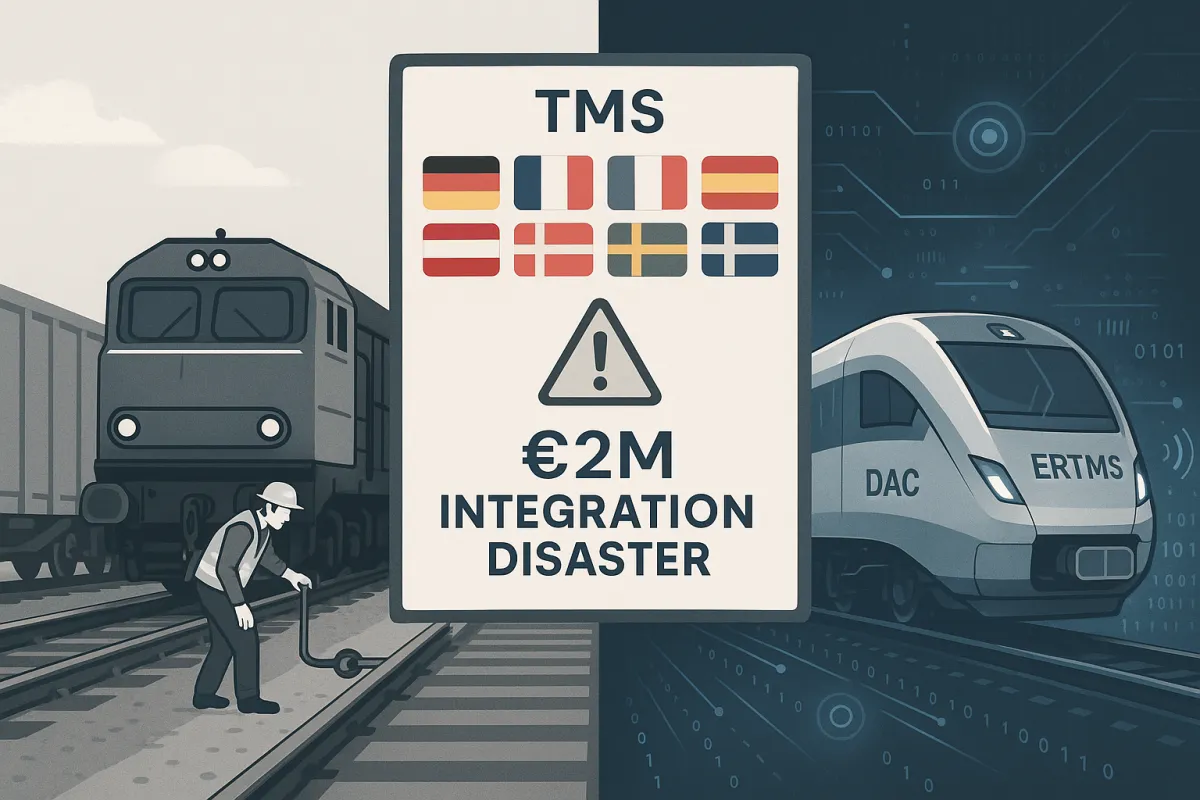
Your 2026 TMS procurement strategy contains a critical blind spot that could cost you €2M in failed rail integration. DAC systems are becoming deployable as of 2026, yet the lack of a coordinated approach at European level has led to fragmented national implementations, with different technical solutions and unaligned timetables for ERTMS across the continent.
European shippers evaluating transport management systems face an unprecedented technology shift. While your procurement team focuses on standard TMS capabilities, two fundamental rail technologies are reshaping integration requirements: Digital Automatic Coupling (DAC) and European Rail Traffic Management System (ERTMS). Most traditional platforms weren't designed for these emerging technologies, creating implementation gaps that transform manageable deployments into expensive integration disasters.
The €2M Rail Integration Reality Check: Why Traditional TMS Platforms Aren't Ready for Europe's Rail Revolution
A staggering 76% of logistics transformations never meet their budget, timeline, or performance targets, and rail integration complexity multiplies these failure rates significantly. Current freight trains using standard screw couplings lack the digital infrastructure required for modern rail operations. While the United States, Russia, China and many other countries use an automated mechanical coupling system to connect wagons and railcars, the European freight industry still uses a universal screw system. With today's universal screw system, coupling, decoupling and checking wagons takes a lot of walking, and operators must test the train's brakes by releasing air from the brake pipe and kicking each brake block.
Traditional TMS platforms like SAP TM and Oracle TM handle these emerging requirements through expensive customization projects. Mid-market solutions including MercuryGate, Transporeon, and Cargoson often provide more flexible integration frameworks, but even these require careful evaluation of rail-specific capabilities.
The DAC Deployment Timeline Crisis
The ambition for DAC is to successfully achieve the transformation from the current screw coupling system to the digital automatic coupling system until 2030. The signatories commit to the Union-wide deployment of the digital automatic coupling in the rail freight sector until 2030. However, the implementation timeline creates a two-phase challenge for TMS platforms.
We're planning a 2-step transition to DAC. The first step will be mechanical: we'll pre-install draft gear under the wagon in a workshop. The second step is the Big Bang: in a 2-week, on-site process, we'll replace the screw couplers with DAC heads on all of the wagons previously fitted with draft gear. Your TMS needs routing engines sophisticated enough to handle these transition zones without manual intervention during this mixed-fleet period.
Austria, Germany, and Switzerland are already conducting live testing. In addition to previous test trains, the DAC is to be implemented in demonstrators from 2026 to continue to form the basis for the so-called pre-deployment phase. During this phase, around 100 DAC pilot trains will run across Europe. European manufacturers who wait until 2030 will face mature technology at higher integration costs.
ERTMS Fragmentation: The Cross-Border Integration Nightmare
Spain has invested over €7 billion since 2018 to implement ETCS on the Mediterranean Corridor, expecting completion by 2030. Meanwhile, France postpones its crucial Montpellier-Perpignan ETCS implementation until 2042. This 12-year gap creates operational nightmares that directly impact TMS integration requirements.
Current deployment statistics paint a sobering picture. With the European Train Control System (ETCS) deployed on about 10% (12 400 km) of the TEN-T network and equipped on some 19% of the EU railway fleet (8 730 vehicles) by the end of 2024, deployment remains significantly behind schedule. This fragmentation forces TMS platforms to accommodate multiple signaling systems simultaneously.
The Technical Debt Problem
National rail authorities often had certain features or constraints in their existing system they did not want to lose, and since every authority was still required to approve the systems, dialects of ERTMS emerged. The challenge of the ETCS onboard business lies far more in market fragmentation. Competition in cross-border projects is more limited than the mere availability of ETCS onboard products.
This creates cascading complexity for TMS vendors. Data normalization requirements become exponentially more complex when handling multiple ERTMS variants. Your implementation strategy needs data normalization layers that translate between systems and maintain consistent visibility regardless of underlying infrastructure complexity.
Building Future-Proof Rail Integration Architecture
Smart TMS selection for European rail freight requires understanding the technical requirements emerging from DAC automation. With DAC, freight trains are digitally connected, and that allows for a wide range of functions. We can monitor each wagon's components, such as brakes, wheels, air continuity, and load positioning. We can also monitor train integrity, which is really useful for tomorrow's signalling systems.
Your TMS architecture must accommodate automated wagon registration, technical inspection data streams, and real-time brake testing calculations. Platforms evaluating vendors should prioritize those offering APIs designed for DAC systems, ERTMS data feeds, and train integrity monitoring rather than retrofitting legacy transport management capabilities.
The Data Integration Challenge
DAC-enabled trains generate continuous data streams that traditional TMS platforms weren't designed to handle. Requirements include real-time synchronization with locomotive control units, consist control units on each wagon, and dynamic route optimization based on train integrity data.
Integration complexity extends beyond simple API connectivity. Different completion phases of the same corridor may use different data formats, update frequencies, and availability windows. Vendors like Cargoson, alongside established providers including nShift and Transporeon, are developing rail-specific connectivity modules, but implementation timelines vary significantly.
Implementation Strategy: Avoiding the 76% Failure Rate
The most common causes are poor change management, underestimated ERP integration complexity, inadequate data migration planning, and selecting a system that doesn't match the organisation's actual operational requirements. Rail freight digitalization amplifies each of these risk factors.
Your phased approach should mirror the DAC deployment strategy. Start with mechanical pre-installation phases in your TMS architecture by establishing data integration frameworks before live DAC connections. This allows testing of rail-specific modules without disrupting existing operations.
Vendor Evaluation Framework
Traditional vendor scorecards miss rail-specific requirements. Evaluate platforms based on their ability to handle mixed fleet operations during the DAC transition period. Can the system route shipments across ERTMS-enabled and legacy rail corridors simultaneously? How does rate management adapt to infrastructure-based service levels?
European-focused vendors often demonstrate superior understanding of these requirements compared to global platforms optimized for North American or Asian markets. Rail integration complexity differs fundamentally from road or ocean freight digitalization challenges.
Cost Management and ROI Calculation
DAC implementation costs extend beyond TMS software. This public-private partnership model – outlined in our High-Level Paper – proposes an €18 billion investment from 2028 to 2034 to strengthen European competitiveness, deliver greener transport, and drive technological sovereignty. While this represents infrastructure investment, TMS integration costs follow similar scaling patterns.
Your ROI calculations should factor in competitive advantages from early rail digitalization adoption. The sector propose to fully deploy the DAC technology latest until 2030 which will significantly improve competitiveness of the rail sector's operations by providing electricity and data bus line across train, automated brake testing, electro-pneumatic brakes.
Competitive Advantage Through Early Adoption
European shippers implementing rail-ready TMS platforms before 2030 gain operational advantages unavailable to competitors using legacy systems. Automated operational procedures, longer train configurations, and distributed power capabilities become accessible only through properly integrated platforms.
Customer service improvements compound these advantages. Real-time train integrity monitoring enables proactive exception management that manual coordination cannot match. When infrastructure disruptions occur, integrated platforms can reroute automatically based on real-time DAC and ERTMS data rather than reactive manual intervention.
The 2026-2030 Action Plan
From 2027 onwards, commercial demonstrators with production-ready DAKs are set to roll across Europe. Your TMS selection timeline should account for this rapid deployment acceleration.
Start vendor evaluation immediately with rail integration requirements as primary selection criteria. Traditional procurement approaches focusing on standard transport management features miss the fundamental technology shift reshaping European rail freight. Platforms designed around road and ocean freight digitalization lack the architectural flexibility required for rail automation.
European rail specialists including Cargoson are developing rail-specific modules, while global vendors often treat rail integration as secondary functionality. This architectural difference becomes critical during implementation when rail-specific requirements surface as expensive customizations rather than core platform capabilities.
The window for strategic TMS selection is narrowing rapidly. European manufacturers who act decisively within the next 90 days position themselves to navigate 2030's rail transformation successfully. Those who delay face fragmented implementations during peak DAC deployment periods when vendor resources become constrained and integration costs multiply exponentially.